Maintaining the right soil pH is essential for healthy lawns, gardens, and potted plants. The right at-home soil pH test kit helps you quickly gauge whether your soil is too acidic or too alkaline, guiding you to amend with lime, sulfur, or other treatments as needed. The following selection focuses on reliable, user-friendly kits that deliver consistent results for American gardeners, whether you’re testing a small backyard plot or several garden beds. Below is a quick summary table of five top options to help you compare features at a glance.
| Product | pH Range | Type | ||
|---|---|---|---|---|
| Dewildetradingco Soil pH Test Strips | 3.5–9 | Test Strips | 100 strips | Affordable routine testing |
| NewTest Soil pH Test Kit | 4–10 | Test Strips + Cylinders | 125 tests | Precise color blocks with measuring cylinders |
| Garden Tutor Soil pH Test Kit | 3.5–9 | Strip + AI Reader | 100 strips | AI web reader for quick results |
| AKSBTEC 4-in-1 Soil Test Kit | – | Color-Chart Kit | 40 tests | Comprehensive nutrient data (N, P, K, pH) |
| HOVIRAN Soil pH Test Kit | 3–9 | Strips | 125 strips | Wide range for diverse use |
Choose a kit that matches your needs: how many tests you plan to run, how precise you want readings to be, and whether you prefer digital assistance or a simple color comparison. The right kit can streamline soil amendments, improve plant health, and save time over trial-and-error methods.
Dewildetradingco Soil pH Test Strips

These 100 tester strips cover a wide pH range from 3.5 to 9, suitable for testing soil in gardens, lawns, and indoor plants. The testing procedure is straightforward: mix a soil sample with water, wait 30 minutes, dip a strip for 3 seconds, and compare to the color chart. The kit emphasizes affordability and versatility for various horticultural needs, enabling quick checks across multiple sites.
NewTest Soil pH Test Kit

The NewTest kit includes upgraded pH strips with measuring cylinders and deluxe instructions aimed at accurate results. It features four colorimetric blocks for better range resolution and uses measuring cylinders to ensure consistent dilution ratios. With 125 tests per kit, it offers excellent value for testing multiple garden zones, lawns, or beds over time, helping you track soil changes and plan amendments confidently.
SONKIR 3-in-1 pH Meter

SONKIR’s 3-in-1 unit tests soil moisture, pH value, and sunlight, all in one device. It requires no batteries and provides quick readouts after inserting the meter into soil. This is a compact option for gardeners who want a simple, all-in-one tool for monitoring several conditions without purchasing separate tests. Note that it is best used when soil moisture is adequate for accurate pH readings.
Garden Tutor Soil pH Test Kit

This kit features professional-grade accuracy tailored for lawn and garden testing, delivering results quickly in about 60 seconds. The third-generation, three-pad pH tester strips design delivers repeatable outcomes. A web-based AI reader further enhances accuracy by analyzing a photo of the test strip and template. Garden Tutor emphasizes American design and user-friendly operation for both novices and experienced gardeners.
MySoil Soil Test Kit
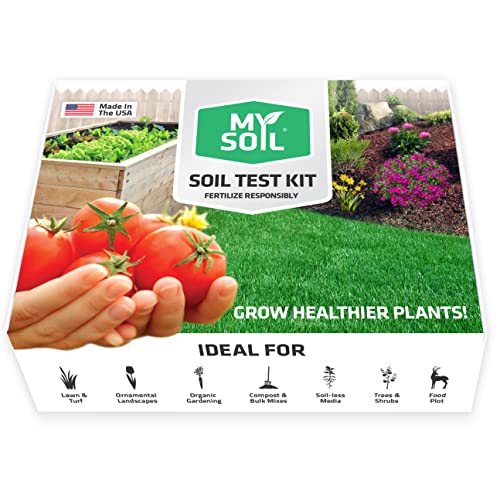
MySoil offers a comprehensive soil analysis with a focus on nutrient availability and pH, including recommendations tailored to your specific soil and plant needs. It operates as a mail-in professional laboratory analysis rather than a simple at-home strip test, delivering results in about 6–8 days. This option suits growers seeking detailed insights beyond basic pH, including nitrogen and other nutrients that influence plant health.
AKSBTEC 4-in-1 Soil Test Kit

The AKSBTEC kit tests four key elements—pH, nitrogen, phosphorus, and potassium—with 40 tests total, including 10 tests per element. It’s designed for repeated use across lawns, vegetable gardens, and flower beds. The color-chart method makes interpretation straightforward, offering a comprehensive snapshot of soil fertility and enabling precise fertilization strategies without specialized equipment.
HOVIRAN Soil pH Test Kit

The HOVIRAN kit uses 125 strips to cover a broad pH range from 3 to 9, suitable for gardens, lawns, farms, and potted plants. The kit emphasizes longevity and daily monitoring, with enough strips to test multiple locations over time. It provides a simple dip-and-compare method for quick, repeatable readings, aiding ongoing soil management across varied landscapes.
Buying Guide: Key Considerations For Choosing a Soil pH Test Kit
- Test scope: Decide between simple pH-only strips, 4-in-1 nutrient tests (pH, N, P, K), or professional lab options. Your choice affects cost, accuracy, and how deeply you can assess soil health.
- pH range and accuracy: Look for kits that cover typical soil ranges (roughly pH 3–9). Wider ranges are better for diverse planting scenarios, while color-blocked scales help reduce interpretation errors.
- Test format: Strips deliver quick results, but measuring cylinders and liquids improve accuracy for some kits. Digital readers or AI-assisted apps can enhance precision but may add complexity.
- Volume and reuse: If you manage multiple beds, a kit with more tests or long-term use (e.g., 100–125 strips) reduces ongoing costs and frequency of replacement.
- Ease of use: Consider whether the kit requires mixing, waiting times, or calibration. Simpler kits are ideal for casual gardeners; more detailed kits suit serious hobbyists.
- Calibration and reliability: Some kits include color charts with multiple blocks or templates. Consistency across batches matters for reliable trend tracking over time.
- Supplementary tools: Measuring spoons, test tubes, and instructions add convenience. Kits with integrated components minimize the need for extra purchases.
- Delivery and support: Brand reputation, clear instructions, and accessible customer support help ensure accurate results and user confidence.
When integrating soil pH data into gardening plans, combine readings with knowledge of plant preferences. Most vegetables thrive in slightly acidic to neutral soil, while lawns often prefer near-neutral conditions. If readings indicate out-of-range pH, apply appropriate amendments gradually and re-test after several weeks to monitor progress. For larger growing operations, consider a mix of at-home tests for routine checks and periodic lab analyses for detailed nutrient profiles. This approach balances speed, accuracy, and long-term soil management goals.