Looking for American beautyberry bushes that deliver striking purple berries and easy care? This guide identifies five top Amazon picks, explains who each plant is best for, and highlights practical buying considerations. Whether you want a compact container plant, a privacy hedge, or a bird-attracting landscape, these selections cover variety, size, and growing style to help you choose confidently.
| Product | Size | Best For | Notes |
|---|---|---|---|
| American Beautyberry Shrub/Bush – 4-8″ Tall | 4-8 inches | Starting small, indoor pots | Dormant state possible Oct–May |
| KVITER 30 American Beautyberry Seeds | Seed form | Privacy hedges, native landscape | Germination required |
| American Beautyberry Plant Live, 4-In | 4 inch pot | Container or small garden bed | Thrives in sun to partial shade |
| American Beauty Berry Shrub – Quart Pot | 6-12 inches | Group planting for berry yield | Bird magnet, easy maintenance |
| American Purple Beauty Berry Seeds | Seed packet | Florida native, ornamental fall color | 3-6 ft tall mature size |
American Beautyberry Shrub/Bush – 4-8″ Tall Live Plant

Best for: small-space gardeners and container enthusiasts seeking early color. This beautyberry is shipped in a 2.5″ pot and arrives in a small, compact form. When in leaf, the plant displays bright magenta-purple berries that cluster along the stems, delivering a dramatic display that lasts into fall. Note: plants ordered from October through May may arrive dormant with no leaves, so plan for spring growth. Best used as a focal accent or starter plant in mixed containers, or planted in a border for later berry production.
Why selected: It offers an immediate, eye-catching berry display once leaves return, with a compact size ideal for urban patios. Its dormant-state arrival can be an advantage for homeowners who want to plant early and watch spring growth emerge.
Caution: Expect seasonal dormancy if ordered in colder months; growth resume is typical in spring. This is not a full-size mature plant but a juvenile, which means slower early berry production.
KVITER 30 American Beautyberry Seeds for Planting

Best for: gardeners who want a native plant from seed, with potential for native habitat restoration or privacy hedges. These seeds focus on Callicarpa Americana and are described for producing purple berries that wildlife enjoy. Seeds require preparation and time to germinate, typically 1–3 months to sprouts, and should be spaced about 6 feet apart in well-draining soil. The plant is a good choice for pollinator-friendly landscapes and long-term habitat value.
Why selected: This seed option supports native gardening goals and provides a longer-term project for enthusiasts who enjoy establishing plants from seed. It’s suited for larger beds where eventual 3–8 feet tall growth can form an effective privacy or wildlife corridor.
Caution: Germination requires patience and precise soil conditions; it is not an instant shrub and does not provide immediate berry displays.
American Beautyberry Plant Live, 4-In Pot

Best for: urban gardeners who want a ready-to-grow live plant with simplified care. This beautyberry arrives as a single live perennial flowering shrub, suited for full sun to partial shade. It is a versatile option for containers or garden beds and is generally low maintenance for homeowners seeking a straightforward planting project.
Why selected: Its compact 4-inch pot makes it accessible for beginners or those with limited space, and its sun tolerance supports a range of garden locations from patios to borders.
Caution: The listing notes “no flower” upon arrival; expect flowering and fruiting to develop seasonally with appropriate age and growing conditions.)
American Beauty Berry Shrub – Quart Pot
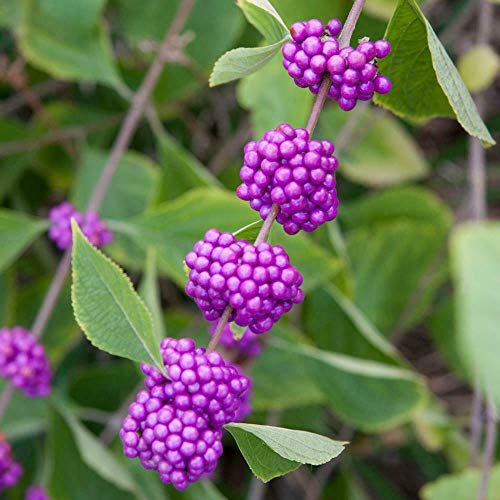
Best for: homeowners seeking larger plants for immediate impact and group planting to maximize berry production. This shrub ships in a quart pot and stands about 6-12 inches tall initially, with best results visible when planted in groups. It’s a low-maintenance choice that attracts around 40 bird species during winter, contributing to wildlife-friendly landscapes.
Why selected: The recommendation to plant in groups helps you estimate berry yield and bird appeal more accurately, offering a straightforward guideline for achieving dense color and enhanced wildlife interactions.
Caution: Early growth may be modest until established; for best berry production, consider interplanting with other beautyberry shrubs to form a denser stand.
American Purple Beauty Berry Seeds

Best for: Florida-native gardeners seeking fall color and ornamental berries. These seeds describe Callicarpa Americana as a native shrub with clusters of vibrant purple berries that appear in fall, set against green foliage. Planting guidance emphasizes well-draining soil and partial to full sun for optimal growth, aligning with native landscaping goals.
Why selected: Offers a native species focus with seasonally vibrant berries, suitable for those prioritizing regional flora and wildlife benefits in compatible climates.
Caution: As a seed-based option, results depend on successful germination and subsequent growth; patience and proper care are essential for eventual branching and berry display.
Buying Guide
- What size suits your space? If you have limited space, choose smaller potted plants or seeds to grow over time. For larger yards, quart or 6-12 inch plants create immediate presence.
- Do you want quick color or long-term native habitat? Live plants provide sooner color; seeds offer native habitat benefits with time to establish.
- How much maintenance do you want? Beautyberries are generally low maintenance but group plantings boost berry production and bird attraction.
- Sun and soil needs? Most Callicarpa americana varieties thrive in full sun to partial shade and well-draining soil. Adjust watering and pruning to your climate.
- Wildlife value? Beautyberries are known for attracting birds and other wildlife in winter, making them a good choice for ecological landscapes.
Practical tips for success
- Plant in groups to maximize berry production and visual impact.
- In cold zones, consider winter mulch to protect roots and promote spring growth.
- Prune lightly after fruiting to encourage bushier growth without sacrificing berry displays.
FAQ
- Are beautyberry bushes native to the United States? Callicarpa americana is native to the southeastern United States and is commonly used in native and wildlife-friendly landscapes.
- When do beautyberries produce fruit? Berries typically appear in late summer to fall, depending on climate and cultivar.
- Can beautyberries tolerate cold winters? Some varieties tolerate cold better than others; choose cultivars or seeds suited to your hardiness zone and provide winter protection if needed.
- Do beautyberries need full sun? They perform well in full sun to partial shade; more sun generally leads to more prolific berry production.
- Is beautyberry pruning necessary? Pruning after fruiting helps maintain shape and vigor, especially for group plantings that form a hedge or dense border.
- Can beautyberries attract birds and wildlife? Yes. The berries are a magnet for birds during fall and winter, which can influence garden planning if you want to observe wildlife up close.