Answering your search for a compact, productive garden, these 3-tier raised beds maximize soil, roots, and sunlight in small spaces. Best for urban balconies, patios, and backyards, they let you separate herbs, greens, and vegetables across three levels. This guide highlights five top options, chosen for sturdy construction, versatile configurations, and practical design. Whether you want vertical stacking, flat layouts, or adjustable depths, these beds offer clear benefits for different planting needs and space constraints.
Overview at a glance: the following table lists five strong choices with key traits to help you compare at a glance. Use this as a quick reference while reading product sections below.
| Product | Brand | Size (approx.) | Best For |
|---|---|---|---|
| Yaheetech 3 Tier 47 x 47 x 22in Raised Bed | Yaheetech | 47″ x 47″ x 22″ | Balanced capacity, versatile layout |
| VIVOSUN 3-Tier Wooden Raised Garden Bed | VIVOSUN | 48″ x 48″ x 21″ | Different depths for varied root lengths |
| SPECRAFT Raised Garden Bed 3-Tier | SPECRAFT | 3-tier trapezoid, compact footprint | Well-separated sections |
| Yaheetech 3 Tier Wooden Raised Garden Bed (Gray) | Yaheetech | 47″ x 47″ x 22″ | Neutral color option, sturdy |
| Giantex 3-Tier Raised Garden Bed | Giantex | Open-ended base, versatile | Drainage and open design |
Yaheetech 3 Tier 47 x 47 x 22in Raised Bed
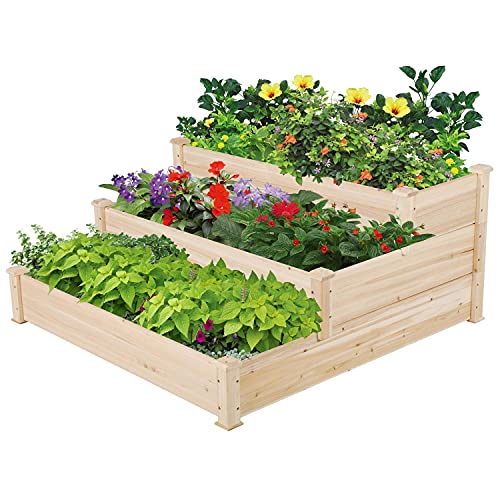
This elevated bed is built from natural fir wood without painting, offering a clean, sanding-finished surface for safe contact with plants and soil. The 0.6″ thick boards are joined with metal hardware for durability. Best for homeowners seeking a robust wood bed with a square footprint that fits mid-sized patios or backyards. The 3-tier design supports distinct planting zones, making it easier to manage herbs, leafy greens, and compact vegetables.
Who it’s best for: gardeners wanting a stable, wood-based option with vertical layering for organized crop planning. Why selected: it provides a straightforward three-tier structure that can be used as three separate beds if desired, thanks to wood-plug connections. Caution: wood can weather over time; consider applying a breathable sealant to extend longevity if used outdoors year-round.
VIVOSUN 3-Tier Wooden Raised Garden Bed

With three depths—21 inches, 14 inches, and 7.8 inches—the VIVOSUN unit accommodates crops with different root requirements. The kit supports two arrangement options: stack vertically as three tiers or lay sections flat for separate beds. This flexibility makes it well suited for gardeners who want to experiment with plant placement across varying root depths. The durable wooden construction pairs well with herbs, flowers, and vegetables alike.
Who it’s best for: urban growers who value depth variation to suit diverse crops. Why selected: the ability to reconfigure layouts saves space and adapts to new planting plans. Caution: ensure proper drainage and avoid over-watering, as deeper tiers can retain more moisture if not managed carefully.
SPECRAFT Raised Garden Bed 3-Tier

This fir-wood, trapezoidal planter emphasizes organization with built-in dividers to keep crops in separate sections. The three-tier arrangement provides a compact footprint while offering distinct planting zones ideal for vegetables, herbs, and flowering plants. The combination of fir panels and solid cedar posts delivers a natural aesthetic that blends with most outdoor spaces. The design is especially good for gardeners who want a decorative yet functional raised bed that fits a narrow balcony or porch area.
Who it’s best for: buyers seeking a tidy, organized layout with clearly separated planting zones. Why selected: the built-in dividers reduce intermixing of crops and simplify care. Caution: trapezoidal shape may be less stable on uneven ground; ensure a level surface during setup.
Yaheetech 3 Tier Wooden Raised Garden Bed (Gray)

This variation mirrors the first Yaheetech option with a gray finish, offering the same 3-tier design built from natural fir wood and metal hardware for durability. The neutral color can be an aesthetic fit for modern outdoor spaces while maintaining the same multi-tier planting flexibility. Best for gardeners who want a cohesive gray-toned planter that complements contemporary exteriors.
Who it’s best for: color-conscious buyers seeking a neutral, low-maintenance appearance. Why selected: redundancy in design allows comparison of finishes without sacrificing structure. Caution: confirm the grayscale finish holds up to weather and ensure proper support on soft or uneven ground.
Giantex 3-Tier Raised Garden Bed

The Giantex model features a three-tier planter with an open-ended base to enhance drainage and aeration. The solid fir wood construction offers durability and a natural aesthetic suitable for herbs, vegetables, and flowers. An open-ended base design helps prevent water stagnation, supporting healthier root systems in crowded patio or balcony settings.
Who it’s best for: gardeners prioritizing drainage and air circulation to support a variety of crops. Why selected: open-ended base reduces risk of root rot and moisture buildup. Caution: ensure top-tier soil capacity aligns with your plant load to avoid tipping on windy days.
Buying Guide: How To Choose Your 3-Tier Raised Bed
- Material and finish: Most options use fir wood with metal hardware. Unpainted wood looks natural but may weather; consider sealants or plan to store indoors during heavy rain seasons.
- Depth options: Deeper tiers support vegetables with larger root systems; shallower tiers suit herbs, greens, and ornamentals. If you grow a mix, prioritize beds with varied depths.
- Arrangement flexibility: Some models stack vertically, others offer two layout modes. Vertical stacking saves space; flat layouts maximize accessible planting areas.
- Drainage and aeration: Open-ended bases or well-drained designs prevent water logging. Ensure your surface is level to avoid wobbling or soil leakage.
- Assembly and stability: Look for solid side panels, integrated dividers, and secure hardware. A single-piece side plate design can improve stability and reduce leakage.
- Maintenance: Unpainted wood requires periodic treatment for longevity. Plan for seasonal checks and re-sealing if used outdoors year-round.
- Space and layout: Measure your intended space and compare to bed footprints. Consider how you will access plants for watering, pruning, and harvesting.
- Best use cases: For balconies and small patios, choose compact footprints with easy accessibility. For backyards, prioritize larger sizes with deeper tiers for a wider crop range.
Frequently Asked Questions
- Are 3-tier beds suitable for all climates? Yes, but you should choose wood that resists local weather and add weather protection if your climate includes heavy rain or intense sun. Regular maintenance helps prevent warping.
- Can I grow root vegetables in these beds? Yes, especially in deeper tiers. Plan for soil depth and drainage to support root development.
- Do these beds require assembly? Most models require assembly. Follow manufacturer instructions and tighten hardware to maintain stability.
- Is it better to lay out the tiers flat or stacked? Stacking saves space and encourages vertical gardening; laying flat creates three distinct beds that are easy to access from all sides.
- How do I prevent soil leakage? Look for beds with solid side panels or single-piece side plates and ensure a level installation surface.
- What plants are best for 3-tier beds? A mix works well: herbs and leafy greens on shallow tiers, and deeper tiers for vegetables with longer roots like carrots or peppers.