Looking for an easy, proven way to feed your lawn in three simple steps? This guide highlights five prime 3-step or closely related step programs that help establish, feed, and finish a healthy, green turf. Each choice targets common lawn goals—weed control, crabgrass prevention, and steady nutrient delivery—so you can pick the plan that best fits your yard type and climate. Below you’ll find who each product is best for, why it’s selected, and practical considerations to help you decide.
Summary table of selected products
- Scotts 23614 LawnPro Step 2 Weed Control Plus Lawn Fertilizer
- Scotts 4 Step Program Step 1 Crabgrass Preventer
- Scotts LawnPro Step 4 Lawn Fertilizer
- Jonathan Green Lawn Enhancement Fertilizer Program
- Turf Line Maximum Green Turf Fertilizer 22-0-8 (Step 3 Max Green)
Scotts LawnPro Step 2 Weed Control Plus Lawn Fertilizer

This Step 2 product is best for established lawns facing broadleaf weed pressure. It kills dandelions and other broadleaf weeds while feeding the lawn to build thick turf from the roots up. Choose this if your goal is weed suppression combined with steady green-up after a weed problem appears.
Who it’s best for: homeowners with a mid-season weed issue and a lawn that already has decent soil health. Why selected: it combines weed control with a fertilizer base from the same brand’s multi-step program.
Caution: application timing and rate matter to minimize lawn stress. Ensure you follow label directions to avoid potential burn on sensitive turf types.
Scotts 4 Step Program Step 1 Crabgrass Preventer
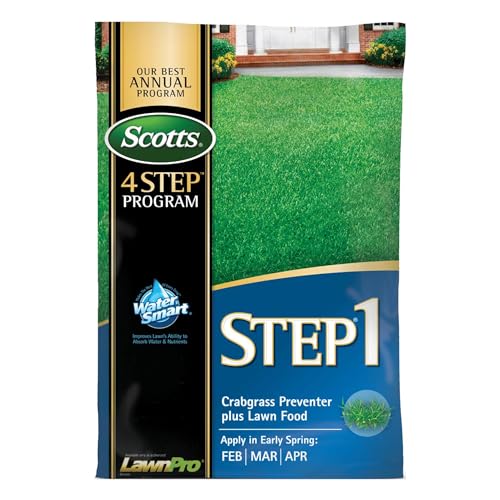
Step 1 is designed for early spring use to prevent crabgrass all season and provide a fast green-up after winter. It’s best for new or transitioning lawns that need proactive weed prevention alongside initial feeding.
Who it’s best for: new or newly established lawns, or yards with a history of crabgrass. Why selected: targets a known spring weed issue while jump-starting color and growth for the coming season.
Caution: crabgrass prevention products can impact newly emerging grass if applied too late or in oversized quantities. Adhere to the recommended patch size and timing windows for best results.
Scotts LawnPro Step 4 Lawn Fertilizer

This Step 4 product is designed for a deeper fall feed to toughen lawn health for the coming spring, with an easy-to-use application that supports a better green up next season. It’s best when your goal is long-term autumn conditioning.
Who it’s best for: homeowners who want a robust fall feeding to improve next year’s turf. Why selected: complements the earlier steps with a fall focus for winter resilience.
Caution: the product is manufactured in China, which may be a consideration for some buyers seeking U.S.-made options. Ensure you’re using appropriate equipment for even coverage.
Jonathan Green Lawn Enhancement Fertilizer Program

Designed for acidic lawns, this four-step program adjusts to soil needs: Step 1 is a crabgrass preventive and starter fertilizer, Step 2 is weed and feed, and Step 3 applies magnesium- and calcium-focused nutrients for soil chemistry. This program targets lawns that struggle with soil acidity and nutrient balance.
Who it’s best for: lawns with acidic soil where pH optimization is a goal. Why selected: explicitly tailored for acidic conditions and progressive lawn improvement.
Caution: the steps rely on soil-friendly timing; verify your soil pH before application to maximize effectiveness and avoid misalignment with plant needs.
Turf Line Maximum Green Turf Fertilizer 22-0-8 (Step 3 Max Green)

This Step 3 program emphasizes rapid color and a lush appearance, adding iron for deeper green color and UFLEXX stabilized nitrogen for consistent feeding across 6 to 8 weeks. It’s best for established lawns that need steady nutrition without frequent reapplication.
Who it’s best for: lawns needing a vivid green color and longer-lasting feeding. Why selected: strong iron content with slow-release nitrogen supports a rich, even color without frequent duties.
Caution: iron-containing formulas can stain hardscape and certain soils; water promptly after application and avoid runoff areas.
Buying Guide
Choose a program based on your lawn’s stage, soil health, and weed pressure. Consider these practical questions:
- What is my lawn’s current weed challenge? If broadleaf weeds are a problem, a weed-and-feed step can be valuable.
- Is crabgrass prevention a priority this spring? A Step 1 product with crabgrass preventive features is important for early-season control.
- What is my soil pH and nutrient needs? Programs tailored to acidic soils or featuring magnesium and iron can improve color and growth.
- Do I prefer a fall or spring emphasis? Fall feeds can boost winter hardiness and spring green-up, while spring feeds focus on early growth and weed management.
- How often do I want to apply fertilizer? Slow-release formulas reduce application frequency and lower the risk of burn.
Practical tips for successful use:
- Read and follow label directions precisely to avoid turf stress or chemical runoff.
- Water after application as recommended to help nutrient uptake and reduce leaf burn.
- Match product timing to the local climate and your lawn’s growth cycle for best results.
FAQ
- What is a “step” fertilizer program? A sequence of fertilizer products designed to feed the lawn at different times of the year, often including weed control and crabgrass prevention.
- Is a 3-step program suitable for all lawns? It depends on lawn type, soil, and weed pressure. Some yards may require more or fewer steps.
- Can I mix steps from different brands? Mixing is not recommended unless the labels explicitly state compatibility.
- What should I do if my lawn shows signs of fertilizer burn? Stop application, water deeply, and consult product labels or a local extension service for guidance.
- Which step should I start with in early spring? Start with crabgrass prevention and starter feeding if your area tends to have crabgrass issues, then address weeds and nitrogen needs in subsequent steps.
- Are these programs suitable for acidic soils? Some programs target acidic lawns; testing soil pH helps you pick the most appropriate products.