Answering the need for reliable, multi-zone irrigation, these 3-outlet water timers deliver independent scheduling for different garden areas. They’re ideal for homeowners with separate zones such as lawn, flower beds, and vegetable plots. This guide highlights five strong choices, focusing on durability, ease of use, and water-saving features.
Summary table of selected products:
| Product | Brand | Key Benefit |
|---|---|---|
| RAINPOINT 3 Zone Water Timer | RAINPOINT | Durable with IP65 waterproofing; three independent zones |
| Insoma 3-Zone Sprinkler Timer | Insoma | Flexible schedules per zone; large LCD |
| Orbit 56082 Digital Hose Timer | Orbit | Simple digital programming; rain delay |
| MOES 3 Zone Water Timer | MOES | Brass construction; sequential outlet operation |
| XinFuture 3-Zone Timer | XinFuture | Full 3-outlet control; clear LCD with zone switching |
RAINPOINT 3 Zone Water Timer with Brass Inlet
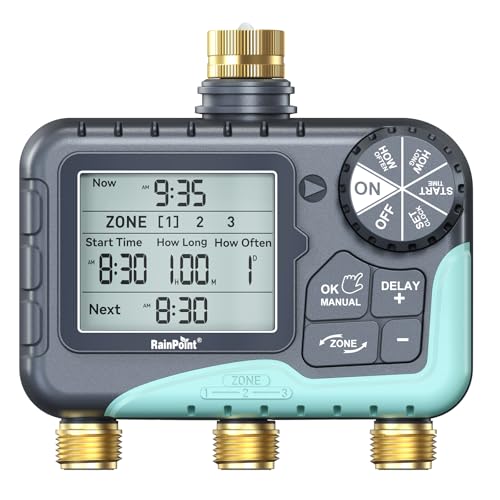
Best for: Homeowners seeking a robust, weather-resistant timer for three independent zones. Why selected: It uses upgraded metal outlets and a coil valve for stable flow and reduced leakage, plus IP65 waterproofing. Each zone can be programmed 1 minute to 8 hours and frequencies from 1 hour to 7 days. A rain delay of 24/48/72 hours helps conserve water.
Limitation: While highly durable, a larger unit may require careful mounting on tight outdoor fixtures. The device is best when installed on sturdy spigots with compatible hose connections.
Insoma 3-Zone Sprinkler Timer with Brass Inlet

Best for: Gardeners needing three independent schedules per zone with a large display. Why selected: It supports three zones with customizable start times, durations (up to 360 minutes), and frequencies from hourly to every 30 days. The manual watering mode allows immediate irrigation without disturbing presets.
Limitation: Programming can be more involved due to multiple options; beginners may need to review the manual to maximize efficiency.
Orbit Programmable Digital Hose Watering Timer (3 Outlet)
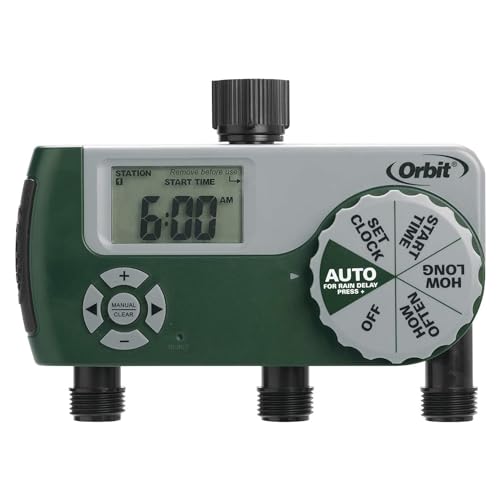
Best for: Homeowners who want simple digital programming and built-in rain delay. Why selected: This Orbit timer converts a faucet into an automatic watering system with an LCD display for easy setup and water-savings through a consistent schedule. It supports a single outlet in its base form but combines with multi-outlet models for larger zones, aided by a straightforward interface.
Limitation: Some users may prefer independent zone control across three outlets in a single device; consider Orbit models designed specifically for multi-valve operation if that’s a priority.
MOES 3 Zone Water Timer for Garden Hose

Best for: Gardens needing durable brass hardware and sequential watering for maximum pressure. Why selected: It uses 100% solid brass inlet and outlets, is weather-resistant, and runs zones sequentially rather than simultaneously to preserve water pressure. Zones can be set independently with programable start times, durations up to 360 minutes, and 30-day maximum frequency. A large LCD aids setup.
Limitation: Some configurations may require precise pressure management; ensure your hose system can support sequential flow without pressure drop.
XinFuture 3-Zone Water Timer
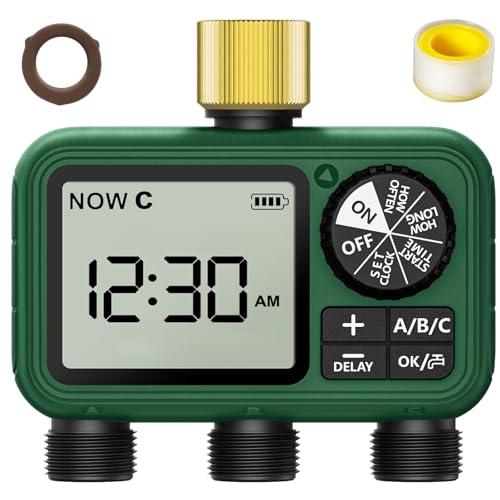
Best for: Users who want a full-featured three-zone controller with a bright, easy-to-read display. Why selected: It supports auto, manual, and rain delay modes with a straightforward dial-based setup. It features a durable brass inlet, a built-in filter, and a seal ring to protect against moisture. Zone switching is simple via a zone selector, and the device requires no special tools for 3/4” faucets.
Limitation: The unit relies on three separate outlets; verify your hoses and sprinkler heads are compatible with three independent lines and flow requirements.
Buying Guide: How to Choose a 3-Outlet Water Timer
- Durability and weather resistance: Look for brass inlets and outlets, metal valves, and IP-rated enclosures for longevity in sun, rain, and heat.
- Independent zone control: Confirm each outlet can run on its own schedule with separate start times, durations, and frequencies.
- Water efficiency features: Rain delay, weather resistance, and dry-run protection help prevent overwatering and save water.
- Ease of programming: A clear LCD, large digits, and intuitive menus reduce setup time and errors.
- Manual and rain-delay modes: Manual override is useful for spot watering; rain delay is essential during wet periods.
- Installation compatibility: Check inlet size (1/2” or 3/4”), thread type, and hose connections to avoid leaks.
- Power options: Battery-powered units offer independence from mains power but require battery maintenance; solar-assisted or battery-backed models ensure reliability in remote spots.
Frequently Asked Questions
- Do 3-outlet timers water zones simultaneously? Some models water zones sequentially to preserve water pressure, while others may allow independent timers for each outlet. Check product descriptions for sequencing details.
- What is the typical rain delay range? Most timers offer 24, 48, or 72 hours, with some models extending into longer delays to protect plants after rainfall.
- Are brass inlets necessary? Brass is more durable and leak-resistant than plastic, especially in hot sun and cold weather. It is generally a good long-term choice.
- Is Wi-Fi required for these timers? The majority of 3-outlet timers operate without Wi-Fi, using manual or preset schedules. Wi-Fi-enabled options exist but aren’t always necessary for basic irrigation.
- How do I prevent leaks at connections? Use the supplied washers, consider thread sealant appropriate for outdoors, and ensure all connections are snug but not over-tightened.
- Which timer is best for beginners? Models with simple digital controls and large LCDs tend to be easier for first-time users, while still offering independent zone control.