Looking for a reliable 24-inch walk-behind mower that matches your pace and yard needs? This guide compares top 24-inch push-and-self-propelled models, highlighting each mower’s strengths, ideal buyers, and potential limitations. Ideal for mid-sized lawns, this selection helps you choose between CVT-driven guides, rugged rough-cut decks, and Honda-powered reliability. The buyers most likely to benefit are those who want faster mowing with consistent speed, improved traction on uneven terrain, and easier starting in varying weather.
Summary of selected products:
| Product | Key Benefit | Best For |
|---|---|---|
| YARDMAX 24 in. 201 cc CVT Walk-Behind | 6-speed CVT, auto choke, smooth deck | Speed-matching to walking pace; medium lawns with varied terrain |
| YARDMAX 22 in. 201cc CVT Walk-Behind | 6-speed CVT with aggressive tread tires | Steady pace and traction on tighter spaces |
| Swisher Predator 24 in. Rough Cut | Rough-cut deck, reverse, tall grass capability | Rugged terrain and brush clearing |
| Swisher 24 in. Commercial Pro Honda | Honda engine, 4-speed with reverse | Professional-grade performance on varied fields |
| Earthwave 24 in. Walk-Behind (example) | Durable deck, reliable cutting width | Balanced daily yard maintenance |
YARDMAX 24 in. 201 cc CVT High Wheel Walk-Behind

This 24-inch mower uses an exclusive CVT (continuously variable transmission) to match your walking speed with six selectable gears. The automatic choke simplifies starting, removing the need to prime or choke the engine. A one-piece steel deck provides durability and reduced vibration for a smoother mowing experience. Best for homeowners who want a larger cut width without sacrificing control on gentle slopes.
Who it’s best for: homeowners who prefer seamless speed control and straightforward starting. Why selected: the CVT design offers precise pace management to reduce fatigue over long sessions. Caution: CVT systems require periodic maintenance to maintain smooth transitions and may have higher service needs than basic push mowers.
YARDMAX 22 in. 201cc CVT Walk-Behind
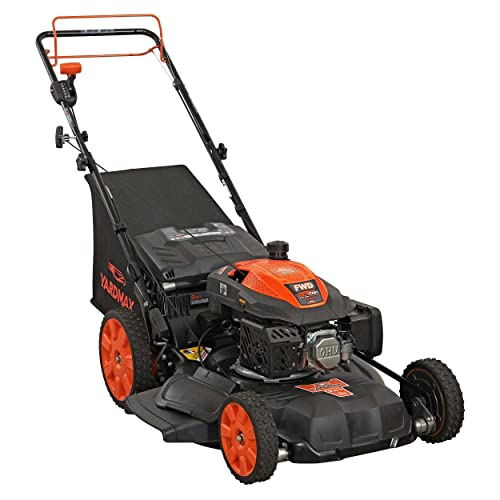
This 22-inch model shares the same CVT technology for six-speed speed selection and features aggressive rubber tires with a spiked tread pattern for improved traction in challenging lawns. The automatic choke makes starting easier, reducing effort on cooler mornings. Best for: users who need reliable traction and smooth acceleration in tighter spaces. Why selected: compact footprint with CVT keeps pace consistent without overwhelming smaller yards. Caution: slightly narrower cut width than 24 inches may require more passes on dense growth.
Swisher Predator 11.5 HP 24 in. Rough Cut

Swisher’s 24-inch rough-cut mower uncorks saplings up to 1.5 inches and features a 24-inch deck with a four-speed transmission plus reverse. Cutting height ranges from 3 to 4.75 inches, making it adaptable for varied terrain. Best for: property owners dealing with brush and small saplings in fields or overgrown edges. Why selected: strong cutting capacity in a compact form, ideal for rugged sites. Caution: rough-cut decks may require more frequent maintenance in brushy areas and could be louder than standard mowers.
Swisher 24 in. Commercial Pro Honda Walk Behind

This 24-inch Honda-powered walk-behind is built for professional-grade performance with a recoil start system and a 4-speed transmission including reverse. The broad deck supports efficient coverage for larger yards and fields with even terrain. Best for: homeowners or professionals requiring dependable, long-lasting power with easy starting. Why selected: Honda engines are known for reliability and smooth operation in a commercial-grade frame. Caution: heavier weight may be challenging for users who prefer ultra-lightweight tools or frequent stowage in small sheds.
Earthquake Walk-Behind String Mower (Model #40314)
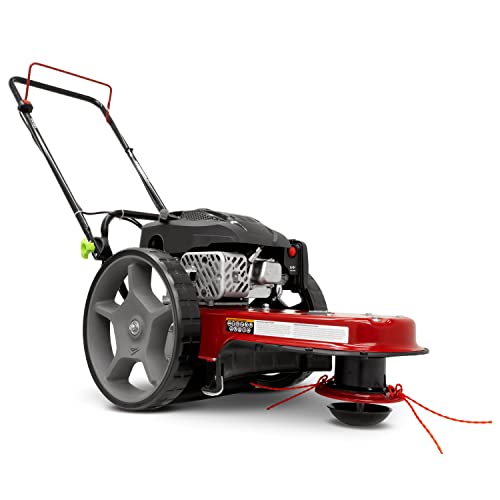
Earthquake offers a 160cc Viper 4-cycle engine powering a 22-inch cutting width with large never-Go-Flat wheels. The one-piece steel deck reduces vibration, while a nylon line and 22-inch cutting swath get work done quickly. Best for: yards needing a string mower with robust wheel design and stable cutting in varied grass conditions. Why selected: strong engine and wheel design address tougher ground, though it runs a bit narrower than 24 inches. Caution: not a traditional blade mower, which may affect cut consistency in very tall or thick grass.
Buying Guide
What cut width do you actually need?
A wider deck (24 inches) covers more ground per pass, reducing total mowing time on larger lawns. If your yard has tight corners or narrow gates, a 22-inch option may offer better maneuverability without sacrificing overall efficiency.
Is an automatic choke or CVT right for you?
Automatic choke simplifies starting, especially in cool mornings. CVT (continuously variable transmission) lets you dial in a precise pace to match your walking speed, reducing fatigue. If you value simplicity, a traditional push mower may suffice; for speed control, CVT is advantageous.
Power source considerations
Gas engines provide quick, strong cutting power for thick or tall grass, but require maintenance and fuel. Battery-powered options offer quiet operation and low emissions but may limit runtime. For 24-inch decks, gas-powered models are common, while occasional hybrid approaches exist in higher-end lines.
Terrain and terrain health
Rough-cut decks (like some Swisher models) excel at brush and saplings but may produce a rougher finish on groomed lawns. If your yard has uneven terrain, look for large-diameter wheels and a stable steel deck. For flat, neat lawns, standard decks with a wider cut width are ideal.
Maintenance and serviceability
Consider how easy it is to service the engine, replace blades, and obtain parts locally. Honda engines, known for reliability, often command service network ease. CVT components require periodic adjustment to maintain smooth operation. Check local support options before purchase.
Storage and weight considerations
Heavier 24-inch models offer durability but may challenge storage in small sheds or garages. If space is limited, consider a lighter 22-inch variant or a model with a foldable handle for easier stowage.
Best value by yard type
- Rugged brush and rough terrain: Swisher Predator 24 in Rough Cut
- Large, open lawns and speed-focused mowing: YARDMAX 24 in CVT
- Best overall balance: Swisher Commercial Pro Honda 24 in
- Compact yards and tighter spaces: YARDMAX 22 in CVT
- Budget-friendly option with practical power: Earthquake 22/24 in line (where available)
Maintenance tips
- Check blade height and alignment before each season.
- Keep air vents and cooling surfaces clear of debris.
- Replace spark plugs and filters as recommended by the manufacturer.
- Lubricate moving parts where specified in the user manual.
Frequently asked questions
- What is the advantage of a 24-inch deck?
It covers more ground per pass, reducing mowing time on mid-sized to large lawns.
- Do CVT mowers require special maintenance?
CVT units need periodic inspection and adjustment, but generally offer smoother operation with proper care.
- Are gas mowers louder than electric ones?
Gas models typically produce more noise and emissions; electric models are quieter but may have runtime constraints.
- Is a self-propelled mower better than a push mower?
Self-propelled mowers reduce user effort on slopes and thick grass, beneficial for larger yards or users with limited strength.
- What should I consider when choosing 24-inch vs 22-inch?
Choose 24-inch for faster coverage on wide lawns; choose 22-inch for tighter spaces and better maneuverability.
- Can I use a 24-inch mower for heavy brush?
Rough-cut or multi-gear models are better suited for brush; standard decks can struggle with thick growth.