Looking for a reliable pull-behind aerator spreader combo to seed, fertilize, and aerate in fewer passes? This guide reviews five top options, highlighting who they’re best for, what makes them stand out, and any potential limitations. Whether you’re maintaining a small yard, a large estate, or a commercial landscape, these tow-behind units are designed to attach to lawn tractors or utility vehicles, delivering efficient aeration and precise material distribution. The following picks emphasize durability, ease of use, and clear flow control to help you choose the right model for your needs.
Overview of selected products:
- Agri-Fab 100 lb Tow-Behind Lawn & Garden Spiker/Seeder/Drop Spreader
- Brinly AS2-40BH-P Tow Behind Combination Aerator Spreader
- Suchtale Upgrade 40-Inch Tow Behind Spiker Seeder
- EarthWay 2050P 80lb Broadcast Spreader
- Brinly BS36BH-A Tow Behind Broadcast Spreader with Universal Hitch
Agri-Fab 100 lb Tow-Behind Aerator & Spreader

This unit is best for homeowners with mid-sized lawns who want a simple, all-in-one tow-behind tool. It combines an aerator with spike disks and a 100 lb hopper for seeds or fertilizer, enabling you to water-and-aerate and spread materials in one pass. The 32-inch working width helps cover more ground per pass while maintaining control. The 8 galvanized steel spike disks provide thorough aeration, which is especially helpful in compacted soils or clay-heavy lawns. It’s an ideal choice for users prioritizing durability and American-made construction.
Who this is best for: Homeowners with medium lawns who value a US-made build and a straightforward aeration-and-spread workflow.
Why selected: The high-capacity hopper and integrated aeration features streamline lawn maintenance, reducing multiple passes. The 32-inch width balances speed with maneuverability on typical residential lots.
Caution/limitation: While versatile, users should verify tractor compatibility and ensure the pull setup remains balanced to prevent scuffing on delicate turf during operation.
Brinly AS2-40BH-P Tow Behind Combination Aerator Spreader

This is best for lawn care enthusiasts who want a dedicated aeration feature paired with a spreader on a single attachment. The 40-inch working width and the combo design maximize efficiency by dropping seed, fertilizer, or lime while aerating, speeding up lawn renovation projects. The included weight tray supports up to 75 pounds, boosting soil penetration depth in tougher soils. Brinly’s 3-D tines provide extra strength and rust resistance for longer service life.
Who this is best for: Gardeners and lawn pros who frequently aerate and spread in one pass and need deeper soil penetration with a robust build.
Why selected: The 2-in-1 capability reduces trips and adjustments, while the weight tray and new tines improve performance on compacted soils. The design prioritizes durable materials to withstand regular outdoor use.
Caution/limitation: Heavier setups may require a broader operating space and careful trailer hitch alignment, especially on smaller properties or hills.
Suchtale Upgrade 40-Inch Tow Behind Spiker Seeder
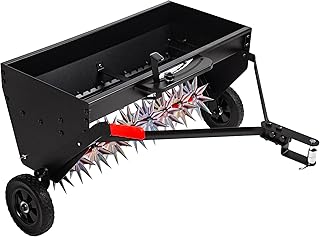
This option is best for buyers who want a dual-function machine with precise flow control and a large 32-inch spreading width. The dual functionality of spike aeration and seed/fertilizer spreading saves time and simplifies maintenance tasks. It uses a high-quality steel agitator to prevent clumping, and nine star-shaped 3D tines deliver deeper penetration into the soil. With infinitely adjustable flow control and a spacious all-steel hopper, it supports reliable performance across varied lawn conditions.
Who this is best for: Homeowners with larger lawns who need precise material distribution and deeper aeration in a single pass.
Why selected: The combination of a large hopper, wide spread, and robust aeration tines makes it versatile for different lawn materials and soil conditions. It emphasizes consistent flow and reduced clumping for better results.
Caution/limitation: The unit’s complexity may require careful setup and calibration to ensure optimal flow and aeration depth, especially for first-time users.
EarthWay 2050P 80lb Broadcast Spreader
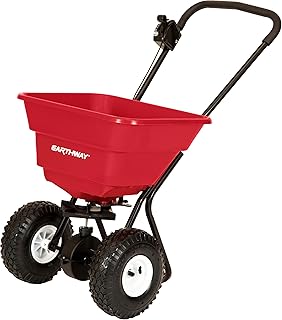
This option is best for larger lawns and commercial setups needing a sturdy, pre-assembled spreader with adjustable drop rate and a rustproof hopper. EarthWay’s 80 lb capacity supports moderate to large treatment runs, while the pre-assembled design simplifies setup. The mower-friendly build and compatibility with standard tow hooks make it a practical choice for frequent aeration and spreading tasks. It’s a solid middle-ground pick when you want reliable distribution without additional assembly time.
Who this is best for: Property owners who value a ready-to-use, durable spreader for medium-to-large lawns and frequent lawn maintenance tasks.
Why selected: The combination of pre-assembly, adjustable drop rate, and corrosion-resistant hopper supports consistent material flow and reduces downtime between applications.
Caution/limitation: The listing notes do not provide IRT ratings; confirm hitch compatibility and flow control accuracy for your specific materials before operation.
Brinly BS36BH-A Tow Behind Spreader

This spreader is best for users who need a high-capacity option for large yards. The 175 lb.+ hopper capacity supports extended spreading sessions without frequent refills, making it suitable for big lawns or commercial properties. Features include a durable poly hopper, stainless steel hardware, and an enclosed nylon gearbox with glass-filled nylon gears for longevity. The patented autoflow system helps stop material when the tractor stops, reducing waste and avoiding burns common with lower-end models.
Who this is best for: Large properties, holiday/seasonal maintenance crews, or anyone who appreciates a high-capacity, durable tow-behind spreader with smart flow control.
Why selected: Its large capacity and durability, combined with autoflow spread pattern control, deliver efficient coverage with less downtime and more precise application.
Caution/limitation: The large hopper and sturdy build add weight, so ensure your tractor can handle the load and that turning radii are sufficient for your terrain.
Buying Guide
Key considerations when choosing a pull-behind aerator spreader:
- Soil and lawn size: Small yards may benefit from 40–80 lb hoppers, while large lawns and commercial sites justify 100–175 lb capacities for fewer refills.
- Aeration depth and width: Look for 32–40 inch working widths for efficient coverage and deeper soil penetration, especially on compacted soil. 3-D or star-shaped tines can improve depth and durability.
- Flow control accuracy: Infinitely adjustable or clearly marked flow controls help reduce waste and ensure even distribution of seed, fertilizer, and lime.
- Hopper and hardware materials: Powder-coated steel, reinforced galvanized components, and corrosion-resistant plastics extend life in harsh weather and with corrosive materials.
- Compatibility and hitch: Confirm tractor or ATV compatibility, hitch type, and weight limits to prevent strain on equipment and ensure smooth operation.
- All-in-one vs. modular: Combination aerator/spreader units save time but may require more setup. Separate aerators and spreaders offer flexibility if you already own one component.
- Maintenance needs: Look for units with simple disassembly for cleaning, and check blade/tine durability and replacement availability.
FAQ
- What is the main advantage of a tow-behind aerator spreader?
– It combines soil aeration with material distribution, reducing trips across the yard and saving time on lawn care tasks. - What’s the best width for a residential lawn aerator and spreader?
– A 32–40 inch working width typically balances coverage with maneuverability on typical suburban lots. - Are larger hopper capacities worth it for small yards?
– Not always; larger hoppers reduce refills but add weight. Consider yard size and tractor capacity when choosing. - How important are tines and material compatibility?
– Durable tines improve aeration depth and resistance to bending; ensure the unit handles your chosen seeds, fertilizer, or lime. - What maintenance does a tow-behind unit require?
– Regularly inspect tines and gears, keep hoppers clean, and confirm flow control remains accurate after use. - Can I use these on hilly terrain?
– Yes, but ensure proper hitch stability and distribute weight to avoid tipping or excessive wheel slip on slopes.