For backyard farmers, an automatic feeder can save time, reduce waste, and keep your flock fed consistently. This guide highlights five reliable options that balance capacity, durability, and no-waste design. Suitable buyers include small-to-mid sized homesteaders, those with daily schedules that limit feeding time, and poultry keepers looking to minimize mess and rodent access.
The following quick-reference table summarizes the five products selected for this guide. Use it to compare capacity, key features, and ideal user type at a glance.
| Product | Capacity | Key Feature | Best For |
|---|---|---|---|
| AOTECC Metal Chicken Feeder | 40 lb | Weatherproof, 6 feeding ports, locking lid, legs | Medium to large flocks; outdoor or coop use |
| ZenxyHoC No Waste Feeder | Bucket-based, various sizes | Rainproof cover, gravity feed, plugs for night | Coops with variable feeders; rain-prone areas |
| TGEYD 50LB Automatic Feeder | 50 lb | 8 ports, no-waste design, rainproof | Larger flocks; longer intervals between fills |
| YENAM 40 lb Feeder | 40 lb | 6 ports, adjustable height, rodent-proof | Busy homesteads needing reliability |
| Briidea Automatic Feeder Timer | Depends on setup | Programmable timer, long operation options | Owners who want scheduled feedings |
AOTECC Metal Chicken Feeder, 40lb
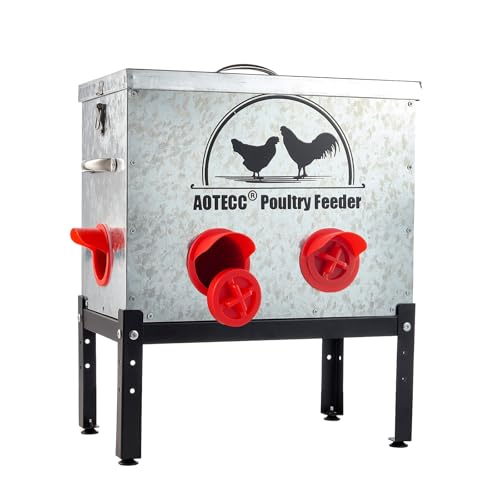
AOTECC offers a robust 40-pound capacity feeder designed for outdoor or indoor coops. The 8mm galvanized steel body resists rust and weather, making it suitable for year-round use. Six feeding ports allow several birds to eat at once, reducing competition. A built-in locking lid helps deter pests, and the included legs keep the feeder stable on uneven ground. This model is best for medium to large flocks that need dependable, long-lasting performance without frequent refills.
Best for: Farmers who want a durable, weatherproof feeder with multiple feeding ports and a secure lid. Choose this if you keep geese or ducks alongside chickens and need a sturdy, long-term solution. Caution: Assembly and installation should consider outdoor weather exposure to maintain longevity.
ZenxyHoC No Waste Feeder Kit

ZenxyHoC presents a gravity-based, no-waste design with a downward-facing feed opening to minimize spill. The kit includes plugs for nighttime use to block access when not feeding and a rainproof cover with a rubber gasket to keep feed dry in wet conditions. Its 3.15-inch diameter hole supports straightforward feeding behavior, making it a versatile option for various coop setups. This feeder suits keepers who prize cleanliness and reduced waste as well as flexibility for indoor or outdoor placement.
Best for: Those seeking a simple, cleaner feeding solution that limits waste and protects feed from rain. Use this if you want a plug-and-play option with built-in rain protection. Limitation: It relies on gravity feed, so chickens must actively access the opening for consistent delivery.
TGEYD 50LB Large Automatic Feeder

The TGEYD model provides a sizable 50-pound capacity with eight feeding ports to reduce competition during meals. The no-waste design mirrors other gravity-feed concepts, and the unit is designed to be rainproof with a secure seal to keep feed dry during wet conditions. It is particularly well-suited for medium-to-large flocks and for keepers who prefer fewer fill-ups between refills.
Best for: Flock managers who need a larger capacity and multiple ports for calmer feeding dynamics. Caution: Ensure the stand or placement allows easy access for all birds to avoid crowding around a single port.
YENAM 40 lb Automatic Feeder

YENAM’s 40-pound feeder emphasizes a heavy-duty metal construction with a locking lid and an adjustable-height base for different poultry sizes. The design claims rodent-proof features and a 6-port configuration to support busy runs. This option is ideal for homesteaders who anticipate longer intervals between refills and a need to adapt feeding height as birds grow.
Best for: Busy farms needing reliable rodent protection and adaptable height for flocks of varying ages. Limitation: While described as rodent-proof, it still benefits from a secure installation to maximize effectiveness against pests.
Briidea Automatic Feeder Timer

Briidea’s timer-based feeder focuses on programmable, precise dispensing up to six feedings per day. The spin plate is galvanized steel for durability, and the housing uses flame-retardant ABS plastic. The kit offers flexibility with power options, including a solar-ready setup and standard battery power, plus a low-battery indicator. This option suits owners who want strict feeding schedules and energy efficiency for longer deployments.
Best for: Operators who want automated timing and precise portions, especially when travel or irregular schedules are common. Limitation: Timed feeding requires setup and may be less intuitive for new users.
Buying Guide: Key Considerations For Your Automatic Feeder Purchase
- Capacity vs. flock size: Choose capacity that matches how often you can refill. Larger flocks benefit from higher pounds of feed per unit.
- Waste reduction: No-waste designs rely on gravity and dividers. Confirm compatibility with your flock’s eating behavior to prevent spill concerns.
- Durability and placement: Metal bodies resist rust and weather better than plastic in damp climates. Consider indoor vs. outdoor installation and pest protection features.
- Ports and accessibility: More ports reduce crowding but may require higher maintenance to keep ports clean. Age and size of birds influence which port count is ideal.
- Weather protection: Rainproof covers, seals, and gaskets help keep feed dry. This matters in rainy or humid environments.
- Power options: Some models rely on batteries or solar power, while others are manual or gravity-fed. Evaluate how you power the feeder in your setup.
- Ease of assembly and mounting: Look for clear instructions and flexible mounting options (hanging, wall-mounted, or stand-based) to fit your coop layout.
- Security against pests: Locking lids and rodent-proof bases help keep feed secure from rodents and wildlife. Consider bin design and access points.
Practical Tips For Using An Automatic Feeder
- Place feeders away from roosting zones to reduce contamination and waste.
- Regularly inspect seals and covers to preserve feed quality.
- Adjust height as birds mature to maintain comfortable access.
- Combine with proper coop cleaning to maximize the feeder’s effectiveness.
Frequently Asked Questions
- Do automatic feeders really reduce waste? Yes, most models with no-waste design direct feed to ports and minimize spillage when used as intended.
- What capacity is best for a small flock? A 20–40 pound feeder is typically adequate for up to 10–20 birds with several days between fills, depending on feed type and consumption.
- Are these feeders rodent-proof? Many models advertise rodent protection, but securing the feeder and keeping feeds in sealed containers enhances effectiveness.
- Can I use these indoors? Several options are suitable for indoor coops or barns; ensure the location has stable mounting and weather protection if used outdoors.
- How do I choose between timer and gravity feeders? Timers suit scheduled feeding and energy management; gravity feeders are simpler, often more durable, and rely on feed flow.
- Is installation difficult? It varies; some kits require DIY mounting or drilling. Check included hardware and mounting options before purchase.