Answering the question “what is the best organic insect killer for plants?” this guide highlights five effective, plant-friendly options. These products are suitable for organic gardening, indoor houseplants, and outdoor gardens. They’re prepared to help control common pests like aphids, mites, whiteflies, gnats, and more without harsh chemicals. The top picks vary in target pests, usage areas, and application style, so the right choice depends on your plants, space, and harvest needs.
The table below provides a quick reference to the five featured products, including typical use case and where they work best. Use this as a buying quick-glance before diving into each product’s details.
| Product | Best For | Where To Use | Key Benefit |
|---|---|---|---|
| Garden Safe Brand Insecticidal Soap | General pests on vegetables, ornamentals, and fruits | Indoors, outdoors, greenhouses | Ready-to-use spray; no mixing |
| BioAdvanced Organics Brand Insect Killer for Houseplants | Indoor houseplants | Inside homes | OMRI-listed; fast-acting |
| Bonide Insecticidal Soap | Outdoor and ornamental plants | Gardens, lawns, greenhouses | Direct-contact control for many pests |
| Mighty Mint Peppermint Oil Plant Protection Spray | Plant protection with essential oils | Indoor and outdoor plants | Plant-based formula |
| Earth’s Ally 3-in-1 Plant Spray | Insects and diseases | Indoor and outdoor gardens | Three-in-one for insecticide, miticide, fungicide |
Garden Safe Brand Insecticidal Soap Insect Killer (32 oz)

Best for broad-spectrum, contact-based control on edible and ornamental plants. This ready-to-use soap kills pests by direct contact and is suitable for organic gardening. It’s particularly effective against soft-bodied insects like aphids, whiteflies, and spider mites when pests are present on leaves and stems. This option is ideal for gardeners who want a simple, no-mix solution that works quickly on a range of plant types, including indoor houseplants and outdoor ornamentals.
Who it’s best for: Home gardeners seeking a ready-to-use, organic-approved spray for immediate pest relief across vegetables, fruit trees, and ornamentals. Choose this if you prefer a straightforward spray without dilutions and you need quick knockdown on contact.
Why selected: It provides direct-contact kill for many common pests and is labeled for organic gardening, including use near edibles. The product’s coverage of undersides of leaves helps ensure pests hiding on the bottom surface are reached.
Caution: For edible crops, apply per label directions and harvest days. Pests must be sprayed directly to achieve control; coverage is essential for effectiveness.
BioAdvanced Organics Brand Insect Killer for Houseplants (24 oz)

Best for indoor plant pests with fast action and organic certification compatibility. This ready-to-use spray is formulated for houseplants and is OMRI-listed, making it a reliable option for indoor gardeners pursuing organic practices. It targets a broad range of insects and provides quick knockdown, helping maintain healthy houseplants with minimal fuss.
Who it’s best for: Indoor plant owners who want a fast-acting insect killer that aligns with organic gardening standards and is safe for most houseplants when used as directed.
Why selected: Its OMRI-listed status supports organic-use goals, and the formula is designed for rapid control of common indoor pests like aphids, whiteflies, and scale on indoor greenery.
Caution: As with all indoor sprays, test on a small leaf area first to check for any phytotoxic response on sensitive plant varieties.
Bonide Insecticidal Soap (32 oz)
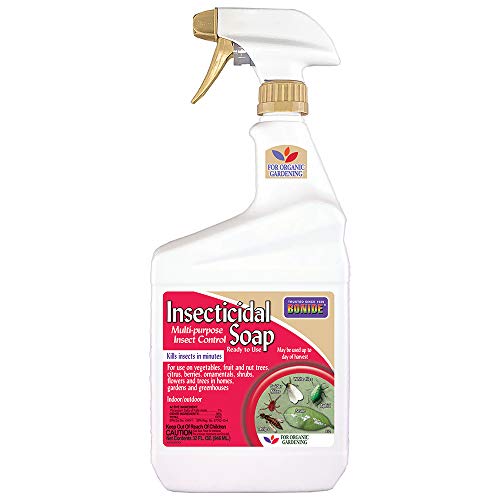
Best for outdoor residential use on a wide range of crops and ornamentals. Bonide’s insecticidal soap is designed for use on vegetables, herbs, fruit trees, and ornamentals, spraying directly on insects or allowing leaf-feeding pests to ingest the spray. It works by contact and ingestion, which can be helpful for rapid pest knockdown on leaf surfaces and stems.
Who it’s best for: Gardeners needing a versatile, outdoor-ready soap that covers diverse plant types—from vegetables to berries and ornamentals—without complex mixing.
Why selected: It’s effective against many soft-bodied pests and suitable for outdoor use in home gardens and greenhouses, offering broad application coverage.
Caution: Ensure thorough coverage for best results; direct contact and ingestion are required for control, so complete leaf surface spraying is important.
Mighty Mint Peppermint Oil Plant Protection Spray (16 oz)

Best for plant-based pest deterrence with a focus on peppermint oil. This spray uses plant-derived ingredients to deter common pests such as gnats, spider mites, and aphids. It’s a good option for gardeners who prefer essential-oil-based products and want to avoid harsher chemicals while maintaining plant health.
Who it’s best for: Indoor and outdoor gardeners seeking a peppermint-oil-based solution that emphasizes fragrance-free or lightly scented plant protection and avoids synthetic pesticides.
Why selected: The peppermint oil formula provides a natural deterrent and supports healthier plants without strong chemical treatments. It’s a practical choice for those wary of synthetic residues.
Caution: As with essential-oil products, follow dilution and application directions to prevent potential leaf burn on sensitive plant varieties.
Earth’s Ally 3-in-1 Plant Spray (32 oz)

Best for a combined approach to pest and disease control. Earth’s Ally 3-in-1 Plant Spray functions as an insecticide, miticide, and fungicide, offering a multi-faceted defense for plants facing multiple threats. Its essential oil blend targets soft-bodied insects and helps prevent common diseases in a single application.
Who it’s best for: Gardeners who want a single spray to tackle both pests and fungal issues, especially in mixed indoor/outdoor spaces or greenhouses.
Why selected: The three-in-one approach reduces the need to rotate products and simplifies care for plant health, particularly in environments with diverse pest pressures.
Caution: Effectiveness may vary with pest type and disease pressure; follow label directions for safe use around pollinators and pets when applicable.
Buying Guide: Key Considerations For Organic Plant Pest Control
- Target pests: Identify the primary pests (aphids, mites, gnats, whiteflies) to choose the most effective product. Some formulas excel on soft-bodied insects, others on fungal issues.
- Usage environment: Indoor houseplants vs. outdoor gardens require different formulations and safety considerations. OMRI-listed options support strict organic standards for certain uses.
- Spray vs. concentrate: Ready-to-use sprays are convenient, but concentrates can be economical for larger areas. Ensure correct dilution if using concentrates.
- Plant safety: Test on a small leaf area first, especially for sensitive ornamentals or edible crops. Some essential-oil-based products can cause leaf burn if overapplied.
- Residue and harvest: Pay attention to up-to-harvest guidance for edible crops. Some products allow application up to day of harvest, while others require a pre-harvest interval.
- Non-target safety: Consider safety for humans, pets, and pollinators. Look for formulations that minimize risks when used as directed.
- Storage and handling: Store in a cool, dry place away from sunlight to maintain product integrity. Follow label directions for storage and disposal.
Frequently Asked Questions
- What is an organic insect killer for plants?
Organic insect killers use natural ingredients or approved substances that comply with organic gardening standards. They control pests primarily through contact, deter pests with scents or oils, or combine insecticidal and fungicidal actions without synthetic chemicals.
- Can I use these products on edible crops?
Many are labeled for use on edibles up to the day of harvest. Always follow the product label and local regulations to ensure safe consumption.
- Are essential-oil sprays safe for all plants?
While generally safer than synthetic pesticides, essential-oil sprays can cause leaf burn on sensitive varieties if misused. Test on a small area first and avoid excessive applications.
- How do I choose between a ready-to-use spray and a concentrate?
Ready-to-use sprays are convenient for spot treatments and smaller areas. Concentrates are more economical for large gardens but require correct dilution and mixing per label instructions.
- Is a 3-in-1 spray better than single-function products?
It can simplify care when dealing with multiple issues (insects and disease). However, if you have specific pest pressures, a product targeting those pests may be more effective.
- What about safety around pets and pollinators?
Follow label directions regarding re-entry intervals and application timing to minimize exposure to beneficial insects and pets.