Answering the need for efficient backyard composting, this guide highlights the best large wooden compost bins and sturdy outdoor units, plus solid indoor options for kitchen scraps. The top picks are ideal for gardeners and homeowners who want year‑round decomposition, strong airflow, and easy access. The listed products are chosen to balance capacity, durability, and ease of use. The table below compares five strong options to help you decide which bin fits your space and composting goals.
| Product | Material/Capacity | Best For |
|---|---|---|
| SOCOME 115 Gallon Solid Wood Composter | Canada Spruce, 115 gallons | Large outdoor yard or garden, year‑round composting |
| SOCOME 95 Gallon Solid Wood Composter | Canada Spruce, 95 gallons | Medium to large outdoor spaces, easy handling |
| SOCOME 130 Gallon Solid Wood Composter | Canada Spruce, 130 gallons | Very large outdoor spaces, bulk organic waste |
| Utopia Countertop Compost Bin | Stainless steel, 1.3 gallon | Indoor kitchen scraps, odor control |
| LALASTAR Countertop Compost Bin | Bamboo fiber, 1 gallon | Eco-friendly small kitchen bin, odor control |
SOCOME 115 Gallon Solid Wood Composter

Best for: Large outdoor spaces that require substantial capacity. This 115‑gallon unit is crafted from Canada spruce, offering natural insulation to stabilize internal temperatures for year‑round composting. The pull-out door enhances access to the compost, making it simple to add materials and turn the pile for aeration. Choose this if you need a durable, weather‑resilient bin that can handle frequent feedstock like kitchen scraps and yard waste.
Why selected: The combination of dense wood construction and airflow‑friendly slats supports faster decomposition when conditions are favorable. It’s a robust option for homeowners who want a long‑term outdoor composting solution with practical access features.
Caution: Wooden bins require regular maintenance to prevent weathering; ensure proper sealing or staining to maximize lifespan in damp climates.
SOCOME 95 Gallon Solid Wood Composter

Best for: Medium to large yards that generate steady amounts of compostable material. The 95‑gallon unit uses wood slats to boost airflow, helping oxygen reach the pile for efficient decomposition. It’s a practical step up from smaller bins for gardeners who compost frequently and want a natural, plastic‑free option.
Why selected: Its pull‑out door provides easy maintenance, adding new materials, turning, and harvesting finished compost without heavy lifting. The wood construction helps regulate heat and moisture better than many plastic counterparts.
Caution: Like other wooden bins, protection against the elements is key to longevity; consider location and protective finishes in snowy or rainy climates.
SOCOME 130 Gallon Solid Wood Composter

Best for: Very large outdoor spaces or households with substantial compostable output. The 130‑gallon model emphasizes maximum capacity without sacrificing airflow, thanks to slatted construction that promotes oxygen flow for faster decomposition in suitable temperatures.
Why selected: This bin matches large outdoor setups with a need for high volume composting, offering the same pull‑out door access for straightforward maintenance and turning. It’s a strong, durable choice for ongoing garden enrichment.
Caution: High volume means more material to turn; plan for regular aeration to prevent odor buildup and ensure steady decomposition.
Beautiful Kitchen Compost Bin with Smell Proof Lid – 1.1 Gallon

Best for: Indoor kitchen use where space is limited but odor control is important. This countertop bin features a rust‑proof, powder‑coated carbon steel body with a smell‑proof lid, making it ideal for daily kitchen scraps and easy transfer to larger outdoor bins.
Why selected: Its odor management system, including a charcoal filter compartment, helps maintain a clean, fresh kitchen environment while facilitating regular composting routine. The wooden handle aids portability and daily use.
Caution: Smaller capacity means more frequent emptying into larger bins; plan for regular disposal to avoid overfill.
AQQHSAIN Compost Bin With Lid 0.8 Gal

Best for: Small indoor spaces seeking odor control with a stainless steel liner. This 3L/4.5L interior solution helps manage scraps efficiently and keeps odors contained with a locking lid feature.
Why selected: The removable stainless steel liner combines durability with ease of cleaning, ensuring a long‑lasting indoor composting option. The locking lid adds an extra layer of odor control for busy kitchens.
Caution: This model relies on interior liner maintenance; avoid overfilling to prevent leaks into the lid area.
Utopia Countertop Compost Bin Kitchen with Charcoal Filter

Best for: Small to medium indoor spaces where odor control and durability are priorities. This stainless steel bin stores kitchen scraps safely and features charcoal filters to minimize smells.
Why selected: Stainless steel offers longevity and a sleek look for modern kitchens, while the charcoal filters help manage emissions. It’s a reliable daily bin for households without a dedicated compost area outside.
Caution: The capacity is limited; you may need to transfer contents to a larger outdoor unit regularly to maintain efficiency.
LALASTAR Countertop Compost Bin with Lid
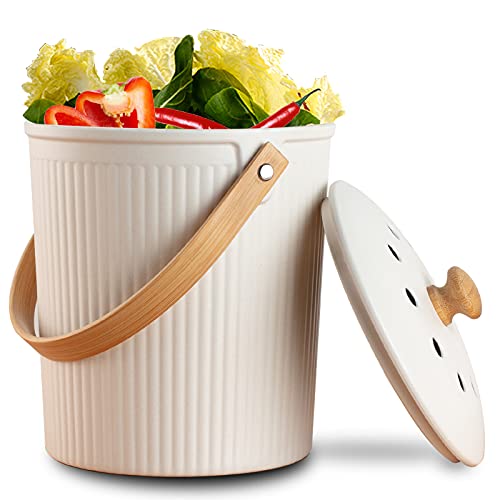
Best for: Eco‑mocused kitchens seeking sustainable materials and odor control. The bin is made from bamboo fiber and includes a vented lid with a charcoal filter to reduce smells.
Why selected: It blends eco‑friendly materials with practical odor management, delivering a compact option for daily waste while aligning with green living goals.
Caution: Material sustainability features vary by manufacturing; verify compostability or recyclability claims if you expect rigorous environmental certifications.
Buying Guide: How To Choose A Large Wooden Or Related Compost Bin
Capacity and space: Measure your outdoor area to ensure the bin fits and allows for turning and aeration. Larger volumes suit high output; smaller setups work with regular feedstock transfer.
Material and durability: Wood offers natural insulation and heat regulation but may require weather protection. Metal interiors (stainless steel) improve longevity for indoor use with durable liners.
Airflow and access: Look for slatted designs or features that boost airflow and a pull‑out door for easy loading and turning. Accessibility reduces maintenance effort and speeds composting.
Odor control: Outdoor bins rely on airflow to minimize odors; indoor bins benefit from charcoal filters and sealed lids to keep kitchens clean.
Maintenance needs: Wood bins need protection from moisture; indoor bins with removable liners simplify cleaning. Budget for coatings, sealants, or replacements as needed.
Ease of setup: Consider whether you prefer a plug‑and‑play unit or a more modular system that can be expanded with additional containers.
Frequently Asked Questions
- What size compost bin should I buy for a family of four?—A bin around 95–130 gallons handles kitchen scraps, yard waste, and seasonal garden clippings for moderate to heavy composting.
- Are wooden compost bins better than plastic?—Wood offers natural insulation and durability in outdoor use, but plastic bins can be lower maintenance and more weather‑resistant in certain climates.
- Can kitchen scraps be composted in a large wooden bin outside?—Yes, but transfer and aerate regularly to avoid odors and anaerobic buildup.
- How important is airflow in a compost bin?—Airflow speeds decomposition by delivering oxygen to microbes; slatted designs generally perform better for outdoor bins.
- Do I need a liner for wooden bins?—Liners aren’t always required, but they can simplify cleanup and help preserve wood, especially in damp climates.
- Is an indoor compost bin necessary if I have a larger outdoor bin?—An indoor bin is convenient for daily scraps; a larger outdoor bin can handle the bulk material efficiently when space allows.