If you need reliable, heavy-duty plastic sheeting for a greenhouse, this guide helps you pick the best options for durability, light transmission, and UV protection. The top picks below are suited for different buyers: commercial growers seek high tear resistance and long life; hobbyists want clear, easy-to-handle film that preserves heat; DIY builders look for strong, weather-ready covers. Read on to compare five strong choices and learn how to choose based on thickness, UV rating, light diffusion, and tear resistance. A quick buyer’s table follows the product bios.
Quick Buyer’s Table
| Product | Best For | Highlights |
|---|---|---|
| Greenhouse Plastic Sheeting, 12 x 25ft, 6 mil | All-around greenhouse use; moderate budget | 5-layer co-extrusion, UV protected, high light transmittance |
| PROMORE 6 Mil 12×25 FT | Durability and UV defense | Heavy-duty PE, >20% UV defense, >90% light diffusion |
| 6 Mil Plastic Sheeting 10×25 FT | Smaller setups or cover drops | Similar specs, strong diffusion, UV protection |
| 12 x 26 FT Clear 6 Mil | Large greenhouses | Water, wind, frost resistance; heavy-duty |
| 12Ftx24Ft Clear 16Mil | Extreme protection and preinstalled edges | 16 mil; preinstalled grommets; tarps |
Greenhouse Plastic Sheeting, 12 x 25ft, 6 mil, UV Resistant
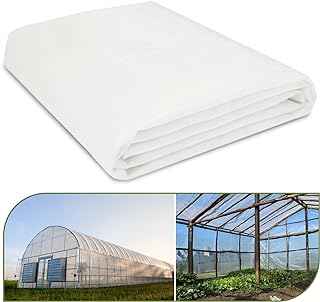
Best for: medium to larger greenhouses needing strong protection without a huge budget. This 6 mil film employs 5-layer co-extrusion to boost mechanical strength and flexibility, reducing tears during installation and wind exposure. It provides UV resistance to protect plants from sun damage at high temperatures and preserves film integrity over multiple seasons. High light transmittance helps crops receive even daylight, supporting steady growth and earlier harvests.
Why chosen: The combination of multi-layer construction and long-lasting polyethylene material makes this a balanced option for growers who want durability without compromising light for plant health. A potential limitation is thickness; for extremely windy sites, consider additional anchoring or a secondary tarp.
Greenhouse Plastic Sheeting 6 Mil 12×25 FT

Best for: gardeners seeking robust protection with strong UV resistance and excellent light diffusion. This 6 mil film uses built-in UV blockers to shield plants, reducing film degradation under sun exposure. It transmits over 90% of natural light, helping to minimize shadowing and hot spots in dense canopies. The material remains tear-resistant for extended use.
Why chosen: Its UV defense and high light diffusion make it a reliable all-season cover. Limitation: while strong, it may still require periodic inspection in extreme weather to ensure corners remain secure.
12 x 26 FT Clear Greenhouse Plastic Sheeting

Best for: large-scale greenhouses needing strong, weather-ready coverage with minimal hot spots. This variant focuses on durability and consistent light diffusion, making it a solid option for extended seasons. It resists wind and frost better than thinner films, though it remains essential to secure edges properly in severe conditions.
12Ftx24Ft Clear Greenhouse Covering

Best for: those needing a heavy-duty tarp-like cover with preinstalled grommets for quick setup. The 16 mil thickness offers exceptional protection against tearing and weather exposure, suitable for challenging climates or high wind sites. It is best for permanent or semi-permanent structures that require robust shielding while maintaining good visibility for plant growth.
Why chosen: The thicker film reduces risk of tears and punctures, which is valuable in windy environments. Caution: thicker material can be stiffer to handle and may require more effort during installation.
Buying Guide: Key Considerations For Heavy Greenhouse Plastic
Thickness and durability: Heavier films (6–16 mil) deliver greater tear resistance and longer life in wind-prone areas. Consider the climate and wind exposure when choosing thickness.
UV resistance: UV blockers slow film degradation and protect plants. Look for films that explicitly state UV protection ratings; higher percentages mean longer film life.
Light diffusion and transmission: Strong diffusion (over 90%) reduces hot spots and creates even lighting, aiding uniform plant growth. Balance diffusion with adequate light transmission for your crops.
Material quality and construction: Multi-layer, co-extruded films offer better strength and flexibility than single-layer films. This reduces pinholes and cracking over time.
Size and fit: Confirm film dimensions align with your greenhouses’ length, width, and hoop spacing. Edges with preinstalled grommets simplify installation, especially for larger structures.
Ease of installation: Look for tear resistance during handling, clear instructions, and compatible fasteners or clips to prevent edge tears during setup.
Cost versus lifespan: A slightly higher upfront cost can pay off with longer service life and fewer replacements, particularly in harsh environments.
Frequently Asked Questions
- What thickness is best for a small backyard greenhouse? A 6 mil film offers a good balance of durability and light transmission for most home setups.
- Do all greenhouse films block UV? Most heavy-duty films include UV blockers; check product features to confirm protection levels.
- Is thicker film always better? Not always. While thicker film is more tear-resistant, it may be stiffer to install and more expensive. Choose based on climate and handling needs.
- How long does greenhouse plastic typically last? Lifespan varies with UV protection, environmental exposure, and installation quality, but higher-quality 6–16 mil films tend to last multiple seasons with proper care.
- Can I reuse greenhouse plastic after a season? Reuse depends on wear, tears, and fitting. Inspect edges and tear points; replace damaged sections as needed.
- Is diffusion more important than light transmission? Both matter. High diffusion reduces hotspots, while adequate transmission ensures plants receive sufficient light for growth.