Looking for better control over your garden watering or RV setup? A garden hose flow regulator can help you conserve water, protect plants, and maintain steady pressure. This guide highlights five reliable options suited for different needs—from precise misting to high-flow irrigation—so you can choose the right regulator for your setup.
| Product | Best For | Key Benefit |
|---|---|---|
| Neoperl Hose Flow Regulator Lower Water Rate Usage Adapter | Gardeners with delicate plants | 1.5 gpm flow for precise watering |
| STMOUTUO RV Water Pressure Regulator | RV, campers, and yard irrigation | Wide 0-160 PSI gauge, adjustable |
| Camco Brass RV Water Pressure Regulator | RVs and drinking water safety | 40-50 PSI preset, 125 PSI max input |
| RVGUARD Lead-Free Brass Regulator | RV and home plumbing with filtration | 3/4″ hose thread, inlet screen |
| Senninger Pressure Regulator 25 PSI | Low-flow irrigation systems | Constant 25 PSI output for drip/soaker |
Note: Each option targets a distinct watering scenario. Use the table above to quickly compare the regulator type, typical use, and standout benefits before diving into detailed product sections.
Neoperl Hose Flow Regulator for Lower Water Rate

Reference features: This adapter lowers the water flow to about 1.5 gpm, suitable for greenhouse misting and careful plant watering. It’s designed for indoor or outdoor use to save water and money by reducing flow rate.
Best for: Gardeners who need a simple, attachment-style regulator to protect delicate plants and optimize water usage. It’s a straightforward choice for greenhouse watering, when precise drip or misting control is more important than high flow.
Why selected: Its low-flow design provides a reliable, easy-to-install option that doesn’t require complex setup or tools. The 1.5 gpm rate is ideal for small pots, seedlings, and greenhouse beds where overwatering is a risk.
Caution: The regulator is a flow adapter rather than a full-pressure regulator; if you require pressure protection for an RV or irrigation system with variable supply, consider a dedicated regulator with a gauge.
Melnor Lever Flow Through Valve Connector

Reference features: This high-volume valve offers maximum water flow with a longer lever and vertical orientation for easy operation. Metal hose threads ensure a secure, durable connection.
Best for: Users needing quick, reliable on/off control at the hose or nozzle with minimal effort. Great for backyard watering that requires frequent stop-and-start adjustments.
Why selected: The longer lever improves ergonomics, reducing strain during prolonged watering sessions. Metal threading adds longevity in outdoor conditions.
Caution: This is primarily a flow control valve, not a full regulator; if your goal is to reduce overall system pressure, pair it with a regulator elsewhere in the setup.
STMOUTUO RV Water Pressure Regulator

Reference features: This brass lead-free regulator includes a 0-160 PSI gauge and an adjustable pressure setting, with a preset around 45 PSI. It’s designed to protect RV plumbing and yard irrigation from high pressure and includes a pressure gauge for precision.
Best for: RV owners and campers who need to safeguard plumbing from city-supplied pressure while maintaining compatible flow for hoses and fixtures.
Why selected: The adjustable gauge and lead-free construction provide a robust, customizable solution that supports various water sources and demand levels.
Limitation: The regulator’s effectiveness depends on correct installation; ensure threads and seals are properly tightened to avoid leaks at the connection.
Camco Brass Marine/RV Water Pressure Regulator

Reference features: This brass regulator provides safe, automatic pressure control (40-50 PSI) to protect RV plumbing. It’s designed to handle higher input pressure up to 125 PSI and is compatible with drinking water needs.
Best for: RVers who want built-in protection against pressure spikes while ensuring water safety for consumption and appliances.
Why selected: The automatic PSI Guard adds an extra layer of protection for hoses and fixtures, reducing the risk of bursts in typical RV setups.
Caution: A regulator with a fixed range can be less flexible in extreme pressure conditions; consider a model with broad adjustability if your supply varies widely.
RVGUARD Lead-Free Brass Regulator with Gauge
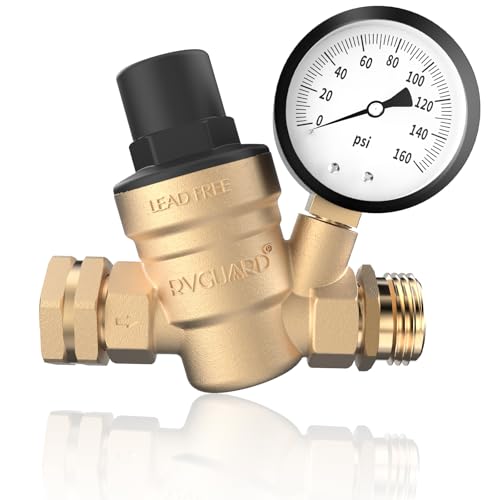
Reference features: This regulator uses lead-free brass with hot casting for safety, includes a 3/4″ garden hose thread, an inlet screen, and a built-in gauge to monitor pressure. It’s designed for compatibility with standard US water sources.
Best for: RVs and home setups requiring safe water delivery with protective filtering to minimize impurities and protect downstream fixtures.
Why selected: The inlet screen helps reduce particulates from affecting downstream devices, a practical feature for outdoor hoses and potable use.
Caution: The inclusion of an inlet screen can require occasional cleaning to maintain optimal flow; inspect during seasonal maintenance.
Senninger Pressure Regulator 25 PSI
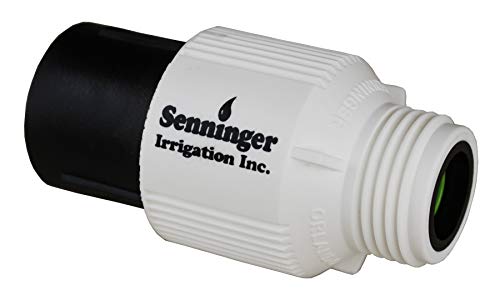
Reference features: This regulator is designed for low-flow irrigation—solid set, drip line, and soaker hoses—with constant 25 PSI output over a flow range of 0.5 to 7 GPM. It supports efficient distribution and system longevity.
Best for: Landscapes and nurseries that rely on precision low-flow irrigation, ensuring consistent droplets and minimizing water waste.
Why selected: It’s built specifically for low-flow applications, helping maintain uniformity in drip systems and reducing overall energy and water use.
Caution: Best used where 25 PSI is adequate; higher-demand zones may require alternate regulators or multiple regulators for zoned irrigation.
Buying Guide: Key Considerations for Choosing a Garden Hose Flow Regulator
What should you look for when selecting a regulator?
- Use case: Is the regulator for garden plants, greenhouse misting, RV plumbing, or irrigation systems? Align the device type (adapter, valve, or pressure regulator) with your primary need.
- Flow rate and pressure: Determine the desired flow (GPM) and suitable pressure range. Low-flow regulators suit delicate plants, while higher-flow options support general watering or RV systems.
- Material and safety: Brass and lead-free components are common. For drinking water or potable use, ensure the model is NSF/ANSI compliant or explicitly rated lead-free.
- Gauge and adjustability: Regulators with a built-in gauge offer precise control, while simple adapters provide quick adjustments. Consider whether you need easy on/off, or fine pressure control for drip lines.
- Compatibility: Check thread size and hose compatibility (commonly 3/4″ garden hose). Inlet screens can help prevent debris from entering downstream fixtures.
- Maintenance: Look for features that simplify maintenance, such as removable screens or easy cleaning of filters and regulators.
How to Install a Garden Hose Flow Regulator
Turn off water supply, connect the regulator to the hose thread, then attach the hose or nozzle. If using a regulator with a gauge, set the desired PSI before opening the water supply. Inspect for leaks and adjust as needed.
Maintenance Tips
- Periodically inspect for leaks at connection points and replace gaskets as needed.
- Clean any inlet screens to maintain optimal flow; remove debris with a soft brush.
- Winterize regulators in freezing climates to prevent damage.
FAQ
- What is a garden hose flow regulator? A flow regulator controls water volume and pressure through a hose to protect plants, reduce waste, and safeguard fixtures.
- When should I use a regulator with a gauge? Use a regulator with a gauge when precise pressure control is critical, such as drip irrigation or RV plumbing.
- Are lead-free regulators safe for drinking water? Yes, regulators labeled lead-free meet NSF/ANSI safety standards for drinking water use.
- Can I use these regulators with any hose? Most regulators use standard 3/4″ hose threads, but always verify thread compatibility with your hose and faucet.
- Is a regulator necessary for all outdoor watering? Not always; for simple tasks, a basic lever valve or adapter may suffice. For drip and misting, a regulator improves efficiency.
- How do I choose between a regulator and a valve? Regulators manage pressure and flow; valves primarily enable on/off control. Choose based on whether you need stable pressure or quick shut-off.