Answer: For most American home lawns, a manual spike aerator with multiple tines or a rolling aerator that adds weight and stability gives the best overall results. These tools improve air, water, and nutrient penetration, helping roots grow deeper and thicker. The top picks below are suited to different lawn types and user preferences, from budget-friendly hand tools to heavier rolling options.
Buyer profile summary:
| Product | Best For | Notes |
|---|---|---|
| Walensee Lawn Aerator Spike | Small to medium yards, DIY enthusiasts | 15 spikes for efficiency; durable iron with powder coating |
| Briliantwerk Lawn Aerator Shoes | Spot treatments, dethatching and lawn prep | Dual spike lengths for aerating and screeding |
| Manual Core Aerator Lawn Tool (LawnVigor) | Soil with compacted zones, deeper penetration | 3 hollow tines; non-clogging design |
| Onadak Lawn Aerator | Average-sized lawns, affordable option | 15 spikes; automatic design intended for ease |
| RIFPOD Lawn Aerator | Consistent aeration in varied soils | Height-adjustable; dual-spring design |
Walensee Lawn Aerator Spike Metal Manual Dethatching Tool

The Walensee spike aerator uses 15 sharp 2.8-inch tines to loosen soil and thatch, allowing air, water, and fertilizer to reach the root zone. It is best for homeowners who want a straightforward, high-coverage option without rolling components. Selecting this tool is ideal for medium-density lawns where quick, broad aeration is desired. Caution: Use with steady, controlled pressure to avoid back strain. Not designed for heavy clay compaction beyond moderate levels.
Briliantwerk Lawn Aerator with Adjustable Straps
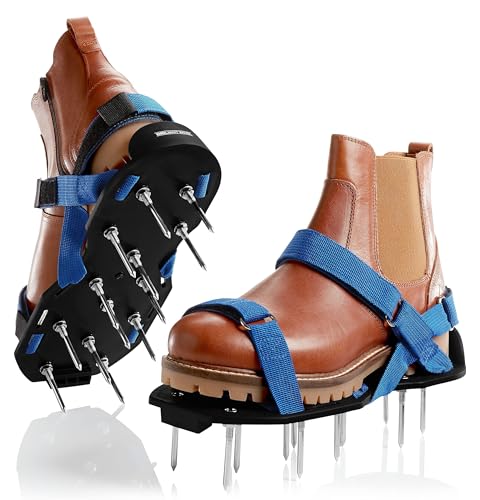
This lawn aerator shoe set offers dual spike lengths, with 2″ spikes for deep aeration and 1.5″ spikes for screeding. It is best for users who want to address thatch and aeration in a single pass while walking the lawn. Choose this if you prefer a shoe-based approach for broader, low-effort coverage. Caution: Ensure straps are secured tightly before movement to avoid slippage.
Manual Core Aerator Lawn Tool (LawnVigor)
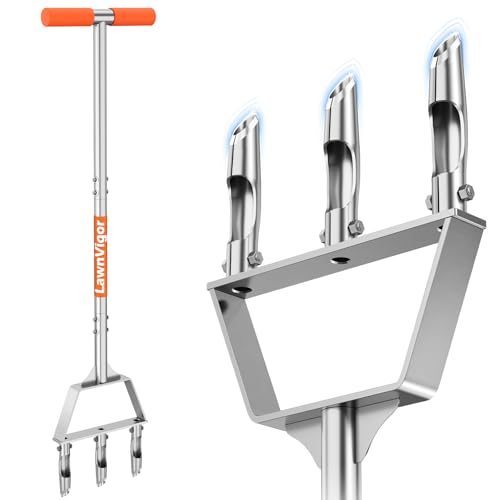
With three hollow tines designed to remove soil plugs, this model targets compacted soil directly and promotes deeper water and nutrient penetration. It is best for lawn enthusiasts who want deeper core aeration and a tool that tolerates repeat use on tougher soils. Caution: Water soil well before use and avoid side-to-side rocking during insertion to prevent unnecessary strain.
Onadak Lawn Aerator Automatic Dirt and Leaf Clean Design

The Onadak model uses 15 iron spikes in a 3-inch length set, designed to reduce soil sloughing and to improve air, water, and fertilizer movement to root zones. Best for average yards seeking a ready-to-use tool with a strong spike array. Caution: Proper assembly order is essential; incorrect setup may render the tool unusable.
RIFPOD Lawn Aerator, Height Adjustable

The RIFPOD aerator features a patent-pending double-spring design and 15 iron spikes at 1.74 inches, with height adjustment for varied soils. Best for homeowners who want consistent performance over a range of soil conditions. Limitation: The dual-spring mechanism may require more setup than a basic spike tool.
Buying Guide
What should you consider when choosing an aerator tool for lawns?
- Soil type and compaction: For heavy clay, core or hollow-tine options may penetrate better than spikes alone.
- Tool type: Manual spike, hollow-core, or rolling aerators each have trade-offs in effort, depth, and coverage.
- Ease of use: Rolling models can require proper loading and balance, while spike tools depend on user strength.
- Durability and materials: Look for rust-resistant finishes and sturdy metal to ensure long life in outdoor conditions.
- Adjustability and height: Tools with adjustable handles or spike lengths help fit different users and soil conditions.
How to use aeration tools effectively
- Water dry soil before aeration to improve penetration and reduce stress on the lawn.
- Avoid over-aerating in a single pass; space passes to minimize disruption and allow recovery.
- Combine aeration with overseeding and top-dressing for best results in improving lawn density.
Manual vs rolling aerators: which is better?
Manual spike aerators are simple and affordable; they work well on smaller or evenly textured lawns. Rolling aerators add weight for deeper penetration and can handle larger areas but require setup and loading with sand or stones for best performance. Consider your lawn size, soil type, and whether you prefer a lightweight tool or a high-coverage option.
Spike vs hollow-tine vs dual-purpose designs
Spike aerators create holes but do not remove cores, which can compact soil in some cases. Hollow-tine aerators remove plugs, reducing surface compaction and allowing air and water to penetrate deeper. Dual-purpose designs offer flexibility but may require more maintenance. Choose based on your specific soil needs and maintenance tolerance.
FAQ
- Which aerator is best for clay soil? Hollow-tine or core aerators generally penetrate better and remove plugs, which can relieve compaction in dense clay soils.
- Do I need to water before aerating? Yes, water the soil well to soften it and improve penetration and plug removal.
- How often should I aerate a lawn? For most lawns, once per season is sufficient; nicking high-traffic or heavily compacted areas may require an additional pass.
- Can I use an aerator on dry or rocky soil? It’s best to moist soil and avoid rocky areas to protect tines and ensure clean holes.
- Is a rolling aerator better than a manual spike aerator? Rolling aerators offer deeper, more even penetration and are helpful for larger lawns, while spike models are simpler for small spaces.
- Will aeration harm existing grass? If done correctly and not overdone, aeration supports healthier growth by improving root access to air and nutrients.