Find the right entrance reducer for your beehive to protect your colony, regulate ventilation, and deter robbers. This guide highlights five well-rounded options suitable for 8- to 10-frame hives, including wooden and plastic designs. Each pick targets common beekeeping needs: beginners seeking simple installation, seasoned keepers needing reliable year-round use, and hobbyists balancing ventilation with security. The table below summarizes the top choices to help you compare at a glance.
| Product | Frame Compatibility | Material | |
|---|---|---|---|
| 5 Pack Beehive Entrance Reducer (Whumsdog) | 10 Frame | Wood | Adjustable openings, year-round use |
| 4 PCS Beehive Entrance Reducer (KQYSLXG) | 10 Frame | Wood | Extra replacements, solid build |
| 6 Pack Bee Hive Entrance Reducer (HIMO) | 8-10 Frame | Plastic | Lightweight, adjustable for ventilation and defense |
| Amyhill 4 Pack Beehive Entrance Reducer | 10 Frame | Wood | Solid protection with ventilation |
| BeeCastle Beeswaxed Beehive Entrance Reducer | 10 Frame | Wood (beeswax coated) | Ventilation, defense against predators |
5 Pack Beehive Entrance Reducer — Whumsdog

Best for: Beginners and budget-minded beekeepers who want multiple reducers for different hives or seasonal changes. This set offers two size openings to control ventilation and deter honey robbers while allowing bees to come and go smoothly. The design is compatible with ten-frame hives and can be used with solid or screened bottom boards.
Why selected: The multiple openings provide flexible management of hive traffic, which helps maintain colony stability. The wood construction supports long-term use in varied climates. A caution: ensure proper alignment with the entrance to avoid bee congestion during peak foraging.
4 PCS Beehive Entrance Reducer — KQYSLXG

Best for: Beekeepers needing reliable replacements and a sturdy wooden option for standard 10-frame hives. This set provides four reducers with a precise 14.76 x 0.75 x 0.75 inch footprint, fitting most common beehives and offering durable, deformation-resistant wood.
Why selected: The extra quantity accepts multiple hives or future replacements, and the wood construction resists wear over time. Limitation: wood may require occasional treatment or sealing in wet climates to extend life.
6 Pack Bee Hive Entrance Reducer — HIMO
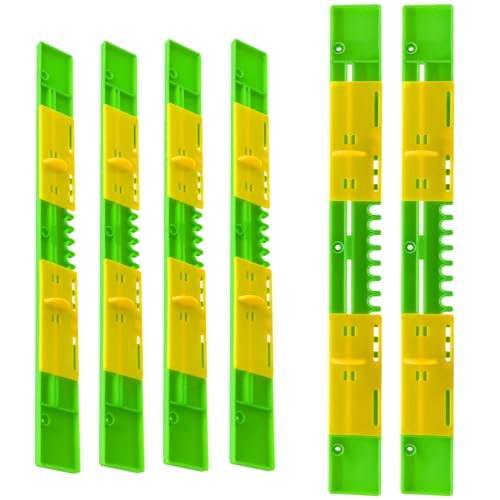
Best for: Beekeepers who want a lightweight, flexible plastic option for quick installation and easy transport, especially in winterizing scenarios. Adjustable paddles allow precise control of bee entry and exit while limiting mouse intrusion.
Why selected: The plastic design stays lightweight and portable, simplifying seasonal changes and hive relocation. Caution: plastic components can wear over time in very hot or harsh environments, so monitor for signs of cracking or warping.
Amyhill 4 Pack Beehive Entrance Reducer

Best for: Beekeepers seeking solid wooden reducers with a consistent, medium-weight construction and a focus on anti-robber protection while maintaining ventilation.
Why selected: The 4-pack offers reliable coverage for multiple hives and replacement needs. The wood construction supports durability. Limitation: may require periodic inspection for warping in humid climates.
BeeCastle Beeswaxed Beehive Entrance Reducer

Best for: Beekeepers who want a beeswax-coated wood reducer for enhanced durability and natural protection against predators. The beeswax coating can help reduce cracking and provide a smoother surface for bees to pass through.
Why selected: Beeswax coating combines traditional beekeeping aesthetics with practical protection. Caution: beeswaxed surfaces may require occasional maintenance to keep the coating intact in extreme weather.
BeeCastle Beehive Entrance Reducer 8 Frame

Best for: Beekeepers using 8-frame setups who need a compact wood reducer with good ventilation and predator protection. This option emphasizes a balanced design for middle-frame hives.
Why selected: The product line from BeeCastle consistently emphasizes airflow and defense against intruders, while remaining easy to install. Limitation: 8-frame sizing may not adapt perfectly to larger or smaller hive configurations without a proper frame count.
Buying Guide: Key Considerations For Choosing An Entrance Reducer
- Frame compatibility: Most reducers target 8- to 10-frame hives. Confirm your hive size before choosing.
- Material and durability: Wooden reducers are sturdy and repairable; plastic options are lighter and often more affordable but may wear in extreme weather. Beeswax-coated wood offers an extra layer of protection against wear and cracking.
- Ventilation vs. defense: A larger opening improves airflow and temperature regulation but can invite robbers if not monitored. Two-opening designs help balance access and security.
- Installation method: Consider whether you need screw-fastened mounting or a simple slide-on design. Easy installation reduces disturbance to the colony.
- Seasonal use: Some reducers are better for winter protection against mice and moths; others emphasize year-round use with adjustable openings.
- Maintenance: Wood may require occasional sealing or drying; plastic may show wear in direct sun or extreme cold. Plan for occasional inspection and replacement.
Frequently Asked Questions
- What is the main role of an entrance reducer?
To regulate hive entrances, control ventilation, and reduce the risk of robbing by other insects or animals while keeping bees comfortable.
- Should I use a wooden or plastic reducer?
Wood offers durability and a traditional feel, while plastic is lighter and often more affordable. Choose based on climate, maintenance preference, and hive design.
- How many openings should a reducer have?
Two openings are common and allow adjustable airflow and entrance sizing to adapt to seasons and weather conditions.
- Can I use a reducer on any 10-frame hive?
Most 10-frame reducers fit standard hives, but verify the exact dimensions (approximately 14.75 x 0.75 inches) to ensure a proper fit.
- Will a reducer protect against mice?
Some designs are specifically marketed as protective during winter and for predator defense; verify product features to confirm rodent protection.
- How do you install a wooden reducer?
Align with the entrance, secure with screws if required, and ensure the openings line up with the hive’s interior space for smooth bee traffic.