Answering the search for durable, versatile black plastic irrigation pipe, this guide highlights top picks ideal for various watering needs. Whether you’re setting up a new drip system, extending a mainline, or fabricating a small greenhouse layout, these options help you move water efficiently. Best for straightforward drip layouts are compact feeder lines; best for larger landscapes are higher-flow mainlines; best for tight spaces are flexible mini-lines.
Summary table of chosen products:
| Product | |||
|---|---|---|---|
| Raindrip 052050 1/2-Inch Tubing | 1/2″ Polyethylene tubing | Main supply or feeder line | Drip lines across beds and pots |
| Raindrip 061050 5/8-Inch Tubing | 5/8″ Polyethylene tubing | Medium to large irrigation runs | Extending mainline to multiple zones |
| Raindrip 052020P 1/2-Inch Water Supply Tubing | 1/2″ Polyethylene tubing | Drip and emitter integration | Mid-size garden and beds |
| Raindrip 016010T 1/4-Inch Tubing | 1/4″ Micro tubing | Small plantings and dripper runs | Planter boxes, pots, and tight layouts |
| Joyfolk 200 ft 5/16″ Tubing | 5/16″ Distribution tubing | Compact spaces and bends | Garden beds with many curves |
Raindrip 052050 1/2-Inch Drip Irrigation Tubing
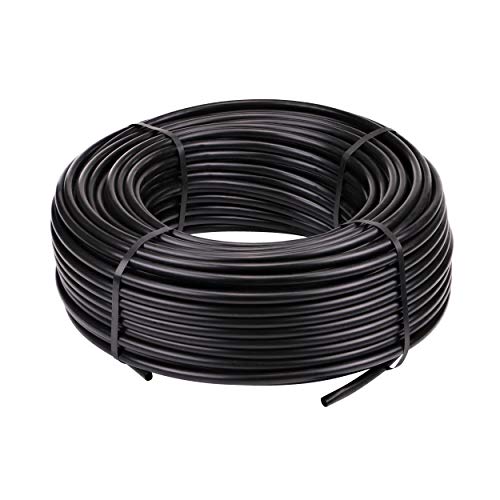
Best for: small to medium drip lines where a sturdy main feeder is needed. The 1/2-inch tubing is designed as a main supply line or feeder line with emitters punched in to deliver water along the run. It’s suitable for trees, shrubs, flower beds, and containers. The robust black polyethylene resists sun exposure and outdoor wear, making it a practical choice for long-term irrigation projects.
Why selected: This tubing balances ease of installation with durability, supporting long runs and multiple connections. It’s easy to punch in emitters directly into the line for distributed watering. A potential limitation is that 1/2″ tubing may require larger fittings on very extensive layouts.
Raindrip 061050 5/8-Inch Drip Irrigation Tubing

Best for: medium to large irrigation layouts needing higher flow. The 5/8-inch tubing provides a thicker wall and greater interior capacity, suitable for longer runs or where multiple emitters are fed from a single line. It’s effective for watering trees, shrubs, and garden beds with a wider demand for water.
Why selected: The tube’s layering and virgin-content outer/inner layers, with a recycled middle, emphasize durability in outdoor conditions. A caveat is that the larger diameter may require compatible fittings and clamps, especially in tighter spaces.
Raindrip 052020P 1/2-Inch Water Supply Tubing
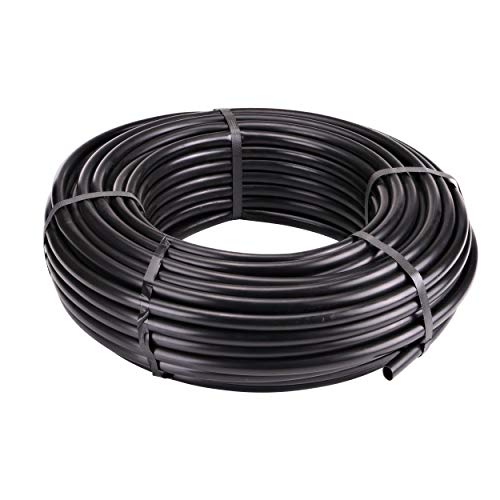
Best for: drip irrigation setups that require flexible main lines with direct emitter integration. This 1/2-inch tubing acts as a bridge between the water source and dripper lines, capable of transporting water to a variety of plantings including pots and garden beds.
Why selected: It offers versatility for both main-line and feeder-line configurations. A limitation is that, like other 1/2″ lines, its maximum flow can be constrained by very long runs without strategic pressure management.
Joyfolk 200 ft 5/16 Inch Drip Tubing

Best for: compact layouts and spaces with many bends. The 5/16-inch tubing suits narrow beds, patios, or greenhouse sections where flexibility and bend tolerance are important. It’s suitable for small plantings and drip emitter runs that need gentle, localized irrigation.
Why selected: The tubing’s flexibility reduces installation friction in tight spaces. A caution is that the smaller diameter limits overall flow compared to 1/2″ or 5/8″ lines, so plan for water needs accordingly.
Dripworks Drip Irrigation Tube 100′ Roll

Best for: larger drip layouts needing higher flow. The 3/4″ mainline tubing supports greater water volume, making it suitable for medium-to-large gardens where 1/2″ tubing would bottleneck flow. Easy to unroll and install for efficient project setup.
Why selected: It provides increased flow capacity with a thicker wall and larger interior diameter. A limitation is that the larger size may require bigger clamps and fittings, which could affect space planning in tightly confined areas.
Landical 6 Pcs 3/4″ Black PVC Pipe

Best for: structural piping in greenhouses, enclosures, or maker projects requiring rigid black PVC. These pipes are 3/4″ and pre-cut to about 40 inches, suitable for frames, supports, or basic irrigation support lines within larger systems.
Why selected: The set provides a ready-to-use quantity for multiple projects and ensures dimensional compatibility with 3/4″ fittings. A caveat is that PVC is rigid, so routing may be less forgiving than flexible tubing in curved layouts.
HydroMaxx 1″ Dia. Black Flexible PVC Pipe

Best for: larger water features and high-flow applications such as ponds, water gardens, and expansive irrigation runs. The pipe is Schedule 40 and designed to handle wet conditions and rapid pressurization.
Why selected: It provides true flexibility within the rigid PVC category and is compatible with standard Sch 40 fittings. A caution is that this product may be more appropriate for larger installations rather than small residential beds.
Buying Guide: Key Purchase Considerations
- Flow needs: Match tubing diameter to your water requirements. Larger diameters support higher flow for longer runs or multiple emitters.
- Layout and flexibility: For tight spaces or many bends, smaller diameters with flexible tubing (5/16″ or 1/4″) can simplify routing.
- Material durability: Black polyethylene tubings resist UV exposure and outdoor weather; PVC variants provide rigidity and stability in frames or pipes.
- Connection compatibility: Ensure fittings and emitters you plan to use fit the chosen diameter and material.
- Longevity vs. installation ease: Thicker walls and virgin-content layers may offer longer life but can require sturdier clamps and tools during setup.
- Maintenance considerations: Choose tubing with clear labeling and consistent sizing to simplify repairs and expansions over time.
Frequently Asked Questions
- What is the difference between mainline tubing and feeder tubing?
Mainline tubing carries water from the source through longer runs; feeder tubing branches off to deliver water to individual drippers or subtends to emitters.
- Which diameter is best for a small balcony garden?
1/4″ or 1/2″ tubing works well for compact spaces; they are easier to maneuver and place near planters while still supplying emitters efficiently.
- Can I mix different tubing sizes in one irrigation system?
Yes, but plan transitions carefully with compatible fittings to prevent leaks and ensure even pressure distribution.
- Is black plastic tubing more durable than clear tubing?
Black tubing typically offers better UV resistance and reduced algae growth, contributing to longer service in outdoor conditions.
- Do I need special tools to install drip tubing?
Basic tubing cutters, barbed fittings, and clamps are usually sufficient; some installations may require a punch tool for emitters.