Finding the right seed starting pots speeds germination and healthy seedling growth. This guide highlights five top options, explaining who they’re best for and why each stands out. Ideal readers include urban gardeners, beginner seed starters, and hobbyists growing vegetables, herbs, or flowers from seed. The following table compares core details at a glance to help quick decisions.
| Product | Best For | Why It Stands Out | Notable Limitation |
|---|---|---|---|
| LWWTBS Plant Nursery Pots | Small-space indoor/outdoor seed starters | 100 pots with labels; upgraded drainage holes | Plastic pots may be less durable over years |
| Dalzom 60Pcs Peat Pots | Eco-friendly transplanting and soil health | Biodegradable, direct-to-ground planting; includes labels | Peat pots may dry faster in dry environments |
| Napia Peat Pots Seed Starter | Seedlings with strong drainage and biodegradability | 45 pots with labels; 100% biodegradable; multiple vitamins | Smaller batch size than some sets |
| Doubleggs Seed Starter Tray | Versatile starter kit for many seeds | 10 trays with 120 cells and 100 labels; flexible use | Tray-based system may be less portable for very small spaces |
| INCIKITI 40Pcs Peat Pots | Beginner-friendly germination kits | Biodegradable, includes 10 labels; compact set | Limited quantity for large seed batches |
LWWTBS Plant Nursery Pots 100 Pcs

LWWTBS pots are a practical starter kit for compact seed projects. The set includes 100 plastic pots and 100 plant labels, making it easy to identify varieties as they emerge. The 4-inch opening accommodates a wide range of seeds and cuttings, while the 3.2-inch height offers substantial root space for seedlings. An upgraded drainage system with eight small holes helps prevent overwatering and promotes healthy air exchange, reducing the risk of root rot. Best for urban gardeners or classrooms that need many uniform starter pots quickly.
Who it’s best for: seed starters managing multiple varieties at once, or educators needing affordable, high-quantity pots with labeled organization. Why chosen: excellent value per pot, straightforward labeling, and reliable drainage support. Caution: plastic pots can stain or degrade with long-term outdoor exposure; reuse may require cleaning between cycles.
Dalzom 60Pcs 3.1” Peat Pots

Dalzom’s peat pots are crafted from recycled pulp and are 100% biodegradable. The kit includes 60 pots and 60 plant labels, offering a compact option for seed germination and starter days. Pots measure about 3.1 inches at the top with a compatible 2-inch bottom diameter, and they are designed to be planted directly into the ground, which minimizes root disturbance during transplant. Best for gardeners prioritizing eco-friendly materials and simple transplant workflows.
Who it’s best for: eco-conscious growers seeking soil-friendly pots that reduce transplant shock. Why chosen: direct-to-soil planting streamlines garden preparation and promotes healthier root systems. Caution: biodegradable pots can dry out more quickly than plastic pots, so consistent moisture is important.
Napia Peat Pots Seed Starter

Napia’s peat pots package includes 45 biodegradable pots plus 30 plant labels. The 3.15-inch pots are suitable for a variety of seedlings—including vegetables, fruits, and herbs—and work well with most 1020 seed trays. The bottom drainage helps air flow and drainage, supporting robust early root development. Best for growers who want a mid-size set that emphasizes biodegradability and label organization.
Who it’s best for: beginners starting several crops at once, or urban growers with space constraints. Why chosen: balanced quantity, strong biodegradability, and clear labeling support. Caution: smaller label set may require additional labeling if growing many varieties.
Doubleggs 120 Cells Seed Starter Tray

Doubleggs offers a robust seed starter kit that pairs 120 seedling cells across multiple trays with 100 plant labels. The cells measure approximately 1.6 by 1.6 inches and two inches deep, a versatile size for herbs, microgreens, succulents, and many vegetables. It’s designed to minimize transplant shock and ease the transition from indoors to the garden. Best for gardeners who want a modular system and the option to cut a tray into smaller sections as needed.
Who it’s best for: more advanced seeders or those growing a wider range of crop types needing flexible seed trays. Why chosen: strong design to protect roots during transplantation; compatible with peat pots for an integrated setup. Caution: tray-based systems can take up more space and may require careful planning in tight quarters.
INCIKITI 40Pcs Peat Pots Kit
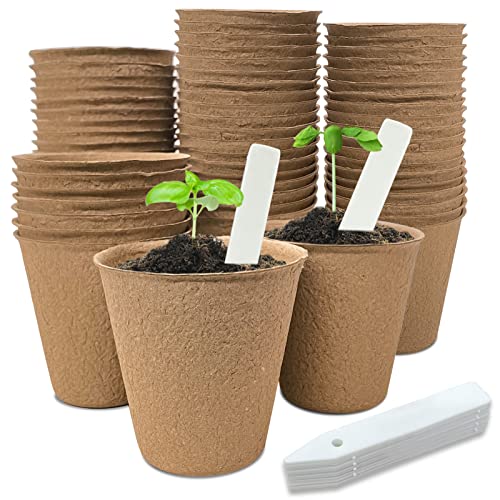
INCIKITI presents 40 peat pots with 10 accompanying plant labels in a compact kit. The pots measure around 3.15 inches, designed for starting flowers, succulents, vegetables, and herbs. Made from biodegradable recycled pulp and peat moss, these pots can be transplanted directly into soil, where they decompose and fertilize the garden. Best for space-limited beginners who value easy compostable options.
Who it’s best for: new gardeners or small-space growers seeking a biodegradable, label-friendly starter kit. Why chosen: 100% biodegradable material and included labeling aids. Caution: limited quantity may not meet larger seed-starting needs; consider supplementing with additional pots for big projects.
Buying Guide: Seed Starter Pot Considerations
- Material and sustainability: Plastic pots last longer and are reusable, but biodegradable peat pots reduce waste and transplant shock. Choose based on your preference for reuse versus garden-friendly disposal.
- Drainage and airflow: Ensure pots have adequate drainage holes to prevent root rot. More holes can improve aeration but may require more careful watering management.
- Size and transplant plan: Match pot size to your seed type and planned transplant date. Larger pots support bigger transplants, but take more space.
- Labeling and organization: Labels help distinguish varieties and monitor germination trends. Look for sets that include labels or offer compatible labeling options.
- Compatibility with trays: If you use seed trays, ensure pots fit standard 1020 or similar trays for efficient space use.
- Indoor vs. outdoor use: Plastic pots are versatile for indoor seed starting; peat pots excel in outdoor-friendly transplant workflows.
Frequently Asked Questions
- What size are the most common seed starter pots? Most sets feature around 3.0–4.0 inch openings, with 2.5–3.5 inch bottoms and 3.0–3.5 inch heights.
- Are biodegradable peat pots better than plastic for beginners? Biodegradable pots simplify transplanting and soil integration, but plastic pots can be reused to seed more cycles with proper cleaning.
- Can peat pots be transplanted directly into the garden? Yes, many peat pots are designed to be planted intact to minimize root disturbance.
- Which option is best for compact urban spaces? Smaller sets with concise labeling and modular trays (like Napia or INCIKITI) suit limited spaces well.
- How important are drainage holes? Drainage is essential to prevent root rot and promote healthy seedling growth; ensure your pots include proper hole configurations.
- Should I buy a kit with labels? Yes, labeling accelerates identification and care tracking, especially when growing multiple varieties.