Raised wooden garden planters offer sturdy roots, straightforward setup, and flexible layouts for vegetables, herbs, and flowers. This guide highlights five well-rounded options, suitable for small patios, balconies, or larger backyards. Each product section explains who benefits most, why it’s a solid pick, and any notable limitations. Use the buying guide to compare sizing, durability, and assembly to match your space and planting goals.
Choosing at a glance — the following table lists key details to help you compare quickly. All entries are designed to work outdoors with moderate weather exposure and offer open or reinforced designs for drainage and stability.
| Product | Size (LxWxH) | Depth | Best For | Notes |
|---|---|---|---|---|
| Yaheetech 8x2ft Natural | 95 x 25 x 11in | 11 in | Vegetables and herbs on patios | Divisible design; easy assembly |
| Yaheetech 8x2ft Dark Brown | 95 x 25 x 11in | 11 in | Flowers or mixed beds | Upgraded slotting for flexible DIY |
| SPECRAFT 8×4 Ft | 96 x 48 in | 1.5 ft | Larger vegetable plots | Open-base drainage; central divider |
| VIVOSUN 48x24x30 | 48 x 24 x 30 in | 30 in | Deep, mulching-friendly beds | Pre-drilled drainage; sturdy fir |
| Best Choice 48x24x30 | 48 x 24 x 30 in | 30 in | Balanced space and capacity | All-wood construction; bed liner |
Yaheetech 8x2ft Natural Wood Divisible Bed

Best for: Patio gardeners wanting flexible planting areas for vegetables, herbs, or flowers. This bed is divided into two growing zones, with a removable baffle to create a single large bed if needed. The simple screw-based construction makes assembly straightforward for DIYers.
Why chosen: The dual-compartment design supports crop rotation and isolation of sensitive plants. Its natural wood finish blends with outdoor spaces while offering durable framing for extended use. The removable divider also supports quick reconfiguration for seasonal changes.
Limitation: The product relies on wood that may require periodic maintenance or sealing to extend life in heavy rain or intense sun. Ensure proper drainage and ventilation to prevent moisture buildup.
Yaheetech 8x2ft Dark Brown Divisible Bed
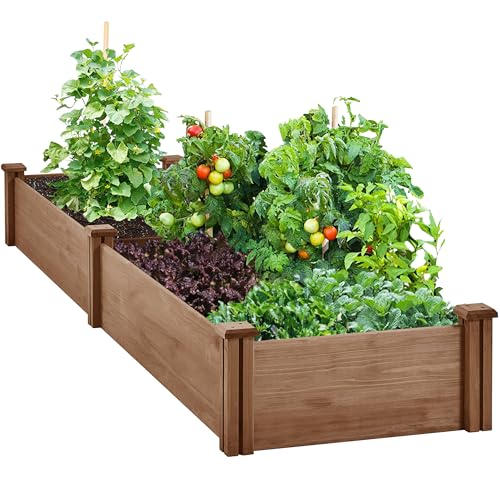
Best for: Mixed plantings where a cohesive look and modular layout matter. The upgraded corner posts with more slotting allow multiple beds to be combined with solid stability, facilitating larger, customizable garden designs.
Why chosen: It supports versatile layouts and larger garden designs through improved joining options. This makes it a good option for gardeners who plan to expand gradually or create stacked configurations in outdoor spaces.
Limitation: The larger modular setup may require more planning and level ground to ensure even assembly and stable operation on uneven patios.
SPECRAFT 8×4 Ft Open-Base Bed

Best for: Taller or deeper root crops and a larger planting footprint. An open-base design improves drainage and root health, while the central divider helps organize crops within a broad space.
Why chosen: The substantial planting area supports diverse crops, including lettuce, tomatoes, and flowers, without feeling cramped. The quick assembly in about 15 minutes makes it practical for busy gardeners.
Limitation: Larger footprint requires more yard or patio space; ensure level ground and weather considerations for long-term stability.
VIVOSUN Elevated Bed 48x24x30

Best for: Deep growing beds for robust herbs, vegetables, and small flowers. The 30-inch height reduces bending and provides ample soil for root development. It includes a bed liner and gloves for easy setup and initial planting.
Why chosen: The deeper design supports a wider range of crops and heavy soils while maintaining a sturdy fir wood frame. Pre-drilled drainage holes help prevent waterlogging and root rot in varying climates.
Limitation: The included liner requires careful placement to prevent water buildup around the wood edges; annual maintenance helps prevent wood wear in harsh weather.
Best Choice 48x24x30 Raised Bed
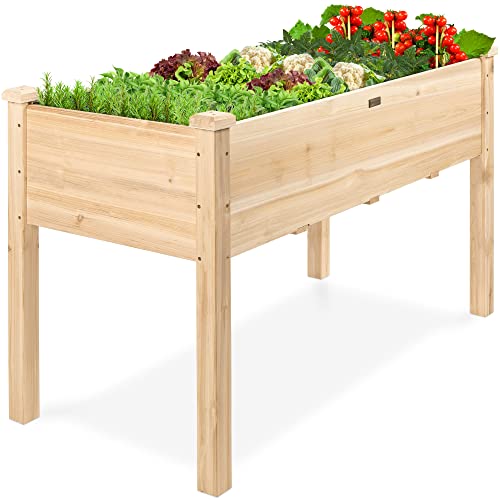
Best for: Budget-conscious buyers seeking a durable, all-wood design with bed liner. The long bed space offers ample room to cultivate a wide variety of vegetables, herbs, or flowers.
Why chosen: Naturally durable fir wood provides weather resistance and a solid frame for outdoor use. The included bed liner helps maintain soil moisture and protect the wood from soil contact over time.
Limitation: Wood untreated for color and finish may require protective sealants over time to extend life in exposed outdoor settings.
Buying Guide: How to Choose The Right Raised Wood Bed
- Space and footprint: Measure your outdoor area and match the bed length, width, and height. Taller beds reduce bending but take more space. Consider flexible layouts if you plan expansions.
- Soil depth and crops: Deeper beds support root-heavy vegetables. For herbs and greens, shallower beds can suffice. Choose a depth between 10 and 30 inches based on crops and climate.
- Construction and durability: Look for solid wood (fir or pine) with straight boards and strong corner joints. Dividable or modular beds offer layout flexibility for crop rotation and microclimates.
- Drainage and liner: An open-base design or built-in drainage holes prevents water stagnation. A waterproof liner helps protect wood and retain moisture but may require customization for drainage.
- Maintenance and longevity: Untreated wood looks natural but may need sealing or staining in harsh climates. Consider maintenance plans for sun exposure, rain, and freeze-thaw cycles.
- Assembly and tools: Favor beds with tool-free assembly or simple screw connections when you want quick setup. Modular designs can simplify future expansions or reconfigurations.
- Weight capacity: Heavier beds with thick posts and reinforced frames support more soil weight and plant load. Check product claims for soil and crop capacity when needed.
FAQ
- Are raised wooden beds suitable for all climates? Yes, they work in most climates, but the wood may need sealing or treatment to resist moisture, sun exposure, and rot in extreme conditions.
- Which bed depth is best for vegetables? A depth of 12–18 inches is suitable for most greens and herbs, while deeper beds (24–30 inches) support root crops like carrots or tomatoes.
- Do modular or divisible beds offer real benefits? Divisible designs enable crop rotation, isolate pests, and adapt layouts as plants grow or seasons change.
- Is an open-base bed better than a closed-base bed? Open-base beds provide drainage and air circulation, while closed or liner-backed beds protect wood and help retain moisture in dry climates.
- How long do wooden raised beds typically last? Durability depends on wood type, treatment, climate, and maintenance; expect several seasons with proper care, and longer if sealed or protected.
- Do these beds require a liner? Liners help with moisture management and prevent soil from contacting wood directly, which can extend bed life in some environments.