Thinking about nectar feeders for birds? This guide highlights the best options for attracting hummingbirds and orioles, with clear comparisons and practical buying tips. Whether you want easy cleaning, anti-pest designs, or decorative feeders, you’ll find choices that fit different yards and birding goals. The top picks are described with who they’re best for and why they were selected, plus potential drawbacks to consider.
| Product | Best For | Why It Stands Out |
|---|---|---|
| Nature’s Way OFP1 All-in-One Oriole Buffet Bird Feeder | Oriole lovers and entry-level feeders | Bee guards, removable jelly dishes, and a protective baffle for weather resilience |
| Perky-Pet Hummingbird Nectar Concentrate (32 oz) | Hummingbird enthusiasts needing nectar concentrate | Real flower nectar mimic, convenient red nectar attractant |
| TOP XIAN Hummingbird Feeders (2 Pack, 14 oz) | Multiple feeding stations | Ant moat, bee guards, easy assembly for quick setup |
| Tegarbed Hand Blown Glass Hummingbird Feeder (24 oz) | Stylish, durable design with easy cleaning | Hand-blown glass, anti-drip design and wide mouth |
| FEED GARDEN Glass Hummingbird Feeder (16 oz) | Budget-friendly, easy maintenance | Bee/ant protection, leak-proof design, wide-mouth for cleaning |
Product Overview
Nature’s Way OFP1 All-in-One Oriole Buffet Bird Feeder

Best for: Orioles and general nectar feeding setups. Why selected: This feeder integrates bee guards to reduce pest visits, removable jelly dishes to simplify cleaning, and a protective baffle to shield the feeder from weather while preserving bird visibility.
Caution: The jelly dishes are removable, so frequent cleaning is helpful to prevent mold or nectar waste when not replenished regularly.
Perky-Pet Hummingbird Nectar Concentrate (32 oz)

Best for: Hummingbird-focused feeders needing ready-to-use nectar. Why selected: The concentrate imitates real flower nectar and uses 100% sucrose, designed to attract hummingbirds with a bright red color.
Caution: This product is a concentrate; ensure proper mixing and storage to avoid crystal formation or spoilage in warm conditions.
TOP XIAN Hummingbird Feeders for Outdoors, 2 Pack

Best for: Homeowners needing multiple feeding stations. Why selected: A two-pack with 14 oz capacity per feeder, featuring ant moat and bee guards, plus four ports and perches for better hummingbird access.
Caution: The assembly is designed to be quick, but ensure all connections are tight to prevent leaks during windy days.
Tegarbed Hand Blown Glass Hummingbird Feeder (24 oz)

Best for: Garden aesthetics and durable glass feeders. Why selected: Hand-blown glass provides a unique look, with a design optimized to resist cracking and a wide mouth for easy cleaning. It includes an ant moat and a perch circle to support multiple hummingbirds.
Caution: Glass feeders require careful handling and placement to avoid accidental breaks in windy locations.
FEED GARDEN Glass Hummingbird Feeder (16 oz)
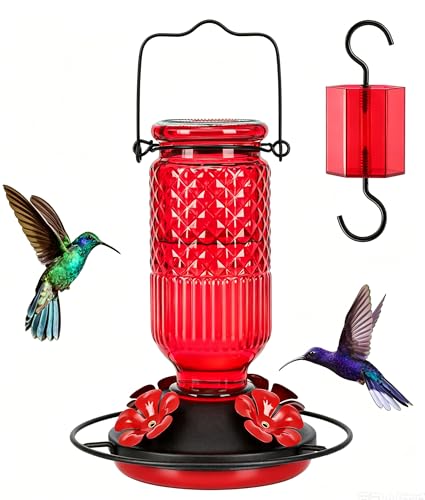
Best for: Budget-conscious buyers seeking easy maintenance. Why selected: This feeder emphasizes bee and ant protection with an ant moat, a leak-proof design, and a wide-mouth glass bottle for quick cleaning and nectar level checks.
Caution: Ensure the gasket is intact to maintain leak-proof performance, especially in windy conditions.
Buying Guide
What to consider when buying nectar feeders
- Purpose and target birds: Orioles typically enjoy nectar with accompanying fruit offerings, while hummingbird feeders focus on nectar-rich solutions and multiple feeding ports.
- Pest protection: Look for bee guards, ant moats, and protective bells or baffles to minimize nectar loss and pest visits.
- Material and cleaning: Glass feeders are attractive but can be heavier; plastic feeders are lighter and easier to clean but may scratch or discolor over time. Wide-mouth designs simplify refills and sanitation.
Design features matter
- Ports and perches: More ports can attract more birds; ensure ports are sized to deter bees and ants when needed.
- Weather protection: A baffle or canopy can shield nectar from rain and sun, preserving freshness and reducing waste.
- Capacity and refill frequency: Higher capacity reduces maintenance but may require longer cleaning intervals. Match capacity to your yard’s bird activity.
Maintenance tips for optimal nectar feeding
- Clean feeders regularly to prevent mold and fermentation. Remove jelly dishes when not needed.
- Replace nectar or solution according to manufacturer guidance to avoid spoilage.
- Monitor for pests and adjust guards or moats as birds establish feeding patterns.
Placement and safety considerations
- Hang feeders in a shaded, safe area away from predators and heavy foot traffic.
- Avoid placing near windows to prevent collisions; use reflective wraps or distanced mounting.
- Ensure feeders are BPA-free and made with bird-safe materials to protect health.
Which feeder should you choose?
- Best for variety and ornamentation: Nature’s Way OFP1 Oriole Buffet for orange-tinted, nectar-and-jelly combos plus weather protection.
- Best for quick nectar preparation: Perky-Pet nectar concentrates for ready-to-use solutions with attention-grabbing color.
- Best for multiple stations: TOP XIAN 2-pack offers two feeders with pest guards for larger yards.
- Best for style and durability: Tegarbed hand-blown glass feeders provide aesthetic appeal with practical leak-resistance features.
- Best on a budget: FEED GARDEN glass feeder combines essential protection features at a lower price point.
Maintenance and replacement considerations
- Check for wear on gaskets and seals to maintain leak-proof performance.
- Inspect ports for cracks or clogging; replace if ports become nonfunctional.
- Keep jelly dishes clean or replace with nectar to prevent bacterial growth.
Quick reference: At-a-glance comparison
| Feature | Best For | Notes |
|---|---|---|
| Bee guards / Ant moat | Orioles and hummingbirds | Reduces pest visits; varies by model |
| Capacity | Low to moderate | Higher capacity requires longer cleaning intervals |
| Material | Glass for aesthetics; Plastic for lightweight | Glass needs careful handling |
| Cleaning ease | Wide-mouth openings | Removable dishes help with cleaning |
FAQ
- What nectar is best for hummingbirds? A: A solution of 100% sucrose is commonly recommended; avoid red dye and additives unless specified by the product.
- How often should I clean nectar feeders? A: Clean at least every 1–2 weeks, more often in hot weather or when feeding jelly or sugar-containing mixes.
- Do feeders attract bees and ants? A: Yes, which is why models with guards, moats, and baffles are beneficial for protecting nectar access.
- Can I mix jelly and nectar in the same feeder? A: Some feeders offer jelly dishes, but keep jelly and nectar separate to prevent spoilage and cross-contamination.
- Are glass feeders safe for birds? A: Yes, when the glass is BPA-free and the feeder is maintained free of sharp edges or cracks.
- How many feeders should I start with? A: For beginners, one feeder per feeding zone plus a backup in case of cleaning, weather, or maintenance needs.
Note: The information above reflects features and typical usage considerations from product descriptions. For detailed assembly and care instructions, refer to the product pages.