Answering the question “which seeds are best for organic sprouting,” this guide highlights five top options for home sprouting. These picks suit beginners and seasoned growers alike, and they emphasize organic, non-GMO seeds that yield crunchy microgreens or tasty sprouts within days. Ideal buyers include apartment dwellers seeking countertop greens, health-focused families wanting fresh nutrients, and hobby growers aiming for quick harvests with low-maintenance care.
| Product | Type | Best For | Germination Speed |
|---|---|---|---|
| Seedboy Organic Non-GMO Sprouting Seeds | Salad Mix | Busy households seeking nutrient-dense greens | Under 7 days |
| Nature Jim’s Sprouts Organic Salad Mix | Microgreen Blend | Beginners wanting easy indoor/outdoor growing | About 5 days |
| Nature Jim’s Organic Broccoli Sprouting Seeds | Broccoli Sprouts | Sulforaphane-rich greens | About 5 days |
| Sereniseed Organic Salad Mix Sprout Seeds (16 oz) | Alfalfa, Radish, Broccoli, Clover | Non-GMO, organic bulk for frequent sprouters | 5–7 days |
| HOME GROWN Broccoli Seeds 8 oz | Broccoli Sprouts | High germination, quick harvest | 5 days |
Seedboy Organic Non-GMO Sprouting Seeds – Salad Blend

Best for: urban apartments and on-the-go lifestyles. This mix includes alfalfa, broccoli, mung bean, lentil, and radish—giving a balanced, mild-to-crunchy flavor suitable for smoothies, sandwiches, and salads. The seeds are USA-grown and USDA Organic, with quality testing to ensure purity and safety. High germination rates help you harvest quickly, even with minimal space.
Why selected: The combination covers familiar flavors while providing diverse textures in one pouch. It’s ideal for those who want a turnkey sprouting experience without buying multiple seed varieties. A caution: some users may prefer smaller seed lots for experimenting with flavors before committing to a full 8 oz bag.
Nature Jim’s Sprouts Organic Salad Mix
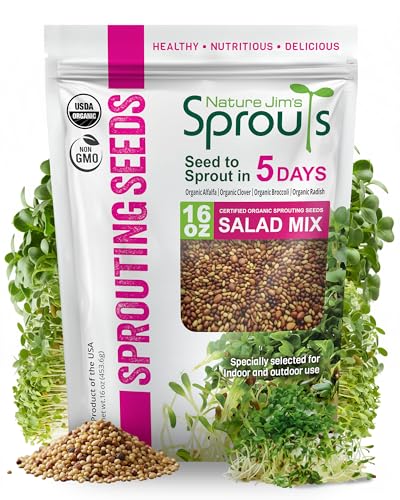
Best for: beginners who want a swift, forgiving sprouting experience. This mix blends broccoli, alfalfa, radish, and clover seeds, all certified organic and non-GMO. Expected sprouts appear in about five days, allowing rapid rotation of crops for fresh greens on a weekly schedule.
Why selected: It emphasizes quick results with a simple, reliable starter blend. The combination suits those who want a classic microgreen trio plus clover for texture. Caution: clover can overwhelm milder flavors if you prefer single-flavor greens.
Nature Jim’s Organic Broccoli Sprouting Seeds

Best for: gardeners seeking sulforaphane-rich sprouts with a quick turnaround. These organic broccoli seeds sprout in about five days and are noted for their quality and strong germination. Great for indoor setups like jars or microgreens trays, providing a nutrient-dense addition to meals.
Why selected: The broccoli focus adds a well-known health boost and a recognizable flavor profile. It’s a safe choice for first-time broccoli sprouters while remaining robust enough for seasoned growers. Limitation: flavor can be stronger than alfalfa, which might not suit all recipes.
Sereniseed Organic Salad Mix Sprout Seeds (16 oz)

Best for: bulk sprouters who want a reliable, tested blend. This 16 oz bag includes alfalfa, radish, broccoli, and clover, all USA-sourced, non-GMO, and certified organic by Oregon Tilth. The seeds are stored in climate-controlled conditions to sustain high germination rates.
Why selected: The organic certification and multiple varieties support year-round sprouting with diverse flavors. A note: bulk packaging may require adequate storage space to maintain freshness after opening.
HOME GROWN Broccoli Seeds 8 oz

Best for: growers focusing on fast, nutrient-dense broccoli sprouts with consistent germination. These organic, non-GMO seeds are USA-sourced and suited for jars or microgreen trays. Harvest occurs in about five days, delivering sulforaphane-rich greens in a short timeframe.
Why selected: The emphasis on high germination and rapid harvest makes this a dependable option for regular sprout cycles. Caution: broccoli sprouts can have a stronger taste; balance with milder greens if needed.
Buying Guide
What should you consider when choosing organic sprouting seeds?
- Seed type and flavor profile: Select blends that match your meals, such as mild alfalfa or spicy radish for sandwiches and salads.
- Organic and non-GMO status: Prioritize seeds certified organic and non-GMO for cleaner sprouts and peace of mind.
- Germination rate and maturity time: Higher germination and a 5-day harvest cycle help maintain a steady supply of greens.
- Storage and shelf-life: Look for seeds stored in climate-controlled environments or packaged with freshness in mind.
- Container compatibility: Consider sprouting jars for small spaces, or trays for microgreens in kitchen counters.
- Flavor versatility: A mixed seed blend offers variety, while single-ingredient seeds suit specific recipes.
Which setup suits your needs?
If you live in a compact space and want quick, weekly harvests, a mixed organic seed blend like Seedboy or Sereniseed is ideal. For health-focused families seeking sulforaphane-rich broccoli sprouts, Nature Jim’s Organic Broccoli Sprouting Seeds or HOME GROWN broccoli seeds are strong choices. Beginners may favor Nature Jim’s Sprouts Organic Salad Mix for its forgiving growth and fast results.
Storage and care tips
Keep seeds in a cool, dry place to preserve germination rates. After opening, reseal bags tightly and store them in a pantry or fridge if recommended by the supplier. Rinse sprouts in clean water and drain thoroughly to prevent mold. Use a breathable sprouting jar or tray to ensure consistent airflow during the rooting phase.
FAQ
- What makes a sprouting seed organic? Organic seeds are grown without synthetic pesticides, herbicides, or genetically modified organisms and are certified by recognized organic standards.
- How long does it take to harvest sprouts? Most mixes produce sprouts in about 5 days, with some greens ready in as few as four days depending on light, humidity, and seed type.
- Are these seeds safe for beginners? Yes. The selected blends emphasize easy germination, clear instructions, and forgiving growth for new growers.
- Can I grow sprouts year-round? Yes. Indoor setups controlled by light and moisture can yield fresh greens in any season.
- Which seed is best for broccoli sprouts? Nature Jim’s Organic Broccoli Sprouting Seeds or HOME GROWN Broccoli Seeds are reliable options for sulforaphane-rich sprouts.
- Do these seeds require special equipment? A simple sprouting jar or microgreens tray is usually sufficient; many blends adapt well to jars, trays, or traditional soil-like setups.