For effective rodent control, choose a trusted, payload-specific product that fits your space, target pests, and safety needs. This guide highlights five top dry-acting rodenticide options and a reusable baiting solution, explaining who each is best for, where to use it, and key considerations. Whether you need indoor protection, outdoor perimeter control, or farm-scale management, these picks help you eliminate rats and mice with clear, practical guidance. The buyer table below offers a quick comparison to help you decide which product to consider first.
| Product | |||
|---|---|---|---|
| Tomcat With Bromethalin Bait Chunx | Bait blocks | Agricultural uses and professional applicators; outdoor/indoor ready | Place in tamper-resistant stations when children or pets may access |
| Victor Rat Poisoning | Ready-to-use bait | Indoor and outdoor rodent control; versatile for varied environments | Keep away from non-target animals; use as directed |
| Ramik Bars | Bar bait (diphacinone) | Controlled, long-term outdoor/indoor use around structures | Not for use in homes with young children or non-target access |
| RatX All-Natural Pellets | Non-toxic, natural pellets | Safe option around livestock and pets; DIY and professional use | May require longer treatment time for reduction |
| Farnam Just One Bite II | Rodenticide bar | Kills warfarin-resistant Norway rats and other common species | Delayed death; plan for monitoring bait stations |
Tomcat With Bromethalin Bait Chunx Pail

Tomcat Bromethalin Bait Chunx are blocks designed for agricultural settings and professional applicators. They target Norway rats, roof rats, and house mice, with feeding ceasing after a toxic dose. Each block kills multiple mice in controlled settings. Suitable for indoor or outdoor use, these bait blocks should be placed inside tamper-resistant bait stations if access by children, pets, or non-target animals is possible. Best for farms, greenhouses, and professional pest programs seeking a robust, field-ready solution.
Victor Rat Poisoning for Inside & Outdoor Use
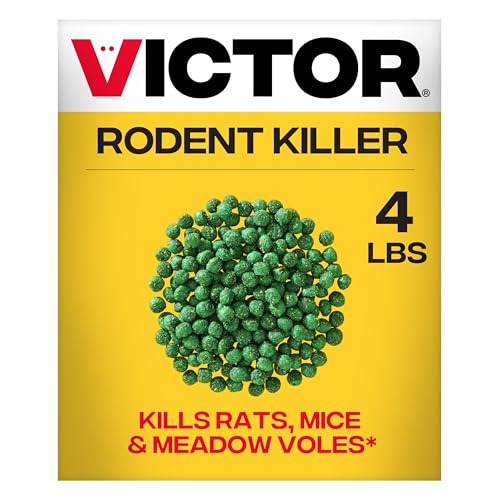
Victor offers a versatile rodent control option with ready-to-use bait suitable for both indoor and outdoor settings. Its fish-flavored bait balls suit harsh outdoor conditions while providing effective interior control. This solution is best for mixed-use scenarios—garages, barns, attics, and sheds—where users want a straightforward setup without complex stations. The formulation is designed to withstand wet or dry conditions, preserving effectiveness across environments.
Ramik Bars All-Weather Bait
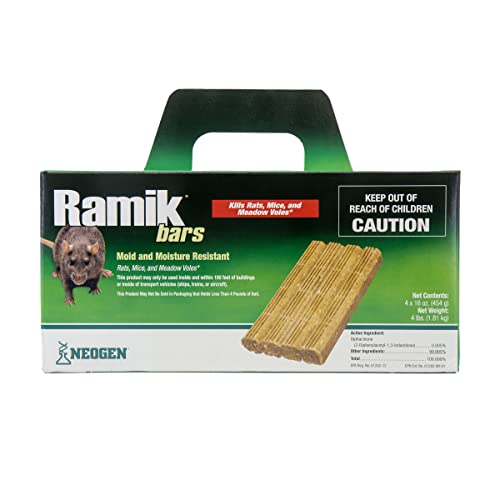
Ramik Bars use diphacinone, a first-generation anticoagulant, and come as four 16-ounce bars. They’re designed for use around man-made structures and can be broken into smaller pieces for flexible placement. This product is well-suited for long-term control of a broad range of rodents, including house mice, Norway and roof rats, and several species of voles and woodrats. Best for property-wide rodent management where a durable, weather-tolerant bait is desired. A potential limitation is the need to keep out of reach of children and non-target animals in some settings.
EcoClear RatX All-Natural Pellets

RatX Pellets are an all-natural, non-toxic option designed for all rat and mouse species. They are safe around people, pets, and livestock when used as directed, making RatX a practical choice for homes, barns, and industrial spaces where safety concerns limit the use of conventional poisons. This product is best for households and workplaces seeking a humane approach or for users who require a non-poison-based regimen. It may require more time to achieve visible reductions but reduces risk to non-target animals.
Farnam Just One Bite II Rat & Mouse Bar

Just One Bite II bars combine lethality with delayed death, typically taking 4–5 days after ingestion. This delay helps prevent bait shyness after initial feeding. It is effective against Norway rats, roof rats, and house mice, including those resistant to warfarin. This option is best for perimeter and interior control where a single feeding event may be unlikely, and users need a steady, monitored approach. A limitation is the delayed effect, which requires ongoing monitoring to confirm activity declines.
Buying Guide
What type of rodent problem do you have?
Identify whether you are dealing with rats, mice, or both. Some products target multiple species, while others excel in a single pest class. Consider the size and accessibility of the area you need to treat (attics, basements, barns, or fields).
Indoor vs outdoor use
Outdoor formulations should withstand moisture and weather conditions, while indoor options focus on minimizing exposure of non-target animals and people. For mixed spaces, choose a product labeled for both indoor and outdoor use, and consider bait stations for safety.
Safety and tamper resistance
In homes with children or pets, prioritize tamper-resistant stations and non-toxic or less-toxic options when possible. Always follow label directions and place baits in locations that reduce access by non-targets.
Speed vs long-term control
Anticoagulant-based baits typically require longer exposure to reduce populations, while some blocks may produce faster initial effects. Balance the need for quick results with safety and ongoing management requirements.
Location and accessibility
Place baits away from food, water sources, and animal enclosures. Consider high-traffic rodent paths and entry points such as near foundations, along walls, or inside attics and garages. Use bait stations where required to limit access by non-targets.
Compliance and handling
Read and follow all label instructions, including application rates, placement, storage, and disposal. Ensure adherence to local regulations regarding pesticide use and baiting practices on farms or commercial properties.
How to monitor effectiveness?
Regularly inspect bait stations and surrounding areas for signs of consumption, rodent activity, or fresh droppings. Replace or replenish baits as needed and adjust placement based on activity patterns observed over 1–2 weeks.
What to do if the activity persists?
If rodent activity continues after 1–2 weeks, re-evaluate bait placement, consider alternative products, or combine methods (traps, exclusion, sanitation improvements). Avoid applying multiple products in the same space without guidance to prevent unintended risks.
Non-target safety and environmental considerations
Non-target wildlife and domestic animals can be affected by certain poisons. Use humane approaches when possible and prioritize products with clear safety features and restricted access. Always keep bait out of reach of pets and wildlife.
FAQ
- What is the fastest way to reduce a rodent infestation indoors?
- Are all rodent baits safe around pets?
- Should I use natural or chemical options?
- Can I mix products for faster results?
- How long does it take to see a decline in rodent activity?
- What maintenance is needed after initial control?
Use a combination of tamper-resistant bait stations with an effective rodenticide labeled for indoor use, plus clear sanitation practices to limit attractants. Immediate action often requires both baiting and physical exclusion.
No. Some products are designed to be pet-safe when used with tamper-resistant stations, but always follow label directions and place baits where pets cannot reach.
Natural options like non-toxic pellets can reduce risk to non-targets, but chemical baits may be necessary for severe infestations. Choose based on risk tolerance, environment, and pest species.
Avoid mixing products unless explicitly directed by the label. Using multiple products can complicate safety, efficacy, and regulatory compliance.
Depending on the product and infestation level, declines can begin within days to a couple of weeks. Ongoing monitoring is essential for confirming sustained control.
Continue monitoring, replace baits as needed, seal entry points, and maintain cleanup practices to prevent re-infestation.