Answering the question “which hay trough is best for goats?” this guide compares top-rated options designed to minimize waste, withstand rough use, and fit different herd sizes. These feeders suit farmers, homesteaders, and small-scale ranchers looking for durable, weather-ready solutions. The top products span galvanized steel, stainless steel, and multi-compartment designs, each with unique strengths. Below, you’ll find a brief product snapshot, followed by in-depth sections that explain who each feeder is best for and why it was selected. A concise buying guide and FAQ help seal the decision with practical considerations.
Product Comparison Snapshot
| Product | Capacity | Material | |
|---|---|---|---|
| FULUPET 70 Gallon Pasture Hay Feeder | 70 gallons total (45 gal hay rack, 24 gal grain pan) | Galvanized steel | Medium-to-large herds needing waste reduction |
| YTOXEO Goat Hay Feeder, 94-Gallon | 94 gallons total | Stainless steel | Busy owners wanting high capacity with rust resistance |
| Generic 62″ Long Goat Hay Feeder, 92 Gallon | 92 gallons | Stainless steel | Durable, long outdoor use with large herd sizes |
| BUYYAH Mini Horse Hay Feeder | 35 gallon hay capacity | Galvanized steel | Smaller ponies, goats, and sheep on pasture |
| VEVOR 2 in 1 Livestock Hay Feeder, 80 Gallon | 80 gallons total (56 gal hay, 24 gal grain) | Steel, galvanized components | People needing dual feed vs. forage separation |
FULUPET 70 Gallon Pasture Hay Feeder

The FULUPET feeder combines a V-shaped hay rack with a deep grain trough, creating a two-zone feeding system. Its design catches falling forage in a bottom pan, reducing waste by up to 30% and lowering daily feed costs. The heavy-duty galvanized steel resists weather and chewing, making it suitable for year-round pastures or barns. With a large capacity of 70 gallons, it enables several animals to feed simultaneously, minimizing refill trips. This model is ideal for medium to large herds where feed efficiency matters.
Best for: Larger goat herds or mixed livestock operations that want to separate grain from hay and minimize waste. It’s also suitable for environments with harsh weather, thanks to its robust steel construction.
Caution: The dual-compartment design adds complexity; ensure proper assembly to maximize waste reduction. Regular inspection of the powder-coated finish helps prolong life in damp conditions.
YTOXEO Goat Hay Feeder, 94-Gallon Capacity

The YTOXEO option offers a large 94-gallon capacity with a 59″ long rack and a 8.0″ deeper feeding pan. It uses rust-proof stainless steel to resist weather and animal wear, ensuring longevity in outdoor environments. The design emphasizes safety with smooth, rounded edges to prevent injuries to goats, including kids, while maintaining a straightforward fill-and-use workflow. This feeder is well-suited for busy owners who need a dependable, long-lasting stainless option.
Best for: Goat owners who prioritize rust resistance and a high daily capacity, especially in rainy or snowy climates where corrosion risk is high. Suitable for barns and open pastures alike.
Caution: Stainless steel units can be heavier and may require more robust mounting or support, especially in windy areas or with larger herds.
62” Long Goat Hay Feeder 92 Gallon, Stainless Steel
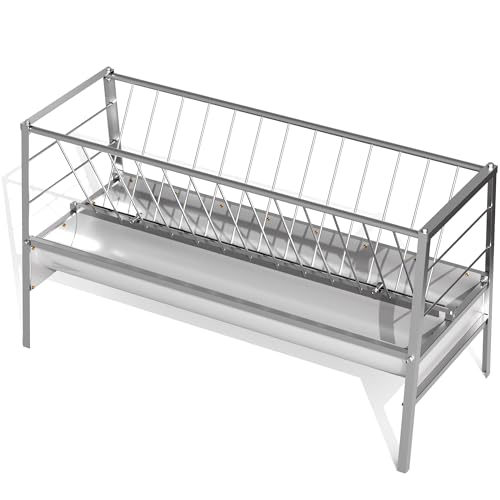
This 92-gallon stainless steel feeder is built for long outdoor use with a sturdy frame. It features a 24-inch-wide deeper feeding tray and a top hay rack that keeps forage off the ground. The design helps keep hay clean and reduces waste while accommodating a sizable group of goats. The emphasis is on durable stainless construction to resist rust and stand up to rugged goat chewing.
Best for: Larger operations needing a durable stainless option with a broad feeding area and easy assembly. It’s a solid pick for outdoor runs where weather exposure is a constant factor.
Caution: All stainless models can be pricier upfront, and care should be taken to ensure secure anchoring to prevent tipping on uneven ground.
BUYYAH Mini Horse Hay Feeder

The BUYYAH feeder uses a thickened nylon feeding trough to catch grass and reduce waste, along with a large 30 gallon hay capacity and 5 gallon shredded grass options. The heavy-duty galvanized steel frame is designed for all-weather use and longevity. The design focus is on minimizing waste for smaller herds, including ponies and mixed small livestock, while offering a practical quick-access feeding solution.
Best for: Small to mid-sized herds that prioritize waste reduction and a robust metal frame, especially those with ponies and goats sharing pasture space.
Caution: The nylon trough can wear over time; inspect regularly for signs of wear or tearing to avoid compromised feeding efficiency.
VEVOR Livestock Feeding Trough, 22 Gallon

The VEVOR 22-gallon trough emphasizes durability with galvanized steel and rounded edges for safety. Its compact footprint suits smaller spaces while still delivering a reliable supply of hay and grain. The trough is designed to withstand outdoor use and rough handling by goats, with easy cleaning in mind. A practical option for those with limited space or who want a simple, sturdy feeder that cleans quickly.
Best for: Small herds, limited space, or owners seeking a straightforward trough without the bulk of larger feeders. This model offers a balance of capacity and manageability.
Caution: The smaller capacity means more frequent refilling for larger groups; plan accordingly if you have many animals to feed daily.
Oxphanor Pasture Hay Feeder 45 Gallon

The Oxphanor feeder pairs a 45-gallon top hay rack with a 24-gallon bottom feed pan for a two-zone feeding system. Built from robust galvanized steel with a protective powder coat, it’s designed to endure outdoor use across seasons. The dual compartments are intended to minimize hay waste while ensuring steady access to nutrition for multiple animals. This model balances capacity and durability for goat-focused operations.
Best for: Farms seeking a dependable dual-compartment design with strong outdoor performance and clear separation of hay and grain. It’s a versatile option for mixed-species fencing and feeding areas.
Caution: Assembly and alignment are important to ensure the top and bottom compartments interface correctly for smooth feeding flow.
VEVOR 2 in 1 Livestock Hay Feeder

This 80-gallon capacity unit combines hay trough and deeper feeding pan, designed to enrich feed for goats and other livestock while catching loose hay to keep floors cleaner. The feeder uses high-strength carbon steel and galvanized components to resist rust and wear. Its large capacity allows a sizable group of goats to feed simultaneously, which can reduce daily refilling.
Best for: Operators needing a robust, two-in-one system that supports a larger group of goats with a focus on keeping feeding areas tidy and reducing wasted forage.
Caution: Heavier construction means installation may require additional equipment or a partner help to lift and position safely in outdoor spaces.
PKNYBZH 2 Pack Heavy-Duty Livestock Feeder Trough

The PKNYBZH 2-pack includes stainless steel feeders with black-coated stands to withstand weather and rough handling. Each trough holds up to 7 gallons of hay or grain individually, and the stands are triangular for added stability to prevent tipping. The two-trough design supports larger or multiple herds while ensuring consistent access to food. This option is designed for versatility and resilience against harsh conditions.
Best for: Farms needing multiple feeders with stable stands for a varied herd, including goats, sheep, and horses. It’s a practical choice when you want redundancy and ease of movement.
Caution: Stainless steel units can be heavier; ensure you have proper anchors or mounting in exposed areas to prevent movement during windy weather.
Buying Guide: Practical Considerations For Choosing A Goat Hay Feeder
- Capacity versus herd size: Choose capacity that matches the number of goats and the feeding frequency. Larger herds benefit from higher capacity to reduce refilling time.
- Material and durability: Galvanized steel offers excellent corrosion resistance; stainless steel provides superior rust resistance and longevity in wet climates. Consider your climate and herds’ chewing habits.
- Two-in-one designs: Compartments for hay and grain help separate food types, minimize waste, and promote healthier feeding habits. Weigh maintenance needs and ease of cleaning.
- Safety features: Rounded edges, smooth welds, and stable bases reduce injury risk to kids and adults alike. Inspect edges and corners before use.
- Space and placement: Measure available area to ensure the feeder fits and remains accessible. Consider whether outdoor placement requires weather protection or anchoring.
- Maintenance considerations: Look for designs that are easy to clean, resist corrosion, and allow quick refilling. Short, frequent maintenance sessions save time in busy operations.
- Assembly and installation: Some models require more assembly than others. If space is tight, choose options with simpler setup or modular components.
Frequently Asked Questions
- What capacity do I need for a moderate goat herd? For a moderate herd, models around 40–70 gallons provide a balance of fresh forage access and fewer refills per day.
- Is stainless steel worth the extra cost? Stainless steel offers excellent corrosion resistance and longevity, especially in damp or snowy climates, which can justify the higher price over many seasons.
- Should I choose a 2-in-1 feeder? If you feed both hay and grain, a 2-in-1 design reduces waste and keeps parcels of feed separated, which can support healthier feeding habits.
- What maintenance is typical for metal feeders? Regular inspection of welds, fasteners, and coating; cleaning to remove hay dust; and ensuring no sharp burrs or exposed metal during use.
- How important is safety in feeder design? Very important. Rounded edges, stable bases, and chew-resistant materials reduce injury and product loss on rough terrain.
- Can feeders handle outdoor weather year-round? Yes, many models are designed for all-weather use, but anchoring and protective finishes extend life in extreme climates.