Answer: For growing multiple fruit and citrus trees, select a slow-release spike or ready-to-use spray that fits your tree types, climate, and feeding schedule. These products are best for homeowners with varied fruit trees (such as citrus, apples, avocados) who want simple, seasonally timed nutrition or targeted pest and disease control. The top picks below cover spikes, concentrates, and sprays to support fruit production, foliage health, and pest management.
The following table summarizes five strong options chosen for broad compatibility with fruit and citrus trees, ease of use, and clear feeding guidance.
| Product | Type | Best For | Notes |
|---|---|---|---|
| Miracle-Gro Fruit & Citrus Plant Food Spikes | Spikes | Seasonal feeding for fruit & citrus trees | Twice-yearly feeding, easy application |
| Espoma Citrus-Tone 5-2-6 | Organic Fertilizer | Organic feeding for all citrus and avocado trees | Ready to use, Bio-tone blend |
| SimplyGro Fertilizer Spikes for Citrus & Fruit Trees | Spikes | Balanced feeding for citrus & fruit trees | 3-month nutrition, low leakage |
| Jobe’s Organics Garden Fertilizer Spikes | Organic Spikes | Organic option for fruit & citrus plants | OMRI listed, low runoff |
| BioAdvanced 3-in-1 Fruit, Citrus & Nut Tree Spray | Spray | Insect and disease control with convenience | Kills pests and controls disease with one spray |
Miracle-Gro Fruit & Citrus Plant Food Spikes
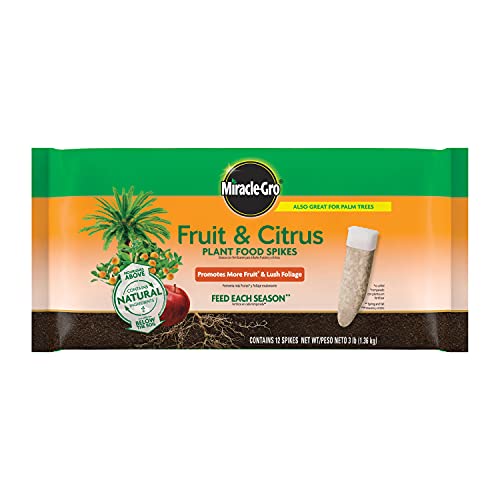
Features: Formulated for citrus and fruit trees, including apple, orange, lemon, lime, and avocado. Promotes more fruit and lush foliage versus unfed plants. Easy feeding twice yearly—apply in early spring and mid-fall. This product is best for homeowners seeking a simple, seasonal feeding routine that supports consistent fruit production.
Who it’s best for: Homeowners with established fruit or citrus trees who want a low-effort, predictable fertilization schedule. It is particularly suitable for trees that respond well to slow-release feeds and a twice-year cycle.
Caution: Spikes should be placed at correct root zones; misplacement may reduce effectiveness or introduce uneven growth. Do not exceed the recommended quantity per tree.
BioAdvanced Fruit & Citrus Tree Concentrate

Features: Systemic insecticide concentrate (Imidacloprid) designed to protect fruit trees from listed insects for up to two months. No spraying required—concentrate is mixed and applied at the base of plants. This option is best for trees prone to sap-sucking pests and those wanting a contained, base-applied solution.
Who it’s best for: Gardeners seeking durable, systemic pest protection with a straightforward base application. Suitable for fruit trees experiencing pest pressure where a preventative approach is desired.
Caution: Not a fertilizer; it provides pest protection rather than direct nutrition. Follow label directions to avoid over-concentration near edible harvests.
BioAdvanced 3-in-1 Fruit, Citrus & Nut Tree Spray

Features: Combines insect control, disease control, and mite control in one spray. It is designed to protect from caterpillars, aphids, mites, and other listed pests, while also addressing diseases like black spot and powdery mildew. This product is best for broad, immediate protection during vulnerable growth periods.
Who it’s best for: Gardeners needing quick, comprehensive protection with a single spray application. It’s especially useful when multiple pests and diseases threaten both fruit and ornamental citrus trees.
Caution: Re-entry and coverage instructions must be followed. Avoid applying during extreme heat or drought conditions to maintain effectiveness and safety for edible crops.
Espoma Citrus-Tone 5-2-6

Features: An organic fertilizer designed for all citrus trees and avocado or nut varieties. Contains a Bio-tone formula for soil health and a ready-to-use granule mix with 5-2-6 analysis and 5% calcium. It’s environmentally safe with no sludges or toxic ingredients. Ready to use—no mixing required.
Who it’s best for: Gardeners preferring organic nutrition and ready-to-use granules, especially for established citrus or avocado trees. It supports steady growth and fruit production while maintaining soil vitality.
Caution: Organic options may release nutrients more slowly than synthetic spikes. Timing around bloom and harvest should align with tree needs to maximize fruit set.
Jobe’s Organics Garden Fertilizer Spikes

Features: Organic fertilizer spikes with a 3-5-5 NPK, designed to avoid runoff and odor while delivering nutrients below ground at the roots. Packaged as a simple option for regular feeding twice a year, typically in spring and fall or as needed during the growing season.
Who it’s best for: Gardeners seeking an organic, low-odor option with predictable root-zone delivery for fruit and citrus trees. This is suitable for those who want an OMRI-listed product without synthetic components.
Caution: Spikes require correct placement to ensure efficient nutrient delivery. Over- or under-feeding can affect growth and fruit development if not timed properly.
Buying Guide: Key Purchase Considerations
What type of product fits your trees best?
- Spikes or granules: Best for established trees needing long-term, low-effort nutrition. They deliver nutrients gradually at the root zone and are easy to apply twice a year.
- Concentrates and sprays: Useful when you want rapid protection from pests or diseases or when you need to address multiple issues in one treatment. They can be more timely but may require more careful application.
- Organic vs synthetic: Organic options support soil health and are preferred by buyers seeking natural inputs. Synthetic formulas may provide faster, more predictable results but rely on chemical nutrients.
What trees and fruits are you feeding?
Match the product to the tree type. Citrus-tolerant tools work well for orange, lemon, lime, and grapefruit trees, plus avocado and some nut trees. If your yard features a mix of fruit trees, a combination of spikes and organic varieties can cover all needs without overcomplicating care.
Feeding schedule and timing
Twice-yearly feeding (spring and fall) is common for spikes. Sprays or concentrates may require seasonal applications aligned with growth and harvest. Always follow label directions for frequency and amounts to avoid nutrient burn or environmental impact.
Environmental and safety considerations
Consider runoff potential and waterway safety. Spikes and granules typically minimize runoff compared to spreader-type feeds. Organic options reduce synthetic chemical exposure, while sprays require careful handling, especially around edible crops.
How to apply and monitor
Apply spikes at the root zone, avoiding trunk contact. For sprays, cover all affected foliage and follow re-entry restrictions after application. Monitor tree growth and fruit set across the season to adjust next feeding accordingly.
Short FAQ
- Q: Are fertilizer spikes better than sprays for fruit trees? A: Spikes are low-maintenance and ideal for steady root feeding; sprays provide quick protection against pests and diseases and can be ideal for immediate issues.
- Q: How often should I feed citrus trees? A: Most spikes are applied twice a year (spring and fall). Organic or spray products may follow seasonal pest pressures.
- Q: Can I mix multiple products? A: It’s generally best to avoid mixing products unless the label specifically allows it. Use products as directed and stagger applications if needed.
- Q: Are these products safe for edible fruit? A: Read the label for harvest intervals and any restrictions, particularly for sprays and concentrates near harvest time.
- Q: Do organic options work as well as synthetic ones? A: Organic inputs can provide solid results with a slower release and soil health benefits. Synthetic products may deliver faster nutrient delivery in some cases.
- Q: How do I know which product to choose for a diverse orchard? A: For variety, pick a couple of options—one for root feeding (spikes) and one for pest/disease management (spray or concentrate)—and rotate based on season.