Yes, squirrel-proof garden netting is a practical solution to protect fruits, vegetables, and delicate plants from wildlife while still letting air, light, and water reach them. This article compares five popular options to help American gardeners choose the right netting based on size, strength, and climate considerations. The top picks are best for small yards, larger plots, and a range of critters, including squirrels, birds, and deer. A quick buying table follows to summarize key specs and suitability at a glance.
| Product | Mesh Size | Size | Best For |
|---|---|---|---|
| Deer Fence Netting (7 x 100 ft) | 3/4 inch | 7 ft x 100 ft | Large gardens, fruit trees, and berry patches |
| Bird Netting for Garden (13 x 40 ft) | 5/8 inch | 13 ft x 40 ft | Medium plots, fruit trees, and vegetable beds |
| KLEWEE Bird Netting (7.5 x 25 ft) | 3/4 inch | 7.5 ft x 25 ft | Small to mid-size plantings, fruit trees |
| Fetanten Garden Netting (13 x 40 ft) | 5/8 inch | 13 ft x 40 ft | Backyard vegetable gardens and fruit crops |
| Ultra Fine Garden Netting (4 x 10 ft) | 0.8 mm x 1 mm holes | 4 ft x 10 ft | Small plant protectors, insect exclusion, patio spaces |
Deer Fence Netting 7 x 100 Feet

This large, reusable netting uses a 3/4 inch square mesh to deter deer and other animals while protecting plants, fruit trees, berries, and shrubs. It’s made from lightweight, durable polypropylene, designed to resist tearing, rust, and rot compared with metal barriers. The kit includes installation nails and cable ties for quick setup, making it a solid choice for bigger gardens where deer intrusion is common. Best for homeowners with extended garden beds or orchard blocks who want long-term protection without harsh chemicals.
Who this is best for: gardeners with substantial plots or fruit tree areas needing a tough, reusable barrier. Why selected: large coverage area, durable construction, and a mesh size that blocks deer without harming wildlife. Limitation: heavier than some other nets, so installation can require more support in windy locations.
Bird Netting for Garden — 13 x 40 Ft

This 13 x 40 foot bird netting uses HDPE material with a 5/8 inch mesh. It’s designed to withstand extreme temperatures (-58°F to 212°F) and resists UV damage and aging. It’s lightweight, easy to install, and reusable, providing broad coverage for vegetable beds, fruit trees, and shrubs. The netting is built to minimize tangling and to prevent birds, poultry, and small animals from accessing protected crops without impeding plant growth. Best for: gardeners seeking weather-resistant netting that performs well year-round in varied climates.
Who this is best for: mid-sized gardens or orchard margins that experience consistent bird pressure. Why selected: excellent weather resilience and low-tangle design. Limitation: may require more ties and stakes for long runs in windy areas.
KLEWEE Bird Netting — 7.5 x 25 ft

This 7.5 x 25 ft net features a 3/4 inch mesh designed to stop birds, deer, squirrels, and other pests from reaching ripening fruit and vegetables. It includes practical accessories like metal U-shaped staples and zip ties for easy, sturdy installation. The netting is UV-stabilized for durability, non-toxic, and compatible with a wide range of garden sizes. Best for: small to medium plots needing robust, reusable coverage. Why selected: compact footprint with strong basic accessories and long-term durability. Caution: smaller nets may require more frequent repositioning as plants grow or as pests test the perimeter.
Fetanten Garden Netting — 13 x 40 Ft
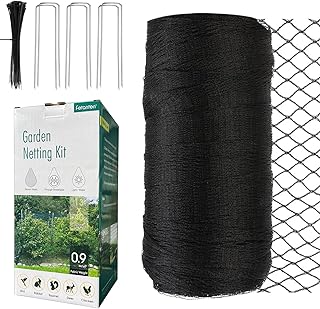
Fetanten offers a 13 x 40 foot garden netting kit with staples and twist ties for straightforward DIY setup. Made from HDPE with UV resistance, this netting is designed to be durable, reusable, and less prone to tangling than typical diamond meshes. Its 5/8 inch woven mesh is sized to protect ripening fruit, trees, blueberries, strawberries, and vegetables without significantly hindering plant growth. Best for: versatile backyards seeking easily cut-to-fit protection with reliable hardware included. Why selected: strong, weather-ready mesh with practical accessories for a quick installation. Limitation: longer runs may require careful anchoring to prevent wind flapping during storms.
Ultra Fine Garden Netting — 4 x 10 ft

This smaller 4 x 10 foot net is designed to exclude insects as well as birds, with ultra-fine mesh (hole size approximately 0.8 mm x 1 mm). It allows air and light to reach plants while keeping pests away and letting water through for irrigation. The kit emphasizes ease of use, with options to add stakes, staples, and clips for a barrier that can be formed around individual plants or rows. Best for: potted plants, vegetables in compact beds, or patio garden setups. Why selected: precise pest exclusion with mesh fine enough to block smaller pests while remaining breathable. Caution: not suitable for larger birds or mammals that can reach through larger gaps.
Buying Guide
Key considerations when selecting squirrel-proof garden netting include mesh size, coverage area, durability, and climate suitability. Below are practical questions and answers to help you decide.
What mesh size is best for squirrels and small birds?
For squirrels and small birds, a 3/4 inch to 5/8 inch square mesh is commonly effective. It prevents entry while staying gentle on plant growth and reducing wind resistance. Larger meshes may allow entry by small rodents, while finer meshes can hinder air flow and water movement.
What garden size does each option fit?
Large plots and orchards benefit from extended lengths like 7 x 100 ft nets. Medium to small gardens do well with 13 x 40 ft or 7.5 x 25 ft kits. Choose proportionally to avoid excessive waste and ensure easy handling during installation and removal.
Are these nets reusable year after year?
Most products in this list are designed for multiple seasons with UV stabilization and rot resistance. Reusability depends on wind exposure, stakes, and proper anchoring. Look for UV-stabilized materials and bundled hardware for easy maintenance.
Do these nets affect plant growth or irrigation?
Netting should be positioned to avoid covering flowering or fruiting parts. Mesh that’s too tight can slightly reduce airflow, while perforated or loose nets allow adequate light and water penetration. Some options document easy irrigation through the mesh, which is helpful for drip or overhead systems.
What installation tips help prevent gaps?
Secure nets at soil level with stakes, nails, or staples. Use cable ties or metal U-shaped staples to create taut lines that resist wind. Regularly inspect for sagging edges and re-tighten when needed to maintain a continuous barrier.
Which option is best overall?
The best overall choice balances coverage, durability, and ease of use. For large spaces, a 7 x 100 ft deer netting provides broad protection with robust materials. For mid-sized gardens, a 13 x 40 ft option from Fetanten or Bird Netting variants offers strong, reusable protection with included installation hardware.
FAQ
- Will these nets affect pollination? Most nets are designed to let bees and pollinators through when properly installed around crops. Ensure there are gaps or openings for pollinators if needed.
- Can I cut nets to fit irregular beds? Yes. Most nets are DIY-cuttable to match unique garden layouts while maintaining sufficient mesh integrity.
- Are these nets safe for wildlife? The listed nets use non-toxic materials designed to deter pests without harming animals. Avoid overly tight configurations that could trap wildlife inside.
- Do I need special tools? Basic installation nails, staples, or zip ties are typically included or recommended. A simple pair of scissors or garden shears helps with cutting to size.
- How do I maintain nets over winter? Clean debris, check for tears, and store rolled or flat in a dry location when not in use to extend lifespan.
- Can I use nets year-round in cold climates? Yes, many materials tolerate extreme temperatures, but check the product’s temperature range for your region.