Finding the right modular floating dock system requires matching dock stability, ease of installation, and deck design to your water setting. This guide highlights top modular floating docks ideal for homeowners and property managers seeking durable, easy-to-assemble platforms. The selections below favor systems that are easy to extend, versatile for kayaks and small boats, and suitable for varying water conditions. Each product is evaluated for who benefits most, potential limitations, and how it compares to similar options.
Quick comparison table of selected products:
| Product | Best For | Key Benefit | Limitation |
|---|---|---|---|
| Patriot Docks D-22013 | Waterfront homes needing low-profile access | Close-to-water design with solid buoyancy | Limited side floats for balance compared to premium variant |
| Patriot Docks D-32013 | Paddleboards, kayaks, and multi-user docks | Side stability floats for enhanced balance | More parts than basic kit |
| Patriot Docks D-32014 | Same as D-32013 with gray decking | Stable, high-balance platform | Similar footprint to D-32013 |
| Connect-A-Dock 20-Foot Kit | Lakes and ponds needing longer runs | Complete kit with multiple sections and connectors | Schedule 40 piling not included |
| Connect-A-Dock 15-Foot Kit | Moderate-sized waterfronts | Compact, easy to install, modular | Less total length than 20-foot option |
Patriot Docks Low-Profile Floating Dock Section with Brown Aluminum Decking (D-22013)

The D-22013 is a compact, low-profile dock section designed to sit closer to the water, making access easier for swimmers and casual users. It includes a 4×8 low-profile frame, two 48x24x12 floating blocks, dual float mounting brackets, and two 4×4 deck panels. Best for homeowners who want a simple, unobtrusive platform that remains stable for small craft and wading. A potential limitation is fewer side floats, which can affect balance versus higher-end configurations.
Patriot Docks Low-Profile Premium Floating Dock Section with Brown Aluminum Decking (D-32013)
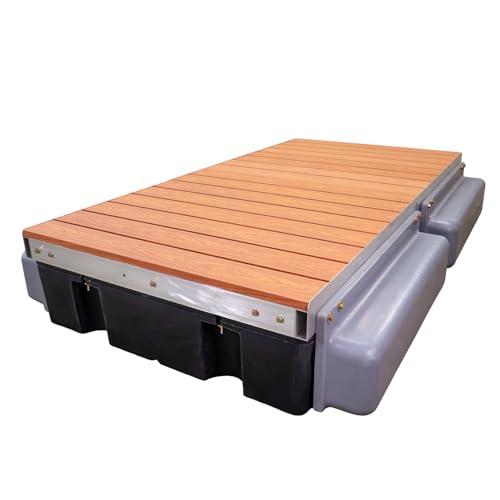
The D-32013 adds four side stability floats and more deck structure to the basic layout. It pairs a 4×8 frame with 2 deck panels, plus side floats for enhanced balance and weight distribution. This design is better for users requiring extra stability for multiple people, kayaks, or personal watercraft. Choose this if you want improved balance and a more secure platform, though it comes with increased component count and setup complexity.
Patriot Docks Low-Profile Premium Floating Dock Section with Gray Aluminum Decking (D-32014)

The D-32014 mirrors the D-32013 in structure but features gray aluminum decking and the same four side stability floats. It is well-suited for waterfronts where a muted deck color matches outdoor aesthetics while delivering robust stability for boats, paddleboards, and swimmers. Best for users prioritizing consistent balance and a cohesive color scheme; limitation is the same high-level setup as other premium Patriot sections.
Patriot Docks Low-Profile Floating Dock Section with Tan Poly Decking (D-22012)
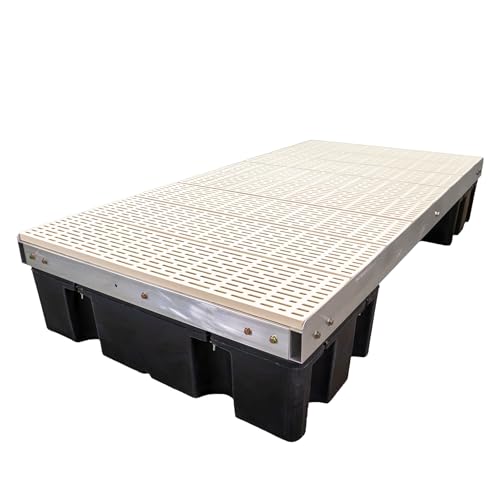
The Tan Poly version offers a low-profile frame and standard deck panels with durable polyethylene floats. This option emphasizes easy access and reliable buoyancy for general recreational use. Best for buyers who want a cost-effective, straightforward setup with proven buoyancy. A limitation is that it may lack some premium side-float stability features found in higher-end variants.
Connect-A-Dock 20-Foot Floating Dock Kit

This complete kit provides four 3.75′ x 5′ float sections, nine float connectors, four pole anchoring connectors, eight cleats, a gangway hinge, and all connection hardware. It enables a secure, modular platform suitable for boats, kayaks, fishing, and swimming. It’s best for longer dock runs and growing layouts. A practical caution is that Schedule 40 piling anchoring is not included, so you’ll need to source that separately.
Connect-A-Dock 15-Foot Floating Dock Kit
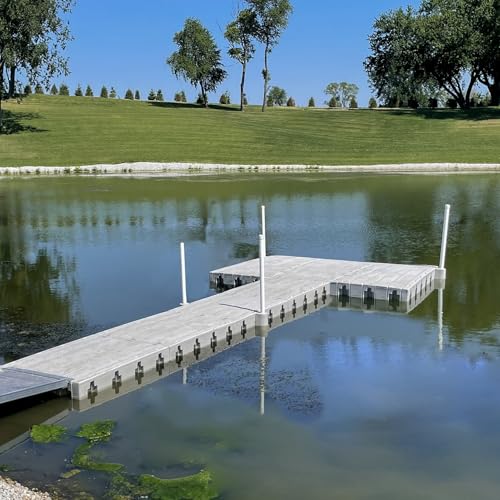
The 15-foot kit features six float sections, a larger set of connectors, two gangway hinges, and four 8″ cleats. It provides a compact, easy-to-install option that maintains modular flexibility for intermediate waterfront properties. It’s best for medium-sized docks and users who want quick expansion as needs grow. A caution is that it offers less total length than the 20-foot variant, which may limit long straight run options.
Buying Guide
What should you consider when choosing a modular floating dock system?
- Dock purpose: Leisure, fishing, launching small craft, or poolside-style access affect required buoyancy, deck area, and stability features.
- Stability features: Look for side floats or integrated ballast if your site has wind, waves, or uneven water depth.
- Deck material and color: Aluminum decking lasts longer and resists corrosion; color options help blend with your landscape.
- Ease of assembly: Modular kits with fewer tools and straightforward connections install faster and are easier for one person to manage.
- Expansion plans: If you anticipate adding more sections, choose systems with standardized connectors and compatible floating blocks.
- Anchoring and maintenance: Some kits exclude piling hardware; plan for anchors, ladders, and occasional maintenance to keep the dock secure.
- Durability and buoyancy: HDPE floats with UV resistance and foam-filled cores typically withstand long-term exposure and rough water better.
FAQ
- What makes a low-profile floating dock different?
Low-profile docks sit closer to the water, making it easier to access from shore and offering a less obtrusive footprint for certain lakefront aesthetics.
- Are side stability floats worth it?
Yes, side floats improve balance and weight distribution, reducing wobble when multiple users are on the dock simultaneously.
- Can these kits be installed by one person?
Many modular kits are designed for one-person installation, but having an extra helper speeds setup, especially for longer runs.
- Do I need to buy piling anchors separately?
Some kits include all hardware except piling anchors; confirm what is included to avoid missing components during installation.
- What decking color should I choose?
Brown and gray tones are common; choose a color that complements your property and the surrounding landscape while maintaining visibility for safety.
- Which kit is best for a long dock run?
The 20-foot Connect-A-Dock kit offers more total length for extended lake or pond layouts, with the trade-off of needing additional anchoring considerations.