Answering your search for reliable sprinkler drain check valves, this guide highlights top options that prevent backflow, reduce water waste, and protect your irrigation system. Each product is suited to different setups—from residential yards to more robust commercial installations. The selection below focuses on valves that are widely compatible, durable, and easy to install. Use the buyer’s guide to compare features, compatibility, and potential limitations before you buy.
| Product | Best For | Key Benefit |
|---|---|---|
| Hunter HC50F50M HCV | Small-to-medium yards; tight riser spaces | Adjustable check height for precise installation |
| Hunter HC75F75M HCV | Medium to large zones; robust systems | Durable, Schedule 80 construction |
| Hunter PROS04CV Pro-Spray | Pro-Spray heads; flexible nozzle setups | Drain check valve included; easy maintenance |
| 437400 Sprinkler Check Valve (CHAR YONG) | Backflow prevention; slopes and drainage control | Blocks backflow; protects water supply |
| Midline Valve 4I2T112 | PVC pipelines; larger line size | Leak-free solvent connections; solid build |
Hunter HC50F50M HCV 1/2-Inch Valve

The Hunter HC50F50M HCV is a 1/2-inch check valve designed to fit between the riser and sprinkler head. This model is built to schedule 80 specifications, offering durability and long-lasting performance. It features an adjustable check height for precise alignment in tight spaces. Best for small-to-medium yards needing reliable backflow prevention without a bulky footprint.
Who it’s best for: Homeowners with compact irrigation runs or remodels where a low-profile valve is advantageous. Limitations: May require careful height adjustment in very short risers to ensure proper clearance.
Hunter HC75F75M HCV 3/4-Inch Valve
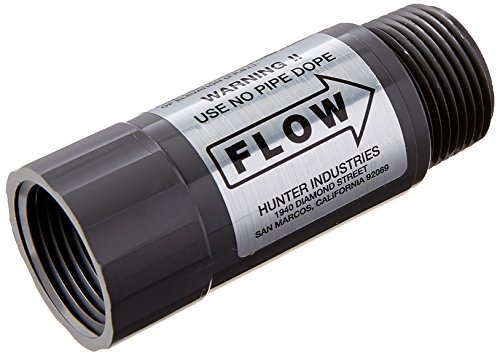
The HC75F75M is a 3/4-inch check valve built for more demanding irrigation zones. Like the smaller model, it uses adjustable height and solid Schedule 80 construction for durability. It’s well-suited for mid-to-large yard setups where higher flow and more robust protection from backflow are needed.
Who it’s best for: Larger residential systems or landscape projects requiring a sturdier valve with greater flow capacity. Limitations: Slightly larger footprint may require more space for installation.
Hunter PROS04CV Pro-Spray Check Valve

The Pro-Spray Pro-S04CV combines a sprinkler head with a drain check valve, offering flexibility for Pro Adjustable Nozzles, Pro Fixed Nozzles, and MP Rotators. It includes a pull-ring flush cap to minimize debris buildup. This option is ideal for systems using Pro Spray heads where debris prevention and ease of maintenance matter.
Who it’s best for: Systems using Hunter Pro Spray heads or similar nozzle configurations that benefit from integrated drainage and easy flushing. Limitations: May be less compatible with non-Pro Spray nozzle families without adapters.
437400 Sprinkler Check Valve (CHAR YONG)

Designed to integrate with Hunter Pro Spray and similar sprinkler heads, the 437400 valve blocks backflow to protect the water supply and reduce drainage on slopes. It is built from rubber and plastic for durability in varying weather conditions and is described as resistant to corrosion and wear. This valve emphasizes backflow prevention and system efficiency.
Who it’s best for: Irrigation layouts with slope drainage concerns or a need to protect the main water supply from backflow. Limitations: Some users may require matching with compatible head models for optimal sealing.
Midline Valve 4I2T112 PVC Inline Check Valve

The Midline Valve 4I2T112 is a 1-1/2-inch inline PVC check valve designed for backflow prevention in larger pipelines. It features a stainless steel spring-loaded check and secure solvent connections. Suitable for installations that require a leak-free seal and higher pressure tolerance across larger runs.
Who it’s best for: Projects with larger-diameter PVC lines or installations prioritizing a robust, leak-free connection. Limitations: Not recommended for potable water systems in some jurisdictions without compliance checks.
Buying Guide
What should I consider before choosing a sprinkler drain check valve?
Match valve size to your irrigation line; common sizes are 1/2″, 3/4″, and 1-1/2″. Ensure the valve is compatible with your sprinkler heads and controllers. Consider the material: Schedule 80 components provide durability in high-traffic areas, while PVC plastic is lighter and easier to install in low-stress applications.
How important is backflow prevention?
Backflow prevention protects your water source from contamination by fertilizers, pesticides, or debris. Look for valves that prevent drainage at heads on slopes and improve overall system efficiency by maintaining proper pressure.
Which features make maintenance easier?
Features such as a pull-ring flush cap, adjustable height, and clear installation paths help reduce debris buildup and simplify servicing. Consider valves that integrate with your existing nozzle types to minimize compatibility issues.
What installation constraints should I know?
Check space for taller valves and ensure you have room to access the bleed or flush points. Larger valves require more space and may impact trench depth in PVC runs. Always follow local plumbing codes and irrigation standards.
Durability vs. cost: what’s the trade-off?
Durable materials like Schedule 80 and hard-wearing rubber offer long life but may cost more upfront. In smaller yards, a simpler PVC valve can suffice and keep installation straightforward. Factor in climate, soil, and exposure to elements when deciding.
What about compatibility with different sprinkler brands?
Look for valves marketed as compatible with Hunter Pro Spray and other popular brands to minimize the need for adapters. Some third-party valves may fit specific heads, but verify seal integrity and flow characteristics before purchasing.
How to evaluate a valve’s performance claims?
Focus on backflow prevention capabilities, drainage control, and the ability to maintain steady pressure. User manuals and installation guides can provide practical details about flow rates and head drainage behavior.
FAQ
- What size valve do I need for a typical home irrigation line? Most residential systems use 1/2″ or 3/4″ valves, depending on head spacing and flow requirements.
- Can I install a drain check valve on any sprinkler head? Check compatibility with your sprinkler head model and ensure the valve fits the riser or inlet dimensions.
- Do valves require special tools to install? Basic plumbing tools are typically sufficient; some models may require thread seal tape and a wrench for proper tightening.
- Are backflow valves required by code? Many jurisdictions require backflow prevention for irrigation systems, especially in areas with susceptible water supplies.
- Can I replace just the valve or do I need to replace the entire head? Often you can replace the valve alone if the head and riser are in good condition, but verify compatibility with your existing components.
- How can I extend the life of my sprinkler drain valve? Regularly flush the system, keep debris out of the lines, and inspect seals for wear or cracking.