The best acid fertilizer for blueberries helps maintain low soil pH while delivering essential nutrients for robust fruiting. This guide compares five top options, highlighting who each product is best for and practical limitations. Ideal buyers include home gardeners with acidic soils, container planters, and those seeking slow-release or plant-specific formulas. Below is a quick summary table of the selected products to help you compare at a glance.
| Product | Best For | Key Benefit |
|---|---|---|
| Down To Earth Acid Mix (1 lb) | Small gardens, containers | Low-pH blend tailored for acid-loving plants |
| Espoma Berry-Tone (4 lb x 2) | All berries, general use | Ready-to-use organic option with Bio-tone |
| Gardenwise 8-4-8 | Soil acidification and iron needs | Iron-rich, helps prevent chlorosis |
| Blueberry Fertilizer by TPS NUTRIENTS (8 oz) | Easy liquid feeding | 8-8-8 ratio for berries |
| Bloom City Acid-Loving Plant Fertilizer (32 oz) | Acid-loving ornamentals and berries | Balances nutrients for low-pH soils |
Down To Earth Acid Mix — 1 lb

What this product is best for: small to medium plantings that require an acid-loving blend. It is designed for rhododendrons, azaleas, camellias, hydrangeas, evergreens, and notably blueberries and raspberries. The formulation targets a low pH to optimize nutrient uptake for acid-loving crops.
Why selected: its acid-specific profile supports blueberries by promoting vegetative growth in spring and enhancing blossom and fruit development. Fall applications aim to strengthen roots for winter resilience.
Who it’s best for: gardeners with limited space or containers who want an easy, early-season application that also supports fall root growth.
Caution or limitation: as a low-pH blend, it should be used according to plant needs to avoid unnecessary soil acidification in non-target areas.
Down To Earth Acid Mix — 5 lb

What this product is best for: larger planting beds or raised beds needing an extended acid-based nutrient source. The 5 lb bag matches moderate to larger blueberry patches and other acid-loving plants.
Why selected: a longer-lasting supply with the same acid-friendly blend, helping maintain low soil pH and supporting repeated seasonal feeding.
Who it’s best for: growers who want fewer replenishments with steady fertilizer release across the season.
Caution or limitation: heavier bag size requires more storage space and slightly more effort to mix for uniform distribution in large areas.
Espoma Berry-Tone 4-3-4 — 4 lb

What this product is best for: berry shrubs including blueberries, strawberries, raspberries, and blackberries. It uses natural and organic ingredients with Bio-tone for soil biology.
Why selected: Berry-Tone is ready to use and designed for feeding at planting or when plants are established. It’s ideal for homesites seeking an organic approach with straightforward application in spring.
Who it’s best for: gardeners who prefer an organic option with a simple feeding schedule—twice yearly in early and late spring.
Caution or limitation: not a specialized liquid feeder; growth response may vary with soil type and moisture conditioning.
GARDENWISE 8-4-8 Acidic Fertilizer

What this product is best for: acid-loving plants needing iron and chlorosis prevention, including azaleas, camellias, hydrangeas, rhododendrons, magnolias, evergreens, and blueberries.
Why selected: it doubles as a soil acidifier and iron-rich feed. The formula supports healthy foliar color and steady growth in low-pH soils.
Who it’s best for: gardeners dealing with chlorosis symptoms or soils trending toward neutral/alkaline, looking to balance pH and nutrition simultaneously.
Caution or limitation: the kit emphasizes iron delivery; ensure compatibility with existing soil minerals to avoid iron overload scenarios in sensitive placements.
Liquid Blueberry Fertilizer — 8 oz

What this product is best for: quick, easy feeding for blueberries and other acid-loving fruiting plants. The 8 oz bottle is designed for simple dilution and application.
Why selected: the liquid format provides rapid nutrient availability and straightforward use for hobby gardeners needing flexible schedules.
Who it’s best for: busy gardeners who want fast results with minimal mixing and measurement.
Caution or limitation: may require more frequent applications to sustain steady nutrient levels in active growth periods.
Bloom City Acid-Loving Plant Fertilizer — 32 oz
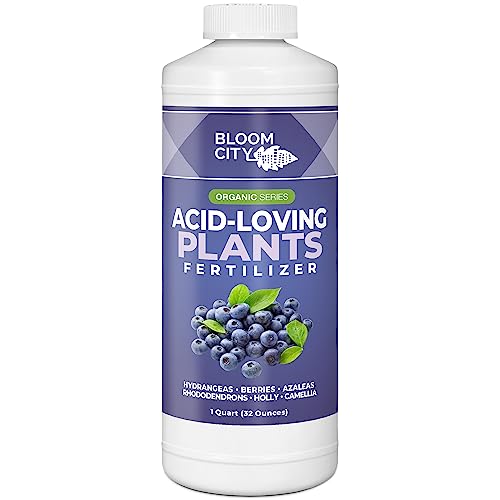
What this product is best for: specialty plants that thrive in acidic soils, including blueberries and hydrangeas. It supports vibrant growth and foliage in low-pH conditions.
Why selected: the 32 oz size suits mid-size to larger plantings and landscapes, offering a consistent acid-loving nutrient profile for ongoing maintenance.
Who it’s best for: homeowners with multiple acid-loving plants or a landscape bed needing uniform fertilization across several varieties.
Caution or limitation: ensure precise soil pH monitoring to avoid overly acidic conditions, especially in mixed-plant beds.
Buying Guide: Acid Fertilizers For Blueberries
- Soil pH compatibility: Blueberries prefer acidic soils (roughly pH 4.5–5.5). Choose fertilizers that either acidify soil or are formulated for acid-loving plants.
- NPK ratio and micronutrients: A balanced or slightly lower nitrogen ratio (such as 4-4 or 4-3-4) supports fruiting without excessive leaf growth. Iron, magnesium, and manganese help prevent chlorosis in blueberries grown in acidic but low-iron soil.
- Release type: Slow-release blends reduce feeding frequency and minimize pH fluctuations. Liquid formulas offer quick results but may require more frequent applications.
- Application timing: Apply in early spring for vegetative growth and again around bloom or fruit set. Fall applications can aid root development and winter hardiness.
- Organic vs synthetic: Organic or organic-compliant blends (like Berry-Tone) support soil biology, while synthetic options may deliver faster visible results.
- Container vs in-ground: Containers require more frequent feeding due to limited soil volume and faster pH shifts. Ensure compatibility with potting mix and drainage.
- Cautions: Over-acidification can stress plants and alter soil microbial communities. Always follow label directions and test soil pH periodically.
FAQ
- Do blueberries require acidic fertilizer only? Not exclusively; they need a low-pH environment and balanced nutrients, including iron and potassium, tailored for acid-loving plants.
- Can I mix multiple acid fertilizers? Mixing is usually discouraged unless specifically recommended by the manufacturer, as it can alter pH and nutrient balance unpredictably.
- Is organic fertilizer better for blueberries? Organic options improve soil biology and long-term health but may act slower; choose based on your gardening goals and patience.
- How often should I fertilize blueberries? Typical schedules are early spring and late spring; container blueberries may need more frequent feeding depending on growth and fruit production.
- What soil pH should I target? Aim for a soil pH around 4.5 to 5.5 for blueberries to maximize nutrient availability.
- When should I avoid fertilizing? Avoid fertilizing right after transplanting or during drought stress, as it can stress plants.