Transform kitchen scraps and yard waste into rich, usable compost with compact, neighbor-friendly bins. This guide highlights five compact options designed for smaller outdoor spaces, blending durability, ventilation, and ease of use. Each product section includes key features to help you compare performance, setup, and maintenance for a small yard.
| Product | Capacity | Type | |
|---|---|---|---|
| Nouva Outdoor Composting Bin | 18.5 Gallons | Tumbling Composter | Sturdy steel frame with good ventilation |
| EcoBrisa Underground Worm Composting Bin | Two small sizes | Worm Bin | 360-degree ventilation for efficient worm-based composting |
| Niuyhe 34 Gallon Yard Bag | 34 Gallons | Fabric Yard Waste Bag | Clear observation windows for monitoring |
| MyLifeUNIT 34 Gallon Bag (2 Pack) | 34 Gallons each | Fabric Yard Waste Bag | Large capacity with reusable design |
| VIVOSUN 43 Gallon Tumbling Composter | 43 Gallons | Tumbling Bin | Dual rotating chambers for continuous composting |
Choosing the right compact composting solution depends on space, waste type, and whether you prefer continuous turning or passive decomposition. The following sections review each option’s practicality for small yards, focusing on capacity, ventilation, durability, and ease of use.
Nouva Outdoor Composting Bin

The Nouva compost bin uses a steel-framed design with a durable outer shell, supporting a 18.5-gallon capacity. Its core advantage is a robust frame paired with a vented design to speed decomposition. The unit’s 9.2 x 7.4 inch door provides convenient access for dumping kitchen scraps and yard waste. Good ventilation and a metal frame enhance longevity, while the upright profile fits smaller backyards. Consider its maximum capacity when planning how often to empty and refill the chamber.
EcoBrisa Underground Worm Composting Bin

EcoBrisa offers a metal worm-composting approach in a compact outdoor bin. The setup emphasizes durability and long-term use with metal construction, and it comes in sizes suited for space-conscious gardens. Its worm-based decomposition relies on adequate airflow, which EcoBrisa supports through ventilation holes and a lid. This method can efficiently process kitchen scraps and garden waste at a small scale, producing high-quality worm compost for soil amendment. If you prefer low-odor, high-efficiency composting through organisms rather than microbial heat alone, this option is worth evaluating.
Niuyhe 34 Gallon Yard Bag
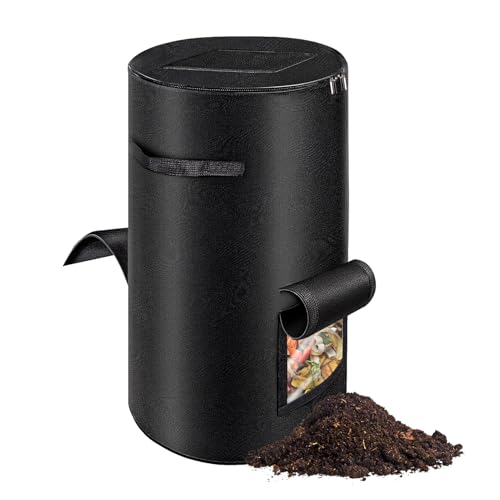
This heavy-duty 34-gallon yard waste bag provides a compact, upright option for outdoor composting or yard cleanup. The 600g thickened felt material offers durability while remaining portable, with side handles for easy transport. A dual-zipper top enables straightforward loading and access, and the bottom windows let you monitor fermentation progress or retrieve soil. Its foldable design ensures it stores compactly when not in use, making it suitable for smaller spaces. Use in combination with a composting mix to seed the pile efficiently.
MyLifeUNIT 34 Gallon Bag (2 Pack)

The MyLifeUNIT bag set provides two 34-gallon bags designed for large-capacity yard and kitchen waste organization. These reusable bags support rapid fermentation and are suitable for storing various organic materials, leaves, weeds, stems, and more. The design emphasizes practicality for frequent use, enabling straightforward disposal or compost preparation. While not a closed-bin unit, these bags offer a flexible, space-saving approach for households with limited outdoor footprint. Pair with a separate turning or stacking system for accelerated composting if desired.
VIVOSUN 43 Gallon Tumbling Composter

The VIVOSUN dual-rotating chamber design enables continuous composting: one side can finish while the other accepts fresh waste. The 43-gallon capacity sits in a compact footprint for small yards, while the 360° tumbling action reduces manual turning. The air vents facilitate aeration to prevent anaerobic digestion and promote even decomposition. This option is well-suited for gardeners who want faster results without digging through piles, though it requires a bit more space than some fabric-bin options.
Buying Guide: Key Purchase Considerations
- Space and footprint: For very small yards, consider compact tumblers or foldable fabric bags. Measure your available area to ensure the unit fits without crowding doors, walkways, or plant beds.
- Waste type and processing method: If you mainly have kitchen scraps, a worm-composting approach (like EcoBrisa) can be efficient. For yard waste, fabric bags or small tumblers are practical, while larger volumes benefit from bigger or dual-chamber designs.
- Ventilation and aeration: Adequate airflow speeds up decomposition and reduces odors. Look for bins with vent holes or designed airflow paths, especially for worm-based or aerobic composting.
- Durability and materials: Metal frames offer longevity but can be heavier; fabric bags are lightweight and portable but may require more frequent emptying. HDPE and PP plastics provide weather resistance for outdoor use.
- Maintenance and cleaning: Removable inner buckets (as seen in countertop and some outdoor options) simplify cleaning. A dishwasher-safe component or washable materials save time over the long term.
- Convenience features: Dual openings, observation windows, or easy access doors can improve user experience by simplifying loading, turning, and monitoring.
- Cost and scalability: Start with a smaller unit if you’re new to composting, then scale to larger or multi-bin systems as your composting needs grow.
Across small yards, choosing between a tumbling mixer, a worm-based system, or a sturdy fabric bag depends on your preferred workflow, odor tolerance, and willingness to manage moisture. Each option provides a clear pathway to turning waste into nutrient-rich soil for plants, shrubs, and vegetables, aligning with sustainable living goals in a compact outdoor space.