Evening primroses bring soft, dusk-friendly blooms to gardens and attract a variety of pollinators. While many cultivars display pink or yellow hues, several seed offerings and root stock permeate landscapes with elegant, light-to-white-toned blossoms or adaptable late-season color. This guide highlights five well-suited options for American gardens, focusing on growth habits, pollinator appeal, and easy care. The selections emphasize perennial potential, self-sowing tendencies, and suitability for borders, beds, and meadow-style plantings.
Summary of Selected Products
| Product | Brand | Highlights |
|---|---|---|
| Seed Needs Showy Evening Primrose Seeds | Seed Needs | Pink blooms, perennial, butterfly-friendly |
| Sow Right Seeds Showy Evening Primrose | Sow Right Seeds | Large packet, long-blooming, pollinator-friendly |
| Survival Garden Seeds Common Evening Primrose | SURVIVAL GARDEN SEEDS | Native wildflower, biennial, drought-tolerant |
| Evening Primrose Roots (CZ Grain) | CZ Grain | Established rootstock, easy to grow |
| Created By Nature Evening Primrose Seeds | Created By Nature | Yellow-to-light color potential, high seed count |
Seed Needs Showy Evening Primrose Seeds For Planting

Seed Needs offers a pink-flowered showy evening primrose, with blossoms brightened by dark pink veins. The plant grows 12 to 24 inches tall, making it suitable for borders and perennials beds. As a perennial, it develops a deep root system in the first year and then returns in subsequent seasons, flowering through late spring into early summer. While the color is pink, the plant’s performance supports pollinator gardens and adds soft evening color to the landscape.
Key considerations: perennial longevity, bloom timing, and attractiveness to butterflies, bumblebees, honeybees, and ladybugs. This selection works well in zones where late-spring to early-summer color is desired and pairs nicely with native grasses and other late-season perennials.
Sow Right Seeds Showy Evening Primrose Flower Seeds
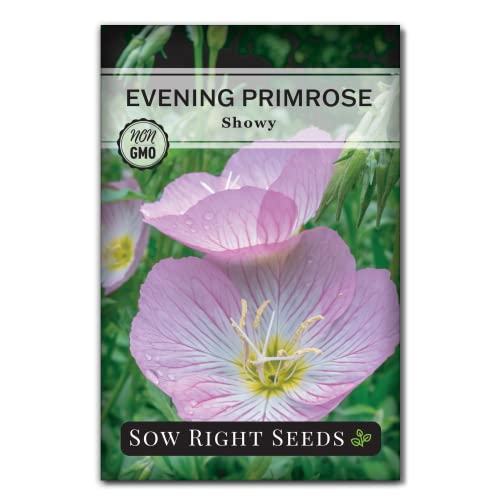
Sow Right Seeds provides a large premium packet of Showy Evening Primrose (Oenothera speciosa) seeds. The blooms display large pink blossoms with sunny centers, offering long-season color from late spring through summer. The plant spreads quickly and self-seeds easily, making it ideal for low-maintenance mass plantings and naturalized areas. Expect 2-3 feet of height and a similar spread; germination typically occurs 14–21 days with soil temperatures around 70–75°F. It thrives in full sun and well-drained soil.
This variety is appealing for pollinators such as moths and other nocturnal visitors, contributing to moon gardens and evening pollinator networks. It is a dependable choice for gardeners seeking an adaptable, self-sowing perennial or near-perennial in temperate climates.
Survival Garden Seeds Common Evening Primrose

Survival Garden Seeds markets Common Evening Primrose as a North American native wildflower. This biennial or short-lived perennial-like plant forms a rosette in the first year and sends up a flowering stalk in the second year, producing fragrant yellow blooms. It grows successfully in USDA zones 3 through 11, with direct sowing in the spring. The seeds are non-GMO and designed to self-seed, ensuring repeated color in the garden over time. This selection also supports pollinators, drawing hummingbirds, bees, butterflies, and moths to nectar and pollen sources.
Considerations include its biennial life cycle, attractive late-afternoon or evening blooms, and its ability to thrive in less-than-ideal soils, making it a good option for prairie-style borders or naturalized meadows.
Evening Primrose Roots (CZ Grain) – Hardy, Fast-Growing

Evening Primrose Roots from CZ Grain delivers established rootstock, offering a strong foundation for rapid growth and flowering. The product emphasizes hardiness and fast establishment, reducing the time to color in beds and borders. While this listing focuses on roots rather than seeds, it provides a straightforward path to adding evening primrose to a garden with predictable vigor and performance. The plant typically attracts evening pollinators and blooms into the late spring and summer, complementing other light-colored perennials in mixed borders.
Consider rootstock gardening: it can be advantageous for gardeners seeking quicker main-season color without the wait for germination from seed, with ongoing pollinator benefits once established.
Created By Nature Evening Primrose Seeds

Created By Nature offers a bright yellow evening primrose mix, with one packet containing a large seed count (approx. 44,000 seeds). This option is suitable for filling borders, beds, or naturalized meadows and can produce bold garden color in sunny or partially shaded spots. The seeds are non-GMO and produced in the USA, promising quality and reliability for large-scale plantings. Germination is favored in well-drained soil with sufficient moisture, and blooms typically appear within 60–90 days after planting, depending on conditions.
Considerations include the color variability within evening primrose, potential for self-seeding, and compatibility with pollinator-friendly plantings. This option is well-suited for gardeners aiming to cover extensive spaces with cheerful, enduring color across the growing season.
Buying Guide: Key Purchase Considerations For Evening Primrose
- Bloom color and form: While white-toned variants are common in ornamental selections, many evening primrose offerings emphasize pink, yellow, or light tones. Consider color compatibility with existing borders and the intended mood of the garden.
- Growth habit and years to bloom: Perennial or biennial tendencies affect long-term planning. Perennials deliver repeat blooms across years, while biennials may require more space or careful scheduling of color.
- Pollinator appeal: Evening primroses attract moths, bees, and butterflies, especially in the evening. Choose varieties that align with your pollinator garden goals and regional wildlife activity.
- Sun and soil requirements: Most evening primroses prefer full sun and well-drained soil. They tolerate a range of soils but perform best with adequate drainage and light exposure.
- Propagation method: Seeds establish quickly and are cost-effective for large plantings. Root stock can offer faster establishment but may limit color diversity if you’re sourcing from multiple vendors.
- Self-seeding and spread: Some varieties self-seed readily, which is beneficial for meadow-style plantings or low-maintenance borders, but may require containment in tight spaces.
- Hardiness and climate zones: Check zone compatibility to ensure plants survive winter lows and summer heat. Some species tolerate a wide zone range, while others are more sensitive to frost.
- Native and non-native considerations: Native wildflowers support local ecosystems and pollinators; non-native cultivars may offer extended color but require monitoring for invasive tendencies in certain regions.
In summary, the selections above provide a blend of perennial resilience, self-seeding behavior, and pollinator-friendly blooms. Whether you prioritize easy mass planting, native compatibility, or straightforward rootstock for quicker color, these options offer reliable pathways to a light-hued evening garden that thrives with gentle fragrance and active pollinators.