Gardening thrives with consistent moisture, but overwatering wastes water and invites fungus, while under-watering stresses plants. A dripper irrigation system brings precise, automatic watering to containers, beds, and greenhouses. Below are five well-regarded options that suit American gardens—from small patios to larger landscapes—designed to save water and reduce maintenance. This guide highlights what each kit offers, how easy they are to install, and how they fit different garden layouts.
Summary of chosen products:
| Product | Brand | Key Use | Area Coverage |
|---|---|---|---|
| Flantor Drip Irrigation Kit | Flantor | Drip system for garden, greenhouse, flower beds | 50-75 sq m |
| Raindrip R560DP Drip System | Raindrip | Timers, containers, hanging baskets | Up to 20 plants |
| Drip Emitters with 360° Drippers | FULAIERGD | Garden pots, trees, shrubs | 4-7 mm barbed tubing compatible |
| Rain Bird LNDDRIPKIT | Rain Bird | Landscape and garden kit with drippers | 108-piece system |
| Riboud 240FT Drip Kit | Riboud | Multi-area irrigation for yard or greenhouse | Up to 240 ft of tubing |
Flantor Drip Irrigation Kit for Home Gardens

The Flantor kit covers 50-75 square meters and is designed for easy, DIY installation. It enables all plants to be watered from a single tap, reducing daily watering chores. For travelers or busy days, an external timer (not included) can automate irrigation, making it suitable for households that travel frequently. The kit includes a 2-way faucet connector to split flow into multiple lines, which helps maintain adequate pressure and ensures each nozzle receives sufficient water. Installation tips include placing tubing in hot water for 30 seconds to ease assembly.
Raindrip R560DP Drip Watering System
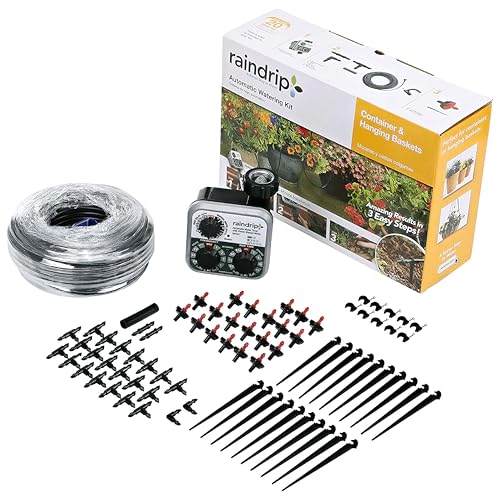
Raindrip offers a compact, timer-friendly drip system that waters up to 20 plants, ideal for container arrangements and hanging baskets. It emphasizes simple setup: connect the timer and tubing to a water source, lay out tubing, and attach drippers with fittings to create a customizable watering network. The design suits gardeners seeking a plug-and-play solution that reduces manual watering while delivering consistent moisture to diverse plantings, from flowers to herbs and small shrubs.
FULAIERGD 25-Pack Drip Emitters with 360° Adjustable Flow

These emitters are designed for flexibility with 360-degree spray patterns and adjustable flow. A 4-7 mm tubing compatibility makes them a versatile choice for garden beds, pots, and shrubs. The package includes 25 emitters on a stake, enabling quick placement around the landscape. Key benefits include easy cleaning, straightforward installation, and the ability to rotate the cap to adjust or close water flow as needed. This option suits gardeners who want precise control over spray radius and intensity in a multi-plant layout.
Rain Bird LNDDRIPKIT Drip Irrigation Kit
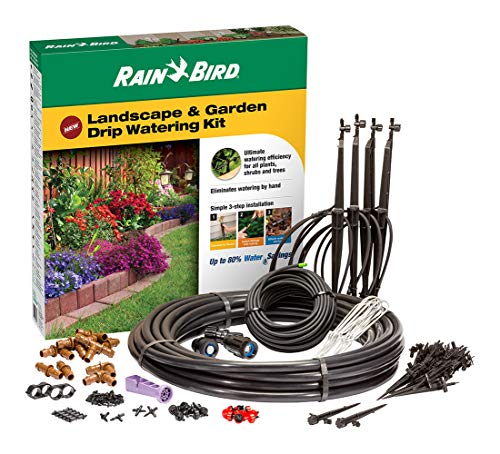
Rain Bird’s LNDDRIPKIT presents a 108-piece ensemble designed for flower beds, gardens, and landscaped zones. It emphasizes ultimate watering efficiency across shrubs, trees, and various plant types, with the potential for up to 80% water savings. The installation path is simple: connect to a faucet, insert tubing fittings, and attach the desired watering devices. This kit supports expanding irrigation networks with reliability, reducing hand watering while maintaining uniform soil moisture for diverse plant communities.
Riboud 240FT Drip Irrigation Kit

The Riboud kit includes 240 feet of tubing, including 40 feet of 1/2-inch main tubing and 200 feet of 1/4-inch distribution tubing. It’s designed for versatile layouts, allowing two smaller systems or one large network. The system aims to deliver up to 80% water savings and is suitable for covering a range of garden spaces—plants, trees, flowers, and vegetables. High-pressure main tubing and flexible distribution help accommodate different yard shapes and irrigation demands, making it a strong option for homeowners expanding irrigation across several zones.
Buying Guide: Key Purchase Considerations
- Garden size and zoning: For small patios, compact kits with adjustable emitters may suffice. Larger lawns or greenhouse setups benefit from kits with longer tubing runs and multiple outlets.
- Water pressure and source compatibility: Some kits assume standard residential pressure; others include fittings to boost or regulate pressure. Check your faucet type and available adapters.
- Automation options: If you want automatic scheduling, choose a kit that either includes a timer or is timer-ready. Ensure compatibility with your preferred smart-home devices if desired.
- Emitter type and clog resistance: Drippers with clog-resistant passages or adjustable flow reduce maintenance. Consider coatings or materials suited to your water quality (hard water, minerals).
- Installation effort and future expandability: Push-to-connect or barbed fittings offer different ease levels. Look for modular kits that allow adding zones or extra emitters without reworking.
- Maintenance needs: Removable emitters for cleaning, easy access to tubing, and clear labeling help maintain long-term performance.
- Maintenance schedule and seasonal use: Some gardeners may need to flush lines seasonally or remove hoses during cold months in regions with freezing winters.
What To Consider When Choosing A Drip System
- Coverage and uniformity: Choose a kit designed to evenly water the intended area, ensuring plants receive consistent moisture without puddling.
- Material durability: Look for UV-resistant tubing and corrosion-resistant emitters to withstand outdoor conditions.
- Ease of expansion: If you plan to grow your garden, select a system that supports adding more emitters, tubing, and zones without complex reconfigurations.
- Water conservation features: Drip irrigation excels at reducing waste; prioritize kits that deliver precise, low-volume flow and allow flow-rate adjustments per emitter.
- Cost of parts and replacement: Compare kit prices and the availability of replacement parts, particularly emitters and connectors, to minimize long-term maintenance costs.
How to Install a Drip Irrigation System: Quick Tips
- Plan your layout: Map plant groups by water needs and arrange tubing to minimize pressure loss.
- Place emitters near the base of plants, aiming to cover root zones without soaking foliage excessively.
- Connect to a water source with any necessary adapters; test for leaks before burying tubing or adding mulch.
- Set a schedule if using a timer: Start with shorter run times and gradually adjust based on plant response and soil moisture.
Drip irrigation systems offer precise watering with reduced waste, making them a practical upgrade for diverse American gardens. By considering garden size, water pressure, automation needs, and maintenance expectations, homeowners can select a dripper setup that aligns with their landscapes and routines. The five products highlighted here cover a range of configurations—from plug-and-play kits to expandable, multi-zone systems—supporting efficient, plant-friendly irrigation across patios, beds, and greenhouses.