Garden forks and spades are essential tools for soil preparation, compost handling, and planting. The following selections emphasize durability, comfortable grips, and practical design for American gardens. Each option is evaluated on construction quality, balance, and versatility to help you choose the right tool for digging, aerating, and turning soil.
The table below summarizes five selected products, highlighting core features and practical uses to guide your shopping decisions.
| Product | Type | Key Features | Ideal For |
|---|---|---|---|
| HORIJUNKE Garden Fork | 4‑Tine Pitchfork | Forged manganese steel head, Y-grip, wood handle, 45″ length | Heavy digging and light-to-moderate use |
| COSITA Pitch Fork | 4-Tine Pitchfork | Heat‑treated steel head, fiberglass handle, 44″ length | Dense material handling, long sessions |
| GSBLUNIE Pitch Fork | 5‑Tine Pitchfork | Tempered steel head, fiberglass handle, D‑grip | Loosening soil and turning compost |
| AMES 3‑pc Gardening Kit | Border Spade, Digging Fork, Round Point Shovel | Ergonomic handles, reinforced connections, UV finish | Small-space projects and edging |
| GARDENWORK Pitch Fork | 4‑Tine Pitchfork | Steel head with PTFE coating, strengthened handle, 45″ length | Heavy-duty digging and composting |
HORIJUNKE Garden Fork, 4-Tine Pitchfork
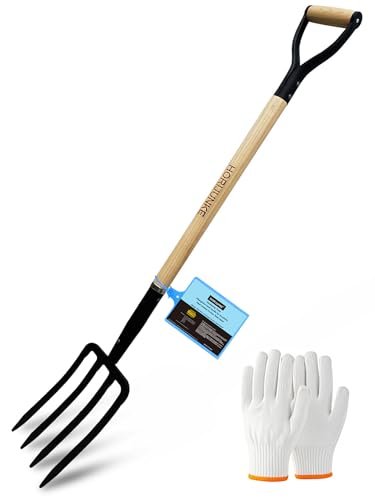
The HORIJUNKE tool combines a forged manganese steel head with a solid wood spade handle and a forged Y‑grip for two‑hand control. At 45 inches in length and about 4.4 pounds, the fork offers a balance favorable to users who need leverage without excessive weight. The design prioritizes durability during digging and turning tasks, reducing the risk of bending in tougher soils. The wooden handle provides a traditional feel with a secure grip, making it suitable for extended use in moderately heavy workloads.
COSITA Pitch Fork for Garden

The COSITA pitch fork emphasizes a heavy-duty four-tine steel head paired with a fiberglass handle. The heat-treated steel resists bending, rust, and corrosion, making it well-suited for dense garden debris like hay, straw, or mulch. Its fiberglass shaft is lightweight and weather-resistant, reducing fatigue during long sessions. A non-slip cushion grip enhances control in wet or muddy conditions, and the tool is versatile for lifting, turning, spreading, and aerating organic materials in barns, greenhouses, and backyards.
GSBLUNIE Pitch Fork with 5 Tines

The GSBLUNIE five-tine digging fork features a tempered steel head designed for penetrating compact soil and breaking through clumps. The D‑grip on the fiberglass handle provides ergonomic leverage, allowing users to apply force with less wrist strain. Length is around 41 inches, which positions the tool for comfortable sweeping and turning without heavy overhead effort. It is described as suitable for tasks such as loosening soil, composting, and cultivating, making it a versatile option for varied garden beds.
GARDENWORK Pitch Fork, 4 Tines

The GARDENWORK pitch fork features a 4‑tine steel head with a PTFE coating to resist soil adhesion and corrosion. The handle is reinforced with a double-screw connection, reducing wobble during use. A 45‑degree rubber Y‑grip provides a comfortable, non-slip hold that supports extended digging sessions. This model prioritizes durability and steadiness, making it a practical choice for turning compost, lifting mulch, and preparing soil in larger garden plots.
FORCOLID Garden Fork, 4‑Tine Spading Fork

FORCOLID offers a 45‑inch fork with a forged steel head and a Y‑grip along a wood handle. The construction mirrors a traditional design with a focus on durability and control. The 4‑tine configuration supports effective soil penetration, loosening, and turning in a range of garden conditions. At approximately 4.5 pounds, the tool aims to strike a balance between sturdiness and manageability for users who need reliable performance without excessive weight.
Spear & Jackson Neverbend Professional Digging Fork

The Spear & Jackson Neverbend digging fork uses solid forged carbon steel tines designed for tough soil and heavy-duty cultivation. The weatherproofed hardwood shaft complements the steel head, offering durability in varied weather conditions. This professional-grade tool is positioned for landscapers and serious gardeners who require a robust digging and turning instrument capable of handling demanding tasks with minimal bending or warping.
WIKER Pitchfork with Fiberglass Handle

The WIKER pitchfork combines a four-tine steel head with a high-strength fiberglass handle and a 45-degree rubber Y-grip. The design emphasizes durability in tougher soils and the comfort of a secure, non-slip grip. At around 43 inches in length and 4.5 pounds, it is suitable for users who need a balance of reach and control, including older gardeners and those with reduced strength. The fork supports tasks from compost mixing to soil aeration and root cultivation.
Buying Guide: Key Considerations For Garden Forks And Spades
- Material quality: Forged steel heads and tempered tines resist bending and wear, while fiberglass or wooden handles affect weight and balance. Consider your soil types and frequency of use when choosing between heavier-duty options and lighter designs.
- Handle design: Y‑grips or D‑grips provide two-handed control and reduce wrist strain. Wood handles offer classic feel and grip warmth, while fiberglass handles offer durability and weather resistance.
- Length and weight: Longer forks provide leverage for deep digging, but can cause fatigue if too heavy. Most 41–45 inch models balance reach with manageable weight for general garden tasks.
- Head configuration: Four-tine forks are versatile for lifting and turning loose soil; five-tine models can break through tougher soil and help with mulch and compost handling. Match head type to your typical soil conditions.
- Coatings and corrosion resistance: PTFE or other coatings reduce soil adhesion and rust, extending tool life in humid or wet environments.
- Intended tasks: Consider whether you primarily aerate soil, loosen clay, turn compost, or dig potatoes. Some tools excel in multi‑purpose roles, while others specialize for heavy-duty digging.
- Maintenance: Regular cleaning, drying, and occasional sharpening or tightening of fasteners helps maintain performance and safety over time.