Choosing the right soil pH tester helps gardeners optimize nutrient availability and plant growth. This guide highlights five reliable 4-in-1 and 3-in-1 soil testers that measure pH, moisture, temperature, and light, making it easier to tailor care for your indoor and outdoor plants. Each product section includes key features, practical uses, and a quick read on performance to help you compare at a glance.
Summary Table
- 4-in-1 Soil Moisture Meter (YAMRON Store) – Measures moisture, pH, temperature, and sunlight with backlit LCD.
- SONKIR MS02 3-in-1 – Moisture, light, and pH indicators; no battery required.
- 4-in-1 Digital Soil Tester (Green) – pH, moisture, temperature, light with large backlit LCD.
- 7-in-1 Soil Test Kit (TryOpen Store) – Moisture, pH, fertility, sunlight, temperature, humidity; LCD display.
- Raintrip 4-in-1 – Moisture, pH, nutrients, light; rotating dial design for easy readings.
4-in-1 Soil Moisture Meter With Backlight LCD

The 4-in-1 model from YAMRON Store combines soil moisture, pH, temperature, and sunlight readings in one handheld device. Its large backlit LCD display makes it easy to read values day or night, and the device runs on four AAA batteries (not included). The meter uses up-to-date probe detection technology to deliver quick, actionable data, helping gardeners determine when to water, adjust acidity, and ensure sufficient light exposure for healthier plant growth. This tester suits outdoor beds, potted plants, and garden rows where monitoring multiple factors matters for timely care.
SONKIR 3-in-1 Soil pH Meter
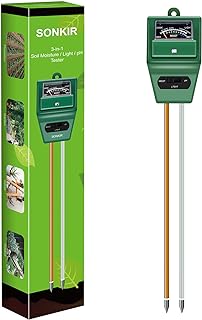
The SONKIR MS02 offers three essential readings: soil moisture, pH, and sunlight. No batteries are required, and the unit is designed for straightforward use—insert into soil, wait a few minutes, and read the display. Note that it’s not suitable for testing liquids; for best results, test soil that’s adequately moistened to ensure the indicators respond accurately. This model is convenient for quick garden checks, lawns, and small farms where a simple, battery-free solution is preferred.
4-in-1 Digital Soil Tester With Green Backlight

This 4-in-1 tester measures soil pH, moisture, temperature, and light levels using an upgraded 2025 soil sensor technology. The large green backlit LCD display ensures readability in low light, with three AAA batteries needed (not included) to power the device. The instrument provides fast, accurate readings—helpful for adjusting watering schedules, monitoring soil acidity, and ensuring plants receive the right amount of light for healthy growth. It’s well-suited for gardens, lawns, and indoor plant care where quick decisions are essential.
7-in-1 Soil Test Kit With LCD

The TryOpen Store 7-in-1 kit provides a comprehensive view of soil and air conditions: moisture, pH, fertility indicators, sunlight, soil temperature, and ambient humidity. The kit emphasizes an all-in-one approach for gardeners who want a broader understanding of environmental factors affecting plant health. Its design supports both beginners and seasoned gardeners by delivering an integrated reading on a single unit, with metal probes that improve durability and signal responsiveness. Use this in home gardens, greenhouses, or outdoor plots to optimize seedling growth and ongoing plant care.
Raintrip 4-in-1 Soil Moisture Meter

The Raintrip 4-in-1 tester covers moisture, pH, light, and nutrients in one compact tool. A standout feature is the 90-degree rotating dial, which allows users to read measurements without bending or squatting, making it accessible for gardeners with back issues. The kit includes a guided approach to interpreting data for plant care, offering practical insights into watering needs, soil acidity, light exposure, and nutrient balance—key factors for garden beds, lawns, and container plants alike. This model emphasizes ergonomic design and actionable readings for everyday use.
Buying Guide
Key purchase considerations help align product choice with garden size, plant variety, and reading preferences. Here are practical angles to weigh:
- Functionality: Decide between 3-in-1, 4-in-1, or 7-in-1 units based on how many readings you want in one tool. More functions save time but can complicate usage for beginners.
- Readability: Large backlit LCD displays improve readability in dim light or at dawn and dusk. Green backlights can reduce eye strain; consider display size and contrast for your setup.
- Power and maintenance: Battery-powered models require replacements, while battery-free designs are convenient but may have limited features or longer warm-up times. Check battery type and life expectations.
- Durability and probes: Metal probes tend to be more durable and responsive than plastic ones. Look for weather-resistant casings if you’ll use the device outdoors or in greenhouse environments.
- Accuracy and speed: Newer sensors (2025 technology) often offer faster and more accurate readings. Cross-reference user reviews for real-world performance across soil types.
- Readout interpretation: Some models provide direct guidance on watering or fertilization based on readings. Decide if you want raw data or actionable recommendations.
- Coverage area: For large gardens or multiple beds, consider the meter’s measurement depth and sensor range to ensure representative readings across zones.
- Budget and accessibility: Battery-free models may be budget-friendly, but consider replacement costs and availability of spare parts over time.
In summary, for ultimate versatility and ongoing plant care, a 4-in-1 or 7-in-1 model with a clear backlit display and fast sensor readings tends to offer the best balance between convenience and depth. For beginners, a simpler 3-in-1 tester with an easy-to-read display can still provide valuable guidance for essential care decisions. Always test soil according to plant type and adjust care routines based on consistent readings over time.