Clay soils tend to compact easily, making water, air, and nutrients struggle to reach grassroots. A dedicated lawn aerator designed for clay helps fracture dense layers, reduce thatch, and improve drainage. This guide highlights five top aerators suited for clay, focusing on durability, effective spike or core design, and user comfort. Each option is evaluated on how well it penetrates compacted soil, how easy it is to use, and how it supports better turf growth over time.
| Product | Brand | Key Benefit for Clay | Spike Type |
|---|---|---|---|
| Walensee Lawn Aerator Spike | Walensee Store | 15 spikes loosen dense soil and thatch | Spike |
| Lawn Aerator Automatic 15 Spikes | Onadak Store | Efficient 15-spike design for quick aeration | Spike |
| Liquid Soil Loosener | Simple Lawn Solutions Store | Liquid conditioner boosts drainage in compact soil | Liquid additive |
| Rolling Lawn Aerator | — | Heavy-duty weight improves penetration | Spiked roller |
| GrdnCare Rolling Lawn Aerator | GrdnCare | 42 spikes with long handle for deep loosening | Spike roller |
Walensee Lawn Aerator Spike – 15 Spikes

The Walensee manual lawn aerator uses 15 sharp iron spikes, each 2.8 inches long, to tackle compact clay soil by puncturing dense thatch and soil layers. This design improves air, water, and fertilizer entry to the root zone, helping establish a healthier, more resilient lawn. The tool’s powder-coated iron construction resists rust, and its 34.6-inch reach reduces back strain during operation. A cushioned T-handle and a foot bar provide leverage for easier punctures, making it suitable for regular maintenance in clay soils where penetration depth matters more than light-duty tools.
Key features align for clay-friendly use: multi-spike efficiency, robust material, and a design that minimizes strain while maximizing penetration. Users with heavy clay will appreciate the combination of long spikes and a sturdy build. The tool works best when the soil is moderately moist to allow easier penetration while minimizing surface disturbance.
Lawn Aerator Automatic 15 Spikes

The Onadak Automatic Lawn Aerator employs 15 sharp metal spikes, each about 3 inches long, to create quick, wide-reaching punctures across compact clay soils. The design targets soil aeration without rolling up large clumps, reducing disruption to your lawn while improving air and water movement to the roots. When installed correctly, this tool delivers efficient, hands-on aeration for medium to large lawn areas. It’s especially beneficial when clays are dense and require multiple simultaneous punctures to begin breaking through compact layers.
Considerations for clay: spike length and distribution are critical. The product emphasizes user-friendly assembly and correct orientation to ensure all spikes engage properly during use. Depth control remains a manual process, so consistent effort and moist soil conditions help achieve uniform results in clay beds.
Liquid Soil Loosener

Liquid Soil Loosener is a soil conditioner designed to work with or without mechanical aeration. It conditions compact soil to improve downward water movement and vertical drainage, enhancing infiltration for clay soils. The 32-ounce bottle covers up to 32,000 square feet, making it a scalable option for large lawns. When used in conjunction with aeration, it can help maintain looser topsoil around roots, facilitating better root establishment and nutrient uptake in clay environments.
For clay-specific performance, consider applying after aeration to maximize absorption and effectiveness. This product is a supplemental approach rather than a stand-alone replacement for mechanical aeration, but it can support long-term soil structure improvements when used as part of a broader lawn care plan.
Rolling Lawn Aerator – Heavy Duty

The rolling lawn aerator uses a weighted design to press spikes into the soil. Weighing 32 pounds (with the option to add more weight up to 55 pounds), it is effective for penetrating heavier clay compaction. The spiral-spiked tread pattern promotes smoother rolling and easier directional control, delivering higher efficiency than many shoe-type or manual spike tools. The heavier weight helps achieve deeper penetration in clay soils where density resists light-duty aeration.
Strengths for clay soils include consistent penetration, straightforward deployment, and the ability to add weight to reach compacted zones. The setup is well-suited for medium-sized lawns, where continuous rolling can produce a more uniform aeration channel across the root zone.
GrdnCare Rolling Lawn Aerator
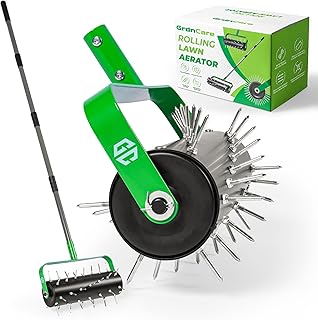
The GrdnCare rolling aerator features 42 heat-treated spikes arranged in a spiral configuration for stable rolling and reduced bounce. With a 71-inch adjustable handle, the tool is designed to reach larger areas of lawn comfortably. The spikes are 2-inch long and built from steel, offering strong resistance to bending and improved longevity for frequent use on clay soil. The design aims to loosen soil, break thatch, and enhance nutrient flow, supporting deeper root development in compacted grounds.
Clay-specific considerations include ensuring the soil is adequately moist before use to maximize penetration depth. The spiral spike arrangement helps maintain a smooth ride across uneven clay patches, aiding consistent aeration and reducing fatigue during longer sessions.
Buying Guide: Key Purchase Considerations for Clay-Soil Aeration
- <strongSoil condition: For dense clay, prioritize tools with longer, stronger spikes and a design that concentrates force for deep penetration. Spikes between 2–3 inches are typically effective for clay when used with proper moisture levels.
- <strongSpike vs. core: Spike aerators are quick and simple but can disturb more surface. Core (coring) aerators remove plugs for deeper soil relief, which is often beneficial for clay. Consider combining aeration with liquid soil conditioners for enhanced results.
- <strongWeight and leverage: Heavier rolling aerators or those with leverage handles reduce user effort and improve penetration in compacted clay. Look for models with comfortable grips and balanced weight distribution.
- <strongDurability and material: Choose powder-coated iron or steel constructions to resist rust in damp clay conditions. Durable materials are crucial for long-term performance under frequent use.
- <strongMaintenance: Ensure spikes are replaceable or easy to sharpen. Check for easy assembly and clear instructions to minimize downtime and ensure consistent work quality.
- <strongArea coverage: Larger lawns benefit from tools with longer handles and wider aeration patterns, as well as those that allow you to add weight for deeper penetration.
- <strongMoisture timing: Aerate when soil is moderately moist; overly dry clay is hard to penetrate, while overly wet soil can smear surface. Plan sessions after rainfall or irrigation.
- <strongCombination strategies: Pair mechanical aeration with soil conditioners or compost to improve soil structure and microbial activity, especially in clay soils where drainage and aeration limits are common.