Growing vegetables in pots and bags can optimize space, improve drainage, and make mobility easier for seasonal changes. The following selections highlight durable, breathable materials, convenient design features, and varying capacities to suit different vegetables—from tomatoes to potatoes and herbs. Use the table below to compare core specs at a glance.
| Product | Material | Capacity | Notable Feature |
|---|---|---|---|
| Cavisoo 5-Pack 10 Gal | Nonwoven fabric | 10 gallons each | Reinforced handles, durable for 3+ years |
| Homyhoo 4 Pack 10 Gal | Double-layer nonwoven fabric | 10 gallons each | Harvest window; good ventilation |
| FEED GARDEN 4-Pack 10 Gal | Nonwoven fabric | 10 gallons each | Heavy duty, durable and reusable |
| Land Guard 4-Pack 5 Gal | Nonwoven fabric | 5 gallons each | Sturdy handles; easy to move |
| OurWarm 3-Pack 10.5 Inch | Plastic with self-watering design | Rectangular planters; size varies | Water level window; self-watering |
Cavisoo 5-Pack 10 Gallon Grow Bags
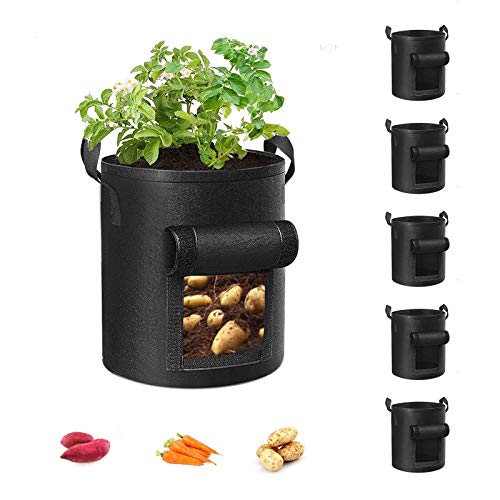
The Cavisoo grow bags are built with 300g thick nonwoven fabric designed for reuse over multiple seasons. Their 10-gallon capacity supports tomato, potato, and other vegetables with ample root room while enabling rapid drainage due to breathable material. Reinforced handles use polypropylene webbing with X-shaped stitching to maintain structural integrity when moving filled bags. The design aims to simplify large-pot gardening in limited spaces and provide durable performance year after year.
Homyhoo Potato Grow Bags With Flap
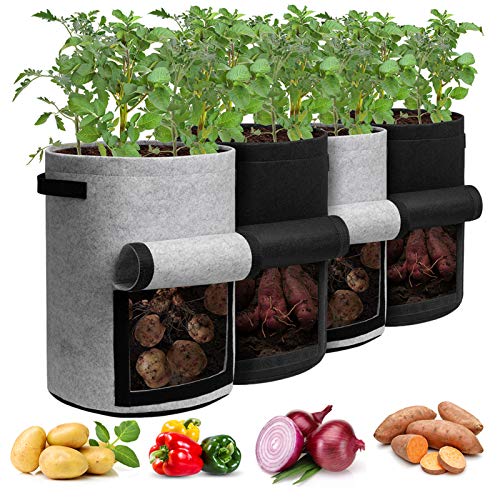
The Homyhoo bags use a premium double-layer non-woven fabric to improve ventilation and prevent excessive moisture, extending bag life and promoting healthy root systems. A large harvest window enables easy potato harvesting and plant checks without full bag disruption. With a 10-gallon capacity, these bags provide ample soil volume for robust vegetable growth while remaining portable for patio or balcony use. Biodegradable materials align with eco-conscious gardening practices while offering durability for ongoing seasons.
FEED GARDEN 10 Gallon Grow Bags
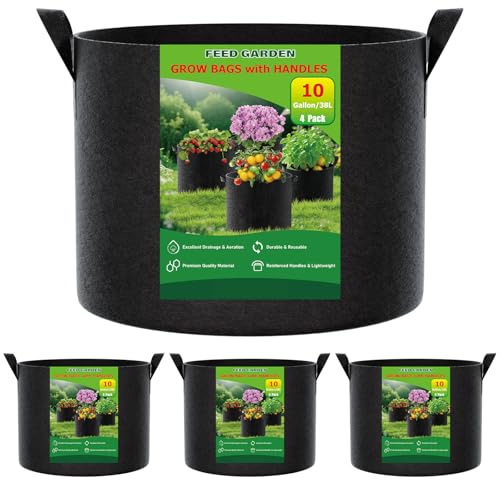
FEED GARDEN emphasizes superior aeration and drainage through its thick nonwoven fabric, which supports healthier root systems and reduces the risk of root rot. The bags are designed for long-term reuse and heavy-duty handling, with reinforced double-stitched handles to safely move fully loaded pots. Their construction targets both indoor and outdoor gardening scenarios, making them a versatile option for vegetable containers, tomatoes, and herbs across multiple growing seasons.
JNYONG 60-Pack Peat Pots

The JNYONG peat pots offer 3.15-inch biodegradable seedlings pots with bottom drainage holes. Made from recycled pulp and plant fibers, these pots biodegrade quickly when planted or worked into soil, turning into organic nutrients for plants. The package includes 60 pots plus 50 plant labels for seedling organization. This option suits starter setups for herbs and vegetables, supporting a sustainable, soil-friendly transplant process.
OurWarm Windowsill Herb Planter Box
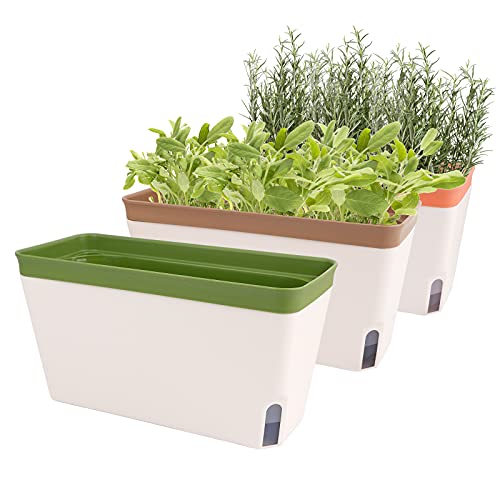
These OurWarm planters deliver a compact, self-watering design with a visible water level window and a water injection port for easy top-ups. The two-absorbent-cotton-rope system maintains moisture through osmosis, reducing daily watering needs. Ideal for windowsills and small spaces, they support herbs, compact vegetables, and decorative greens while offering an orderly, modern look for indoor gardening setups.
Land Guard 4-Pack Fabric Grow Bags

Land Guard’s 5-gallon fabric grow bags combine sturdy nonwoven fabric with high-strength weaving for a lightweight yet load-bearing solution. They provide excellent drainage to prevent overwatering and encourage healthier, more vigorous growth. The bags include heavy-duty handles for easy moving, making them suitable for balcony gardens, patios, or medium-scale container setups that require frequent repositioning.
DRYADES Indoor Garden System

The DRYADES self-watering system pairs a 17-watt LED grow light with a soil-based plant pot setup and smart timer options. It supports selectable light cycles and intensity to optimize photosynthesis in indoor environments, helping beginners and experienced gardeners achieve stable yields year-round. While designed for indoor use, it provides a compact, integrated approach to edible plant growth, including vegetables and herbs, in limited spaces.
Buying Guide: Key Purchase Considerations
Material and durability: Nonwoven fabrics are popular for grow bags due to airflow and drainage; check fabric weight (g) and stitching quality to gauge longevity and load tolerance. For decorative or space-limited setups, plastic planters with self-watering features can reduce maintenance but may require more frequent replacement as styles evolve.
Size and capacity: Match bag or planter capacity to the crop. Leafy greens and herbs can thrive in smaller containers, while tomatoes and potatoes generally need 10-gallon bags or larger. Consider how much root space a plant requires and whether you’ll transplant later.
Drainage and ventilation: Adequate drainage prevents waterlogging and root rot. Look for bags with perforations or breathable fabric and ensure there are bottom drainage options. Harvest windows or observation ports can aid in maintenance for specific crops like potatoes.
Mobility and setup: If you plan to move pots seasonally or rearrange outdoor spaces, reinforced handles and lightweight materials are valuable. For indoor use, self-watering features and integrated irrigation help reduce daily care needs.
Environment and reuse: Reusable bags reduce ongoing costs and waste. Biodegradable pots are excellent for seed starting but may not suit long-term reuse. Consider the product lifecycle and your sustainability goals when choosing between options.
Budget and space: A mix of larger grow bags for high-yield crops and smaller containers for herbs can maximize space. Compare sets by total price, durability, and included features like harvest windows or water-level indicators to determine overall value.