This guide highlights the best growing trays and kits for cultivating microgreens at home. Each option focuses on ease of use, durability, and space efficiency, helping beginners and seasoned gardeners alike achieve steady harvests. Explore a curated mix of soil-free systems, traditional seed trays, and stackable setups to suit different kitchens and living spaces.
| Product | Brand | Key Benefit | Type |
|---|---|---|---|
| Self-Watering Microgreens Growing Kit | ZESTIGREENS | No soil, water-efficient, reusable tray | Hydroponic/Soil-Optional |
| Legigo 5 Pack Seed Sprouter Trays | Legigo | Five trays with lids, clear covers for humidity | Seed Sprouter Trays |
| mizuna Microgreens Growing Kit | mizuna | Two stackable trays with coconut coir and seeds | Stackable Trays Kit |
| 10 Plant Growing Trays | Living Whole Foods | Large, drain-hole trays for soil or hydroponics | Plant Growing Trays |
| 6Pack Microgreens Growing Trays | RMBHM | Six reusable trays with hemp mats | Multi-Tray Kit |
Self-Watering Microgreens Kit By ZestiGreens

The ZestiGreens self-watering kit provides a reusable 12″ x 6″ tray surrounded by a bamboo frame, plus a hydroponic insert and blackout lid. This setup supports soil-free growth with optional soil use, giving flexibility for different microgreen varieties. The kit includes two hemp grow mats, a seed pack (Red Garnet Amaranth and a Superfood Mix), and a comprehensive 16-page guide. It is designed to reduce mess and maintenance while delivering crisp harvests in about 7–10 days. Users can switch to soil if preferred, enabling a dual growing approach.
Legigo Seed Sprouter Trays With Lids
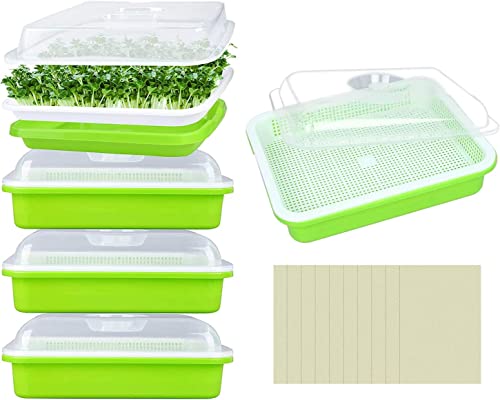
Legigo offers a 5-pack of seed sprouter trays sized 12.7″ x 10.23″ x 4.95″ with ten planting papers. The clear lids help maintain humidity for rapid sprouting, while the densely perforated trays promote drainage and airflow to reduce mold risk. Made from food-grade plastic, these trays are designed for easy cleaning and repeated use. The system supports soil-free cultivation for a quick, efficient microgreens start, and can also accommodate some soil-based setups when desired.
mizuna Microgreens Growing Kit

The mizuna microgreens kit features two stackable white ceramic growing trays (2x5x12 inches) with coconut coir and seeds included. The stackable design saves space and enables ongoing harvest cycles. The included growing medium provides a reliable base for rapid germination, while the compact 2-tray system supports stylish indoor cultivation. This kit emphasizes aesthetics combined with functional indoor growing capabilities, suitable for small kitchens and display-worthy microgreens.
Living Whole Foods 10 Plant Growing Trays

This set provides 10 durable plastic trays with drain holes, sized approximately 21″ by 11″ on top and 20″ by 10″ at the bottom. They are designed for versatile use—drip tray, hydroponic cultivation, or seed starting. The drain holes support controlled water flow and reduce waterlogging, making them suitable for large microgreen batches or starter projects in homes, classrooms, or small studios. The trays are built for repeated use and easy cleaning, supporting long-term microgreens hobby farming.
RMBHM 6Pack Microgreens Growing Trays

The RMBHM kit bundles six reusable microgreens trays with 12 hemp fiber grow mats. The kit emphasizes a complete microgreens growing setup with durable PS material trays designed for lightweight handling, easy cleaning, and long-term use. Each tray measures 15″ x 11″ x 2.5″, providing ample space for diverse greens. The setup supports seed starting, indoor gardening, and consistent harvests, with convenient mat-based cultivation that helps roots establish efficiently while minimizing soil mess.
Buying Guide
Key purchase considerations for microgreens trays and kits include size and space, growing method (soil vs hydroponics), durability, cleaning and reuse potential, and versatility for multiple greens. If counter space is limited, opt for stackable or compact trays that maximize harvest while occupying minimal room. For beginners, kits with clear instructions and included growing media can reduce trial-and-error time. Consider whether you prefer soil-free systems for quick setup or longer-term options that support soil cultivation as your needs evolve. Drainage and humidity control features help prevent mold and overwatering, especially in humid indoor environments. Look for materials that are food-grade, BPA-free, and easy to sanitize. Finally, assess whether the trays allow continuous harvest through interchangeable components or require a dedicated cycle for each batch. Practical comparisons often hinge on whether you value aesthetics and display (e.g., ceramic trays) versus rugged, high-volume production trays for frequent harvests.