Finding the right weed cutter for lakefront conditions helps protect shorelines, improve boating and swimming access, and keep aquatic vegetation under control. The following five tools are among the most capable options available for American lake environments, balancing cutting width, durability, and ease of use. Each product is well-suited for cattails, lily pads, Phragmites, and other common lake weeds, and includes a long throw rope for extended reach.
| Product | Brand | Max Cut Width | Throw Rope | |
|---|---|---|---|---|
| Jenlis The Original Weed Razer | Weed Razer | 48 inches | 25 feet | Classic V-shaped razor blades designed for deep cuts |
| Jenlis Weed Razer Express | Weed Razer | 30 inches | 25 feet | Compact option with quick clearing capabilities |
| Zynthrafor Adjustable Lake Weed Cutter | Zynthrafor | 37 inches (adjustable 37/25/12) | 30 feet | Adjustable widths for variable conditions |
| Jenlis Weed Razer Pro | Weed Razer | 30–62 inches | 25 feet | Wide adjustable blade path with built-in sharpener |
| VEVOR Lake Weed Cutter | VEVOR | 37–48 inches | 30 feet | Heavy-duty steel blades for robust weed control |
These selections cover a range of lake conditions, from shallow weed beds to deeper, denser growth. They emphasize durable construction, adjustable cutting widths, and long reach to minimize watercraft interference and shoreline obstruction. The following sections detail five top options with direct product details and practical usage notes.
Jenlis The Original Weed Razer

The Original Weed Razer uses V-shaped razor blades to shear aquatic vegetation, delivering a 48-inch-wide cutting path for rapid clearing of submerged weeds and algae. Weighing around eight pounds, it balances portability with enough heft to reach plant bases. The included five-foot handle supports stable throwing and effective bottom cutting, helping maintain accessible shorelines for swimming, boating, and fishing.
Jenlis Weed Razer Express
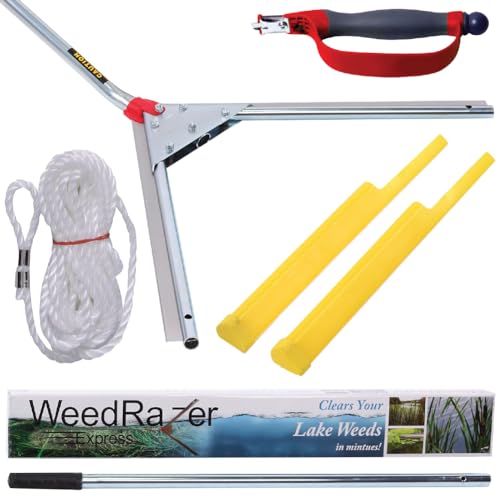
The Weed Razer Express is a compact option designed for quick weed control along lake edges. It uses razor-sharp blades to cut a 30-inch-wide path and weighs about six pounds, which aids in casting distance and manageability. A five-foot handle keeps the tool effective at reaching weed beds while preserving shoreline access for outdoor activities.
Zynthrafor Adjustable Lake Weed Cutter
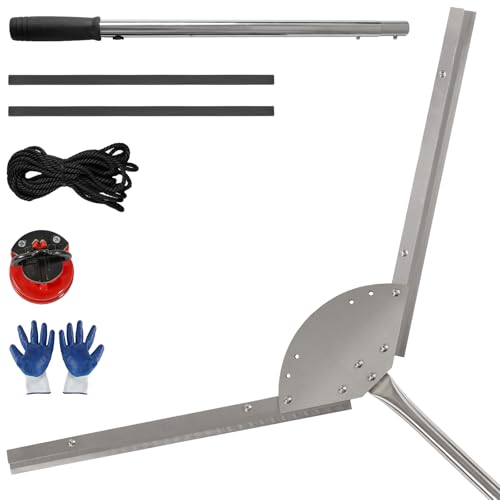
The Zynthrafor model features an adjustable blade function for 37/25/12-inch widths and a 30-foot rope, enabling flexible clearance across various weed densities. Its stainless steel construction boosts corrosion resistance, providing longevity in freshwater and exposure to natural elements. The blade sharpener is included to maintain cutting efficiency, supporting ongoing lake weed management at the source.
Jenlis Weed Razer Pro

The Weed Razer Pro expands cutting width from 30 to 62 inches, offering a substantial reach for extensive weed beds. It comes fully assembled and includes a blade sharpener for ongoing performance. At about nine pounds, it remains manageable for throwing while providing strong bottom-cut capability to reach roots and minimize re-growth along shorelines. A five-foot handle assists with casting and control during use.
VEVOR Lake Weed Cutter

The VEVOR Lake Weed Cutter features two adjustable cutting widths up to 48 inches with sturdy tool steel blades. It includes a 30-foot throw rope and a durable stainless-steel build designed to resist corrosion in wet environments. This setup blends strong cutting power with a longer reach to clear sizable patches of cattail, lilies, and other aquatic vegetation efficiently.
Buying Guide: Key Purchase Considerations
When choosing a lake weed cutter, consider width flexibility, blade design, and overall durability. Wider paths speed up clearance on large weed beds but may require more throwing power. Narrower settings are useful for precise edging along docks or between boats. Blade geometry affects efficiency for different plant types—V-shaped blades excel at piercing and cutting through dense root systems, while straight or multi-blade configurations may handle lighter growth more smoothly.
Rope length and weight influence casting distance and fatigue. Lighter tools are easier to throw but may sink more slowly or require more effort to cut at the base. Heavier models offer stability and stronger cutting power but demand more strength for extended sessions. Corrosion resistance is essential for longevity in freshwater, so look for stainless steel or coated blades and hardware.
Ease of maintenance matters: include features like blade sharpeners or quick-release components that promote maintenance on the water. For property owners with extensive weed beds, a model offering a wide adjustable width (such as 30–62 inches) can reduce overall work and time. Compatibility with docks, swim areas, and boat lanes should shape your selection to minimize disruption to lake activities.
In choosing among these five options, reflect on local weed density, depth, and accessibility of shorelines. If you have broad, dense weed growth near the shoreline, prioritize a cutter with a wide cutting width and robust blades. For smaller lakes or lighter weed loads, a compact model with reliable casting distance might be more practical. Always follow safety guidelines for handling sharp blades and ensure proper rope handling to prevent entanglement or injury.