Volcanic rock dust is widely used to replenish mineral-depleted soils and improve plant vigor. The following selections feature natural mineral content, micronutrients, and porous textures that aid drainage and moisture retention. This guide highlights five well-regarded options to support gardens, containers, and landscape plantings across the United States.
| Product | Brand | Why It Stands Out |
|---|---|---|
| Azomite Rock Dust Volcanic Ash | Greenway Biotech, Inc. | Broad spectrum trace minerals; soil-friendly amendment |
| Gaia Green Glacial Rock Dust | Gaia Green | Glacial mineral source; improves structure and cation exchange |
| Azomite Rock Dust Volcanic Ash (2 lb) | Greenway Biotech, Inc. | Same mineral basis in a smaller packaging option |
| BIOMAND Lava Rocks | BIOMAND | Porous lava rocks for drainage, aeration, and potting mixes |
| FANTIAN Black Lava Rocks | FANTIAN | Natural volcanic lava with drainage and moisture retention |
Azomite Rock Dust Volcanic Ash – Greenway Biotech, 4 Pounds

Azomite rock dust provides a broad spectrum of trace minerals essential for plant metabolism, root development, and soil vitality. Greenway Biotech’s product is micronized and packaged for resealability, offering an organic source of minerals that supports healthy crops and resilient soil biology. The powder includes soluble potash, calcium, magnesium, and other micronutrients to help improve plant health and vigor in vegetables, fruits, and field crops.
Gaia Green Glacial Rock Dust – 2 kg

This finely ground rock dust comes from glacial moraine and is celebrated for mineral richness and soil rehabilitation. It serves as a long-term soil amendment, delivering magnesium, iron, manganese, and other trace elements that help rebuild soil structure, moisture retention, and drainage. By supplying minerals gradually, it can contribute to resilient plant growth across diverse garden settings.
Azomite Rock Dust Volcanic Ash – Greenway Biotech, 1 Pound
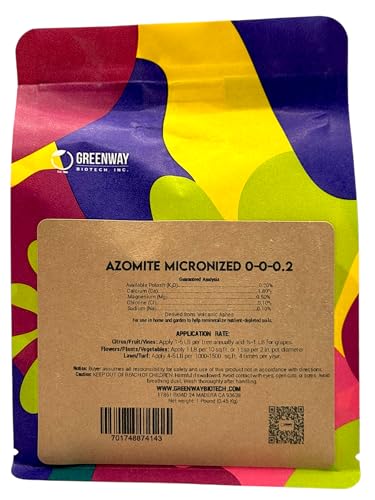
A smaller packaging option for gardeners and hobbyists, this 1-pound Azomite powder shares the same mineral profile as larger bags. It is suitable for targeted amendments to beds, containers, or seed starting mixes where precise mineral input is desired. It contributes a broad range of trace minerals that support plant immunity and root system development.
Azomite Rock Dust Volcanic Ash – Greenway Biotech, 2 Pounds
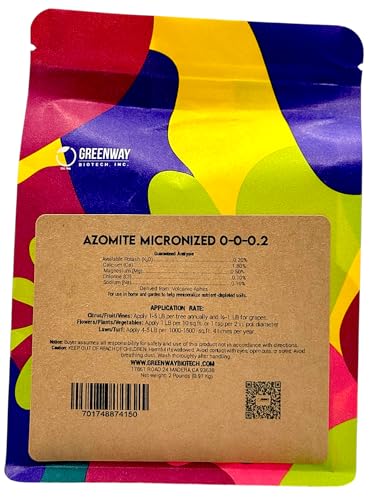
Offering a mid-size option, this 2-pound bag aligns with regular soil amendments across raised beds and larger containers. The product maintains the same micronutrient diversity and soil-friendly benefits, with emphasis on supporting crop yield through mineral replenishment and improved nutrient uptake in diverse crops.
BIOMAND Lava Rocks – 18 lb

These premium volcanic rocks are sorted to 3/8 inch and designed for potting mixes, drainage, and soil aeration. Pre-washed to minimize dust, they provide excellent drainage while retaining some moisture, reducing the risk of root rot in moisture-sensitive plants like succulents, orchids, and cacti. They also function as decorative top-dressing in landscapes and planters.
FANTIAN Black Lava Rocks – 2 lbs

FANTIAN lava rocks are a natural volcanic rock option with a fine-to-medium grain. Their porosity supports drainage and prevents waterlogging, making them suitable as top-dressing for succulents, cacti, bonsai, and other drought-tolerant species. Users should rinse after receipt to minimize residual dust, particularly if added to potting mixes or hydroponic substrates.
3lb Black Lava Rock – Anothera

Anothera’s lava rocks emphasize drainage and moisture management for potted plants. The small to medium grain size works well as a top dressing and bottom-layer amendment, helping to create an environment that reduces root rot while supporting healthy growth in a range of plant types, from ornamentals to edible container crops.
Gaia Green Basalt Rock Dust – 2 kg

Basalt rock dust is another mineral-rich option that complements other soil amendments. Gaia Green Basalt Rock Dust provides trace minerals and natural mineral sources that support long-term soil health and microbial activity. This product is suitable for garden beds, lawns, and larger planting areas where steady mineral input is beneficial.
Buying Guide: Key Purchase Considerations
- Mineral content and diversity: Look for products labeled as containing a broad spectrum of trace minerals (calcium, magnesium, potassium, iron, manganese, zinc, copper, boron, etc.).
- Texture and particle size: Finer powders disperse more evenly in soil and compost, while coarser lava rocks improve drainage and aeration when used as top dressing or in potting mixes.
- Soil health impact: Volcanic rock dusts can enhance soil structure, cation exchange capacity, and microbial activity over time, supporting steady nutrient availability to plants.
- Application rate and method: Follow product-specific guidelines. Azomite-type products are often mixed into soil at planting or sprinkled into containers; lava rocks are typically layered at the bottom or used as a mulch.
- Packaging and storage: Choose resealable bags for extended use and moisture protection. Keep away from direct sunlight and humidity to preserve mineral integrity.
- Plant type considerations: For container gardens and succulents, emphasize drainage-friendly amendments (lava rocks, coarse rock dust). For vegetable beds, a balanced mineral supply supports overall yield and resilience.
- Environmental impact: Prefer products sourced from natural mineral deposits with minimal processing, and verify that they are free of additives or contaminants that could affect soil microbiology.
- Cost-per-use: Compare price, weight, and coverage to estimate long-term value. Larger bags may offer lower unit costs for established gardens, while smaller packs suit experimental plots.
- Compatibility with existing soil amendments: If your soil already has liming or phosphate inputs, tailor the application to avoid excessive calcium or phosphorus, focusing on complementary minerals instead.