Choosing the right soil test kit helps you tailor amendments for healthier lawns, vegetables, and flowers. This article reviews five highly relevant options, focusing on accuracy, ease of use, and actionable guidance. Each product is designed for home gardeners who want reliable results without sending samples to a lab. Read on for practical comparisons and a buying guide to help you pick the best soil test for your garden.
| Product | Brand | Primary Benefit | Link |
|---|---|---|---|
| MySoil Soil Test Kit | My Soil | Professional lab-grade results with actionable recommendations | Amazon |
| Garden Tutor Soil pH Test Kit | Garden Tutor | AI-powered web reader for quick, precise pH | Amazon |
| NewTest Soil Test Kit | NewTest | 40 tests across four key nutrients and pH | Amazon |
| SONKIR Soil pH Meter (MS02) | SONKIR | 3-in-1 moisture, pH, and light for quick checks | Amazon |
| IRTOV 4-in-1 Soil Tester | IRTOV | Integrated moisture, pH, temperature, and light | Amazon |
MySoil Soil Test Kit
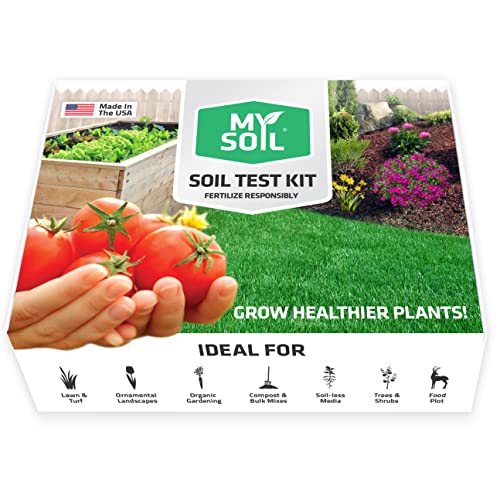
MySoil offers a comprehensive soil analysis with professional-grade accuracy managed for home use. This kit tests 13 plant-available nutrient levels, including nitrogen, and measures soil pH. Results arrive in 6–8 days through a mail-in lab, providing detailed insights that let gardeners tailor fertilizers and amendments. It supports diverse growing scenarios, from lawns and turf to vegetable gardens, flowering beds, trees, and even hydroponic or soil-less systems.
Key features include fast-inform results compared with consumer test strips and meters, suitability for various soil types, and a tailored recommendation framework. This makes it a strong option for gardeners seeking precise nutrient data before planting or renovating a landscape.
Garden Tutor Soil pH Test Kit

This kit emphasizes pH testing accuracy with an AI-powered web reader that analyzes test strip images to deliver precise soil pH results. It provides a streamlined workflow: collect a soil sample, dip the test strip, snap a photo, and receive instant digital results. The design focuses on repeatable measurements to help gardeners stabilize soil chemistry before planting, improving nutrient uptake and plant health.
Pros include ease of use, quick feedback, and a user-friendly web-based reader that reduces interpretation variability. Consider this option if you want a no-fuss, high-repeatability pH test you can share with others via a simple online tool.
NewTest Soil Test Kit

NewTest provides a professional-grade approach for home gardeners, delivering 40 tests across four parameters: pH, nitrogen, phosphorus, and potassium. The kit emphasizes independent, multiple tests and clear step-by-step instructions to help beginners perform accurate assessments. It positions itself as a practical alternative to sending soil samples to a lab while delivering results that can guide tailored amendments for better crop yields and healthier lawns.
Strengths include a detailed test plan, beginner-friendly instructions, and substantial test capacity. It’s a solid pick for gardeners who want robust data without professional lab turnaround times.
SONKIR Soil pH Meter (MS02)

The SONKIR MS02 is a 3-in-1 soil tester that quickly measures moisture, pH, and sunlight exposure. It requires no batteries, simply insert the probe into soil to read values. The device is useful for gardeners who need a fast snapshot of soil conditions in different garden zones, pots, or lawns. It is particularly handy for outdoor or on-the-go checks where power sources are limited.
Limitations include potential variability with very sandy or clay-heavy soils and the need to ensure soil moisture is adequate for accurate readings. It excels as a quick diagnostic tool to guide immediate watering or light management decisions.
IRTOV 4-in-1 Soil Tester

This multi-function tester covers moisture, pH, temperature, and light, offering a broad snapshot of growing conditions. It features a large backlit LCD display for easy reading day or night and operates with standard AAA batteries. The 2025 soil sensor technology is presented as providing quicker, more accurate readings, helping gardeners optimize watering schedules, pH adjustments, and light exposure as plants grow.
Consider this option if you want a compact, all-in-one device that supports routine monitoring across multiple environmental factors that influence plant health and growth.
Buying Guide
- Purpose and scope: Choose kits that align with your goals—pH precision, nutrient profiling, or quick-condition checks. Lab-grade kits (like MySoil) provide deeper insight, while 3-in-1 meters (like SONKIR) suit quick garden checks.
- Test type: At-home kits can be colorimetric, digital strip-based, or lab-based mail-in analyses. Each has trade-offs between speed, accuracy, and depth of data.
- Sample strategy: For most home gardens, sample from several spots and average results to account for soil variability. This improves guidance on amendments.
- Result interpretation: Look for kits that provide actionable guidance—fertilizer recommendations, target pH ranges for common crops, or online tools that interpret results.
- Turnaround time: If you want quick decisions, opt for kits with immediate readouts. For in-depth nutrient profiling, consider mail-in lab analyses.
- Ease of use and maintenance: Consider the number of steps, required consumables, and whether the device needs batteries or calibration plates.
- Durability and environment: Outdoor-friendly devices should withstand weather conditions and provide consistent results across seasons.
- Budget and value: Compare per-test costs and the total number of tests included. A kit with more tests may offer better long-term value for ongoing gardening.
When selecting a soil test kit, gardeners should balance precision with practicality. For new garden beds, a lab-grade or professional-style test provides a robust baseline. For ongoing lawn maintenance or container gardening, fast, repeatable readings from digital meters can guide day-to-day decisions. Consumers should also consider whether they want integrated online tools or simple, stand-alone readings. The right choice depends on how deeply you want to understand soil chemistry and how actively you plan to adjust soil conditions over a growing season.