Greenhouses require precise and reliable irrigation to protect tender growth while conserving water. Overhead sprinkler systems and misting kits offer even coverage, adjustable spray patterns, and scalable layouts for greenhouse environments. The following selections focus on ease of installation, durability, and versatility for greenhouse setups. Each option includes adjustable flow, corrosion-resistant components, and configurations suitable for small to large greenhouse spaces.
| Product | Brand | Key Feature |
|---|---|---|
| Tigvio Complete 234FT Drip Irrigation Kit | Tigvio | 87 connectors, quick-connect design, up to 35 emitters |
| Thiswing 360° Adjustable Drip System | Thiswing | 360° misting nozzles, copper nozzle, 50 ft kit |
| MIXC 100Ft Drip Irrigation System | MIXC | 1/4″ tubing, adjustable copper nozzles, 20 cm emitter rods |
| MIXC 65Ft Greenhouse Watering System | MIXC | Quick connectors, misting nozzles, 1/4″ tubing |
| Funpynani 360° Automatic Drip Kit | Funpynani | 16 ft options, 360° copper nozzles, three water-saving modes |
Tigvio Complete Drip Irrigation Kit for Greenhouse

The Tigvio kit provides a comprehensive drip irrigation solution suitable for greenhouse benches and raised beds. It includes 200 ft of 1/4″ tubing and 34 ft of 1/2″ mainline, along with 87 components such as lock barbed tee connectors, drip emitter streams, vortex emitters, blue mist nozzles, quick connection tees, and faucet adapters. Quick-connect technology helps installers achieve a leak-free setup quickly, often in under 10 minutes. The system supports up to 35 emitters, delivering targeted watering while minimizing waste. This setup enables scalable coverage across multiple greenhouse zones with consistent water distribution.
Thiswing 360° Adjustable Drip Irrigation System

Thiswing’s system emphasizes wide-angle coverage for greenhouse plantings with 16 misting nozzles and 50 ft of tubing. The 5/16″ mainline tubing increases water flow compared to standard 1/4″ sets, reducing dry spots in denser greenhouse layouts. The kit includes a copper nozzle assembly for durability and longevity, plus tees, plugs, a quick connector, and a hose cutter. The adjustable, detachable nozzles allow precise targeting of plant rows or trays, while the bundled hardware supports flexible installation on greenhouse benches, shelves, or vertical trellises.
MIXC 100Ft 1/4″ Drip Irrigation System

The MIXC 100Ft kit is designed for US compatibility with 1/4″ tubing, offering universal connectors and 16 copper-nozzle options. Its 20 cm bendable rods provide flexible placement for drip emitters, misting, or sprinkler patterns. While the system caters to garden beds and raised areas, it excels in greenhouse settings when paired with bench-level irrigation layouts. A recommended practice is to limit more than eight rods per 50 ft of tubing to preserve consistent flow and avoid over-saturation of delicate greenhouse crops. The copper nozzles deliver durable, reusable spray patterns for long-term greenhouse use.
MIXC 65Ft Greenhouse Watering System

This MIXC kit is tailored for greenhouse environments with a 65-ft layout and quick-connect fittings. Included components such as 1/4″ tubing, misting nozzles, and a set of tees support a simple, scalable overhead irrigation network. An adjustable misting nozzle, built with metal components, offers robust performance for greenhouse humidity control and uniform plant hydration. The quick connector design assists rapid setup, with a focus on reliability in greenhouse climates where consistent coverage is essential for seedling trays and potted plants alike.
Funpynani 360° Automatic Drip Kit
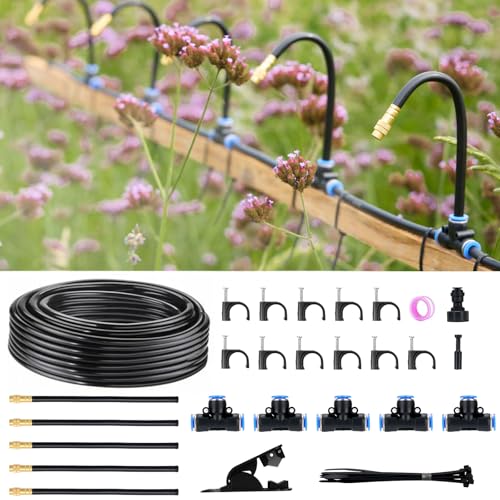
The Funpynani kit offers a 360° nozzle system with copper components designed for full coverage in greenhouse spaces. It features 16 ft sections with multiple lengths to fit various layouts. Water-saving modes help reduce consumption while maintaining even hydration for greenhouse plants. The copper atomizing nozzles resist corrosion and provide stable spray patterns, which is beneficial for high-humidity greenhouse environments where uniform wetting is critical for seedlings and mature crops alike. The kit supports multi-directional irrigation to cover corners and tight rows.
Buying Guide: Key Points For Greenhouse Overhead Irrigation
When selecting an overhead sprinkler system for a greenhouse, consider the following factors to ensure effective coverage and durability:
- Coverage and layout: Assess greenhouse dimensions, aisle spacing, and bench configurations. Choose systems with adjustable nozzles or emitters that can be directed to seed trays, mature beds, and overhead shelves.
- Tubing size and flow: 1/4″ tubing is common for emitters; 5/16″ or larger mainlines increase flow in larger greenhouses. Ensure compatibility with your water source and fittings.
- Materials and durability: Copper nozzles and corrosion-resistant plastics extend life in humid greenhouse environments. UV resistance is a plus for outdoor areas or sun-exposed greenhouses.
- Ease of installation: Quick-connect fittings and plug-and-play components save time and reduce leaks. Look for kits with comprehensive manuals and clear wiring or tubing diagrams.
- Water-saving features: Adjustable spray patterns, misting controls, and multiple modes help balance plant hydration with water conservation, especially in drought-prone regions.
- Maintenance and replacement parts: Availability of replacement nozzles, tees, and seals matters for long-term upkeep in high-use greenhouse spaces.
- Automation potential: Some systems support controllers or rain-barrel integration for timed or sensor-driven irrigation, enabling precise plant care without manual intervention.
- Safety and plant compatibility: Consider misting vs. dripping, humidity tolerance of greenhouse crops, and potential disease risks from over-watering. Choose emitters that minimize leaf wetting where foliage disease is a concern.
For greenhouse planning, map zones by plant type and watering needs. Group high-water-demand crops (like tomatoes and cucumbers) in zones with robust mainlines, while delicate seedlings can use targeted drip emitters. Regularly inspect emitters for clogs and flush lines seasonally to maintain consistent performance.