Choosing the right soil pH kit helps gardeners, lawn lovers, and small farm enthusiasts optimize nutrient uptake and plant health. This guide highlights five reliable options from top brands, focusing on accuracy, ease of use, and value for money. Each product section includes essential features and practical use cases tailored to American soils and climate conditions. Read on to compare options and find the best soil test kit for your yard, garden beds, and houseplants.
| Product | |||
|---|---|---|---|
| Rapitest Soil Test Kit | At-Home Kit | Homes & Gardens | pH, Nitrogen, Phosphorus, Potash |
| MySoil Soil Test Kit | Professional-Style Kit | Lawn & Garden US | 13 Plant-Available Nutrients + pH |
| SONKIR Soil pH Meter | 3-in-1 Meter | Quick checks for soil health | Soil pH, Moisture, Sunlight |
| Leaping Lynx Soil pH Test Strips | Test Strips Kit | Frequent pH monitoring | pH 3–9 |
| NewTest Soil pH Test Kit | Strip Kit with Cylinders | Beginner to intermediate | pH using 4-color blocks; measuring cylinders |
Rapitest Soil Test Kit for Gardens, Vegetables, Flowers and Lawns

The Rapitest kit from Luster Leaf is an inexpensive, educational option designed to deliver quick at-home soil readings. It uses an easy-to-use capsule system and patented color comparators to estimate four major variables: pH, nitrogen, phosphorus, and potash. The kit includes enough components for 20 tests, with five tests allocated for each nutrient category. This makes it practical for testing multiple spots in a garden bed or lawn to assess variability across a landscape. It is particularly well-suited for hobby gardeners who want a straightforward, low-cost testing method without sending samples to a lab.
MySoil Soil Test Kit
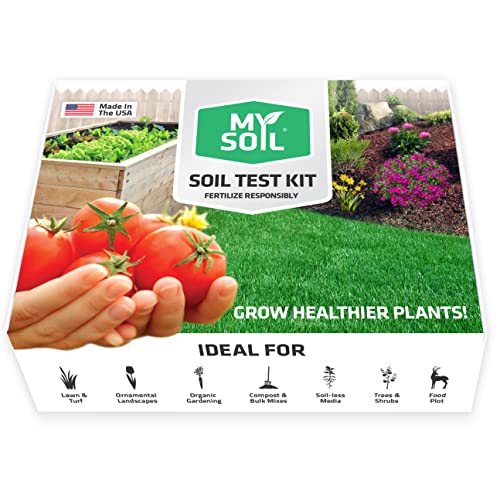
MySoil offers a comprehensive, professional-style soil analysis that goes beyond basic pH. It focuses on 13 plant-available nutrient levels, plus pH, and provides actionable recommendations tailored to your soil and plant needs. The analysis is delivered in 6–8 days and is suitable for diverse growing scenarios—lawn and turf, vegetables, flowers, compost, trees, houseplants, and hydroponics. This kit is ideal for gardeners seeking trusted lab-like insights without leaving home, enabling data-driven decisions on amendments and fertilizer strategies.
SONKIR Soil pH Meter, MS02

The SONKIR MS02 is a 3-in-1 soil tester that measures soil moisture, pH, and sunlight exposure. It does not use batteries, offering a straightforward plug-and-read experience. The device emphasizes beginner-friendly use with clear readouts and is particularly convenient for quick checks in different garden zones, including lawns, vegetable plots, and potted plants. Important usage note: the tool is designed for soil testing and may not yield accurate results if used for overly dry soil—moisture and pH readings depend on proper soil moisture before testing.
Leaping Lynx Soil pH Test Strips

Leaping Lynx provides 100 high-quality soil pH test strips covering a range of 3–9. The strips offer a quick and cost-effective way to monitor soil pH across multiple garden beds or containers. The included color chart enables fast readings after dipping the strip in a simple soil-water mixture. This option is popular among gardeners who want frequent checks to fine-tune soil conditions for vegetables, lawns, and flowering beds without a long wait for lab analyses.
NewTest Soil pH Test Kit

NewTest offers an upgraded kit with 125 soil pH test strips and measuring cylinders, designed to improve accuracy and ease of use. The kit emphasizes colorimetric color blocks across four levels, enabling more precise pH readings as you dissolve and compare soil-water samples. The combination of strips and measuring cylinders makes this kit suitable for gardeners who want consistent, repeatable results across large or multiple test sites in a yard or garden area.
Buying Guide: Key Purchase Considerations and Comparisons
- Accuracy vs. convenience: Lab-style tests (like MySoil) provide comprehensive nutrient profiles, while strips and colorimetric tests (Rapitest, Leaping Lynx, NewTest) offer quick, inexpensive checks suitable for routine monitoring.
- Test type and scope: Decide between pH-only tests, multi-nutrient at-home kits, or multi-parameter meters that include moisture and light readings. Your crop types and soil variability will guide the choice.
- Time to results: Some options provide immediate readings; others send samples for lab analysis with results in several days. Consider how quickly you need guidance for seasonal planting windows.
- Target environment: Garden beds, lawns, containers, hydroponics, and indoor plants each benefit from different test approaches. For parameter-heavy needs, a professional-grade kit might be worth the extra cost.
- Ease of use: Battery-free meters and simple strips are accessible for beginners, while more advanced kits may require careful handling, sample preparation, and interpretation of color charts.
- Reusability and quantity: Look at the number of tests per kit and whether the components can be reused or require periodic replacement. Larger yields are more cost-effective for extensive gardens.
- Compatibility with amendments: Consider how well the kit’s guidance translates into actionable amendments—lime, sulfur, organic matter, compost, or specific fertilizers.
- Support and documentation: Clear instructions, guidelines for sample collection, and interpretation help ensure consistent results across seasons and different soil types.
In summary, choose a soil pH kit based on how deeply you want to understand your soil, how often you test, and whether you prefer rapid in-field readings or comprehensive lab-grade insights. The options above cover a spectrum from quick checks to detailed nutrient analyses, making it easier to tailor your selection to your garden’s needs.