Protecting fruit trees from birds, insects, and other pests is a key step in securing healthy yields. This guide reviews five top-rated netting options designed to shield cherry, peach, fig, blueberry, and apple trees while allowing light, air, and water to reach the plants. Each option features practical access points so you can harvest without removing the cover. Below, compare sizes, coverage, and notable design elements to help you choose the right netting for your orchard or home garden.
| Product | Brand | Estimated Coverage | Notable Features |
|---|---|---|---|
| 10x10Ft Large Tree Netting for Fruit Trees Keep Birds Squirrels Cicadas (Zippers on Both Sides) | LHongL | 10 x 10 ft coverage (unfold diameter ~75″) | Dual zippers, durable, weather-resistant |
| Large Fruit Tree Netting, Cookmaster 10x10Ft Insect Bird Barrier Netting | Cookmaster | 10 x 10 ft coverage | 60-mesh, drawstring and zipper, wind-stable |
| Fruit Tree Netting with 2-Way Zipper & Drawstring, 6.4Ft x 6.4Ft | Garden Tailor | 6.4 x 6.4 ft | Two-way zipper, top and side access, UV-resistant |
| Fruit Tree Netting with Zipper & Drawstring – 8’x8′ | Garden Tailor | 8 x 8 ft | Zipper and drawstring, breathable HDPE mesh |
| KLEWEE 10 x 50 FT Garden Mesh Netting | KLEWEE | 10 x 50 ft roll | Ultra-fine 0.8 x 0.8 mm mesh, cut-to-size flexibility |
10x10Ft Large Tree Netting for Fruit Trees
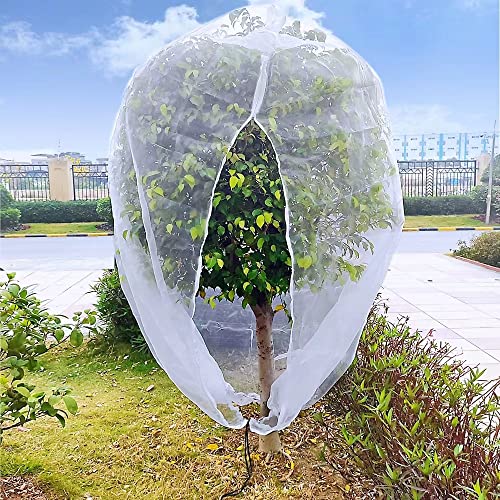
The LHongL netting provides a substantial 10 by 10 foot footprint with an unfolded diameter near 75 inches. Built to shield peaches, cherries, figs, and other fruit trees, it reduces damage caused by birds, squirrels, cicadas, and smaller pests. The design emphasizes ease of use with zippers on both sides, enabling full access to ripening fruit without wrestling a bag over the entire tree. The material is engineered to withstand sun exposure and rain, while allowing light, air, and water to flow through for plant health.
Cookmaster 10x10Ft Insect Bird Barrier Netting

Cookmaster offers a robust 10×10 ft net with a 60-mesh design for reliable pest exclusion. The netting uses durable polyethylene and features a drawstring plus a zipper mechanism to facilitate easy covering and removal. It is designed to prevent birds, insects, cicadas, and other pests from accessing fruit trees and shrubs while remaining lightweight enough for practical use. The product is described as weather-resistant and suitable for extended outdoor exposure, allowing water and light to pass through so plants stay healthy during coverage.
Fruit Tree Netting With 2-Way Zipper & Drawstring

This Garden Tailor option uses a 6.4×6.4 ft footprint with a 2-way zipper that covers top and sides, enabling convenient fruit picking without removing the net. The net is UV-resistant HDPE with a 40-mesh construction, providing around 90% light transmission and about 95% breathability. It aims to protect a range of crops beyond fruit trees, including tomatoes and berries, while ensuring long outdoor use and straightforward watering without net removal.
Fruit Tree Netting with Zipper & Drawstring – 8×8

Garden Tailor’s 8×8 ft netting emphasizes effortless access with a zipper and drawstring. The UV-resistant HDPE mesh delivers practical protection against birds, cicadas, and small animals while maintaining light and air flow essential for plant health. Its breathable design supports regular watering, and the medium-large size suits many backyard trees and shrubs, including blueberries, apples, and tomatoes, reducing pest pressure across diverse plantings.
KLEWEE 10 x 50 FT Garden Mesh Netting

The KLEWEE product offers a large 10×50 ft roll of ultra-fine garden netting designed to be cut to size. Its mesh measures 0.8 mm x 0.8 mm, delivering dense coverage for fruit trees, blueberries, and other crops. The netting is suited for orchards and gardens with birds, deer, rabbits, cicadas, and other pests as potential threats. The transparent, light-permitting fabric supports ongoing photosynthesis, watering, and inspection without removing the cover, making it a versatile choice for extended use across seasons.
Buying Guide
- Mesh size and durability: Finer meshes (0.8 mm x 0.8 mm) provide stronger pest protection but may slightly reduce air flow. Consider mesh density in relation to pest pressure and sunlight needs for your trees.
- Size and coverage: Choose a model that covers your tree canopy with a margin for growth. Larger trees may require 10×10 ft or larger nets, while smaller plantings can use compact covers or rolls that can be cut to fit.
- Access features: Zippers on one or multiple sides and drawstrings simplify harvesting. Two-way zippers allow top and side access without removing the net, which can save time and protect fruit longer.
- Weather resistance: Look for UV-resistant HDPE or similar fabrics that withstand sun exposure, rain, and wind. Durable stitching and reinforced edges improve longevity in outdoor conditions.
- Watering and light transmission: Ensure the netting allows adequate light, water, and air flow. This helps maintain plant health while keeping pests out; some nets enable watering through the fabric without removal.
- Reusability and maintenance: Durable nets can be reused across multiple growing seasons. Check for simple cleaning methods and whether the mesh remains intact after rainfall and wind.
- Installation practicality: Some nets come with ties or drawstrings to secure edges, reducing wind displacement. Consider whether you’ll need help installing around a full tree canopy or just draping over the top.
When selecting netting, balance protection level with practicality for your garden. For small to medium trees with high bird pressure, a 6.4×6.4 ft or 8×8 ft option with a zipper can offer convenient access. For larger trees or dense orchards, a 10×10 ft solution or a long roll with cut-to-fit capability provides flexible coverage. Pairing multiple nets to cover different varieties can adapt to varied pest pressures across a single garden space.