Driveways can be vibrant play zones, but traffic and ball roll-overs are real hazards. A purpose-built safety net or barrier can create a clear, visual boundary that helps keep children within a safe play area while still allowing adults to monitor activity. This article reviews five popular driveway safety nets, highlighting setup, durability, and performance to help American families choose the right option for their yard and lifestyle.
| Product | Height | Width / Length | Notes |
|---|---|---|---|
| LUTICO Driveway Net (36’ Wide) | 40 inches | 36 feet wide | High-visibility tape; quick install; suitable for grass or soil |
| KidKusion Retractable Driveway Guard (20’) | Not specified | 20 feet | Made in USA; retractable; ground sleeves included |
| PROGOAL Driveway Guard Barricade Net | 5 feet | Approx. 31/41 feet | HDPE anti-tear; wind-stable; middle support |
| ProSlam Driveway Safety Net Fence | 5 feet | 40 feet long | Ground-mounted; orange net; large protection area |
| Franklin Sports Driveway Barrier Net | Not specified | Up to 20 feet | Visual barrier with caution signage; not a gate |
The following sections detail each product with key features, installation notes, and how they address common driveway safety concerns for families with kids, pets, and active play.
LUTICO 36’ Wide Driveway Net

The LUTICO Driveway Net is designed as a temporary safety boundary that helps prevent young children from entering the street. It uses rustproof fiberglass poles with spiked bottoms for easy ground seating in grass or soil, and it includes full support-pole kits for a complete installation. While not a permanent fence, it emphasizes stability through side ropes to keep poles upright, offering a reliable barrier during active play. The product is compatible with yards and driveways where a quick setup is preferred and can be a practical solution for yards with uneven ground where other nets sag or wobble.
KidKusion Retractable Driveway Guard
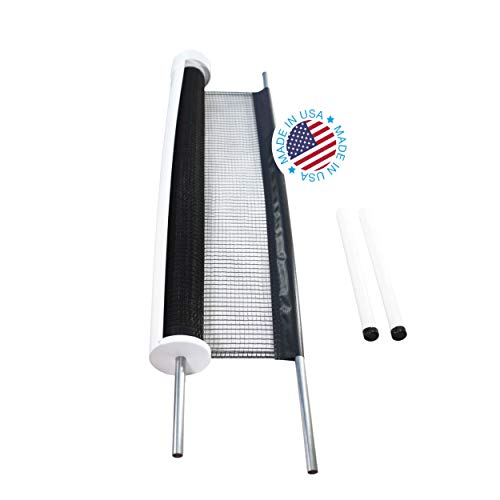
This retractable net is built in the USA and includes two mounting ground sleeves with galvanized steel poles, offering a flexible boundary that can be extended or shortened to fit varying driveway widths. It is not a gate and is intended for driveway use only, serving as a visible boundary that discourages kids from approaching the street while allowing quick return to the play area when storage is needed. The design emphasizes weather resistance and straightforward deployment for active households.
PROGOAL Driveway Guard Barricade Net

PROGOAL’s barricade net focuses on three stability boosts: a 7.9-inch deep spiral ground stake system, a middle support tube with a disc base to prevent sagging, and additional tension ropes with ground pegs on both sides. The HDPE material offers enhanced tear resistance and all-weather durability, including UV resistance for sun exposure. This setup aims to minimize sag and wind-related movement while blocking access to the roadway from a child’s play zone, making it a strong option for families seeking a robust, long-term solution.
ProSlam 40FT x 5FT Driveway Net Fence

ProSlam offers a large 40-foot length and 5-foot height, designed as a visual barrier to keep children and play objects away from street traffic. It is ground-mounted with two sleeves for secure installation, and the net’s bright color and size provide clear delineation of safe play boundaries. The extended length supports wider driveways and variable parking setups, giving homeowners flexibility while maintaining a strong protective perimeter around the play area.
Franklin Sports Driveway Barrier Net

Franklin Sports positions its barrier net as a visual safety fence designed to alert motorists and define play boundaries. It emphasizes UV protection and all-weather performance to endure outdoor use, while signaling drivers to proceed with caution. Note that this product is intended as a visual barrier rather than a physical containment system or gate, making it suitable for families prioritizing clear boundaries without a full enclosure.
Buying Guide: Key Considerations For Choosing A Driveway Safety Net
- Purpose and design: Decide between a visual barrier, a full enclosure, or a retractable option. Visual barriers are best for highlighting boundaries without restricting access, while full nets offer greater containment for balls and toys.
- Height and length: Align with your driveway width and the height needed to block access without obstructing visibility for drivers. Taller nets provide stronger separation but may be more conspicuous in the yard.
- Ground conditions: Ground staking works well on grass or soil, but stiffer or uneven ground may require nets with mid-supports or disc bases to prevent sagging.
- Durability and materials: Look for UV-resistant, weatherproof materials (HDPE or similar) for longevity in sun, rain, and temperature changes. Lightweight nets are easier to move, but sturdier builds reduce sag and wind movement.
- Installation ease: Consider whether the product includes poles, stakes, or mounting sleeves. A kit that includes all necessary components reduces setup time and ensures a secure fit.
- Mobility and storage: If you need to switch between play and open driveways, retractable or easily removable nets provide convenience. Storage features can extend the life of the barrier by reducing exposure to the elements when not in use.
- Safety and compliance: Ensure that the product is designed to prevent unwanted entry into the street while allowing reasonable visibility for supervising adults. Note whether the barrier includes warnings or signage to alert drivers and visitors.
When selecting a driveway safety net, balancing durability, ease of installation, and the specific layout of your property is essential. For homes with grass or soft ground, models with spike anchors and mid-supports tend to perform better in windy conditions. For urban driveways with limited space, retractable options or shorter lengths can offer practicality without sacrificing safety. Always measure the driveway width and consider parent feedback about how easy it is to deploy and remove the barrier during active play.