Growing microgreens indoors can offer quick harvests, high yields, and strong profit potential for home-based growers. This guide highlights five proven kits and seed packs that cater to beginners and seasoned urban farmers alike. Each option emphasizes soil-free or minimal-mess methods, fast turnaround, and scalable cultivation for steady weekly harvests. Read on to compare features, setup needs, and how these products support a reliable microgreens operation in compact spaces.
| Product | Brand | Notes |
|---|---|---|
| Self-Watering Microgreens Growing Kit | ZESTIGREENS | Hydroponic insert, grow mats, and a choice of seeds for fast, soil-free harvests |
| Microgreen Seeds Variety Pack – 10 Heirloom Types | SURVIVAL GARDEN SEEDS | 10 assorted microgreen varieties for diverse yields and flavors |
| ZESTIGREENS Ceramic Microgreens Kit | ZESTIGREENS | Premium ceramic planter with bamboo tray and soil-based option for variety |
| 6Pack Microgreens Growing Trays with Hemp Mats | RMBHM | Multiple trays with hemp fiber mats for stacked, soil-free production |
| AOMGD 4-Tier Sprouts Growing Tray Kit | AOMGD | Stackable, soil-free setup suitable for continuous harvests |
Self-Watering Microgreens Growing Kit

The ZESTIGREENS Self-Watering Microgreens Growing Kit provides a soil-free growing method with a reusable 12″ x 6″ tray, hydroponic insert, and blackout lid. It comes with two hemp grow mats, a seed pack (Red Garnet Amaranth and a mixed Superfood seed blend including broccoli, kale, Kohlrabi, arugula, and cabbage), and a detailed 16-page grow guide. Users can grow multiple microgreen varieties by removing the hydroponic insert to enable soil-based cultivation, offering flexibility for investors seeking recurring harvests with minimal maintenance.
Key features support profitability through quick turnover (7–10 days to harvest) and reduced upkeep. The kit emphasizes a mess-free, compact setup ideal for kitchen counters or small storefronts. While some seeds thrive hydroponically, others may perform better in soil, giving growers the option to diversify strategies as market demand changes. This adaptability can help maximize weekly yields with relatively low initial investment.
Microgreen Seeds Variety Pack – 10 Heirloom Types

This 10-variety heirloom seed pack from Survival Garden Seeds delivers a broad palette of flavors, textures, and colors for year-round indoor production. Varieties include broccoli, pea, sunflower, radish, kale, arugula, beet, cabbage, buckwheat, and alfalfa microgreens, offering a diverse harvest calendar and appealing menu options for customers. The seeds are high-germination, non-GMO, and ready for quick cultivation in small spaces with simple trays, light, and water routines.
Profit potential increases with variety: different microgreens appeal to different buyer segments, from restaurants seeking consistent quality to home chefs exploring new flavors. The pack’s ready-to-grow design minimizes prep time and helps new growers establish a predictable, repeatable cycle. For profit, consider pairing with weekly subscription-style sales or local farmers markets to maximize throughput and cash flow.
Ceramic Microgreens Growing Kit
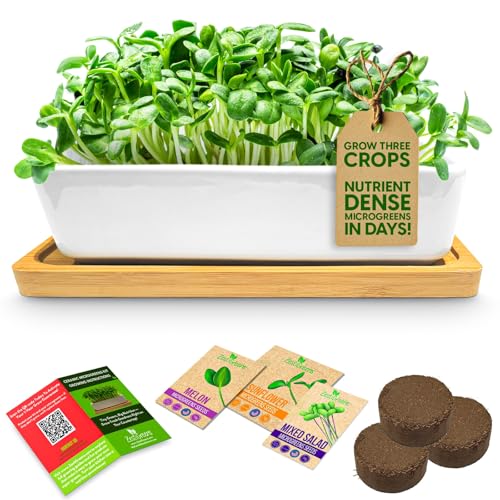
The ZESTIGREENS Ceramic Microgreens Kit combines a white premium ceramic planter with a decorative bamboo tray and soil-inclusive growing option. This kit emphasizes durable, plastic-free materials suitable for long-term use. It includes nutrient-rich soil and enough seeds for three full crops, with growth per batch in 7–10 days. Light and water are the primary inputs, simplifying management for profit-focused growers seeking a premium presentation and extended product life.
Strengths for business use include an elegant, reusable design that can command premium pricing in boutique markets or gift channels. The absence of disposable plastic aligns with growing consumer demand for sustainable farming products, while consistent growth cycles support reliable revenue. The kit’s aesthetic appeal makes it a strong candidate for in-store displays and social media marketing to attract steady customers.
6Pack Microgreens Trays with Hemp Mats

RMBHM’s 6-pack set includes durable PS material trays paired with 12 hemp fiber grow mats. The large 15″ x 11″ x 2.5″ trays provide ample space for a variety of microgreens like wheatgrass, kale, and arugula, increasing per-tray yields. PS material offers lightweight durability and easy cleaning, while the included hemp mats deliver a soil-free but nutrient-efficient growing environment. This kit is well-suited for scaling up production in home kitchens or small commercial spaces.
Profit-focused buyers benefit from the kit’s balance of price, durability, and yield potential. Reusability reduces long-term costs, and the modular trays enable stackable setups that maximize vertical space. For operators, pairing these trays with a consistent seed program and a simple irrigation routine can yield predictable weekly harvests and steady sales.
AOMGD 4-Tier Sprouts Growing Tray Kit

The AOMGD 4-tier kit is designed for stacked, soil-free growth of sprouts and microgreens. This tiered system supports simultaneous cultivation of multiple greens, enabling a continuous harvest cycle. The kit emphasizes a no-soil approach, with a focus on easy water management and a compact footprint—ideal for urban growers who want to maximize output in limited spaces. It’s also marketed as kid-friendly, making it a potential entry point for classroom or family-run microgreen operations.
For profitability, the multiple tiers allow higher throughput per square foot, translating into more weekly harvests with the same space. The kit’s simplicity reduces labor time per batch, contributing to a more scalable business model. Consider using this setup to test new seed varieties and build a rotating menu for restaurants or local markets.
Self-Watering Microgreens Kit with Capillary Mats

This kit features a self-watering design with 20 capillary grow mats and humidity domes across four trays. Capillary mats replace soil, maintaining a clean, mess-free growing environment. The built-in water reservoir ensures steady hydration, while the humidity dome accelerates germination. This setup supports continuous microgreens production with relatively low maintenance and is suitable for hobbyists expanding to small-scale profitability.
Operational considerations for profit include managing water levels to prevent overwatering and ensuring consistent light exposure for uniform growth. The modular tray system supports scalable expansion as demand grows, making it a strong option for transitioning from hobbyist to small business.
Complete Microgreens Growing Kit with 6 Seed Varieties

This all-inclusive kit includes six packets of organic seeds—Sunflower, Pea, Broccoli, Mixed Salad, Red Amaranth, and Purple Rambo Radish—plus trays, coconut coir soil pucks, and comprehensive instructions. The seeds are USDA-certified organic and non-GMO, with germination often high and harvest times around 7–10 days. This option blends soil-based and seed diversity to support a varied and recurring microgreens program, appealing to markets that value nutrition, flavor, and color variety.
For profit, this kit offers an easy, turnkey starting point with ready-to-grow materials and organic seeds that can be marketed as premium produce. The diverse seed mix reduces risk by enabling a steady supply of different greens to meet changing customer demand, making it a reliable backbone for a small indoor microgreens business.
Buying Guide: Key Purchase Considerations for Profitable Indoor Microgreens
- Space and scalability: Choose kits that fit your available space and allow stacking or modular expansion to grow output as demand rises.
- Growth method: Decide between soil-free systems for cleanliness or soil-based kits for broader variety and customer appeal. Some growers blend both approaches to optimize yields and flavor.
- Turnaround time: Look for setups that offer harvest windows within 7–14 days to maximize weekly production and cash flow.
- Seed quality and diversity: Prioritize organic, non-GMO seeds with good germination rates. A mix of familiar staples and novel varieties can attract a wider customer base.
- Maintenance and labor: Assess how much daily care is required. Self-watering and humidity-controlled options can reduce labor and improve consistency.
- Presentation: Kits with attractive, reusable materials (ceramic planters, bamboo trays) can command premium prices in boutique or gift markets.
- Sustainability: Reusable trays and minimal plastic usage align with consumer trends and may enhance branding and marketability.
- Marketing and sales: Plan for direct-to-consumer channels (online or local markets) and B2B routes (restaurants, cafes). Variety packs and weekly harvest schedules can stabilize revenue.