For American gardeners seeking effective, environmentally friendly pest control, organic pesticides offer a safer alternative to synthetic chemicals. This guide highlights top organic options that protect plants without compromising your family’s health or the environment. Below you’ll find concise product spotlights and a practical buying guide to help you choose the right solution for your garden.
Summary of chosen products:
- Organic Laboratories Lab QT Organocide 3-in-1 Garden Spray (100-021)
- Garden Safe Insecticidal Soap Ready-to-Use
- Garden Safe Fungicide3 (Neem Oil) 32 oz
- Garden Safe Fungicide3 1 Gallon
- Earth’s Ally 3-in-1 Plant Spray 24 oz
Product Spotlight: Organic Laboratories Lab QT Organocide 3-in-1 Garden Spray

Product overview and intended use: Organocide is a nature-safe organic insecticide and fungicide designed to combat a wide variety of insects and mites while also addressing fungal issues. It is marketed as a versatile solution that can replace harsher pesticides, with no required re-entry time. Its EPA exemption underscores its suitability for organic gardening. This makes Organocide a practical option for growers seeking a spray that supports both pest and disease control in a single application.
Key features and considerations: The product emphasizes safety for the environment and can even be used during harvest or indoors. This flexibility makes Organocide appealing for home gardens, greenhouses, and edible crops. While it provides broad coverage, users should monitor plant response and efficacy against specific pests to tailor usage frequency and rates. Consider pairing with cultural practices like proper spacing and sanitation for best results.
Why it fits organic gardening: As an approved organic input, Organocide aligns with organic production standards and provides a multi-purpose approach to pest and disease management. Its ability to function as both an insecticide and fungicide can simplify treatment regimens for small-scale gardens. Use as part of an integrated pest management plan to minimize resistance development over time.
Product Spotlight: Garden Safe Insecticidal Soap Ready-to-Use

Product overview and intended use: This ready-to-use insecticidal soap provides direct contact control for pests such as aphids, whiteflies, mealybugs, and other soft-bodied insects. The convenience of not needing mixing makes it a straightforward option for busy gardeners. It is suitable for use indoors, outdoors, and in greenhouses on a wide range of plants, including edibles.
Key features and considerations: Because this is a contact spray, thorough coverage of all plant surfaces, including undersides of leaves, is essential for effectiveness. The product is permitted for organic gardening and can be applied up to the day of harvest for edible crops, matching the needs of home gardeners who prioritize harvest-time flexibility. As with any soap-based product, avoid applying in extreme heat to minimize plant stress.
Why it fits organic gardening: Insecticidal soap is a classic organic option that reduces reliance on harsher pesticides. It works well in conjunction with other cultural and biological controls to manage pest populations while maintaining plant health and safety for the household.
Product Spotlight: Garden Safe Fungicide3 With Neem Oil (32 oz)

Product overview and intended use: This fungicide, insecticide, and miticide from Garden Safe leverages neem oil extract to protect a variety of plants from fungal diseases and common insect pests. It is positioned for organic gardening and labels itself as a three-in-one solution suitable for home gardens, edible crops, and ornamentals. Neem oil can help suppress populations by disrupting feeding and development in some pests while reducing fungal attack.
Key features and considerations: The product targets a broad spectrum of issues, including black spot, rust, powdery mildew, and insect pests. Neem oil-based formulas may require thorough coverage and repeated applications to maintain protection, particularly in humid conditions. Always follow label directions regarding spray timing, plant compatibility, and any pre-harvest intervals for edible crops.
Why it fits organic gardening: Neem oil is a well-established organic input that blends protective and curative effects for both pests and diseases. Its multi-functionality reduces the need for multiple products, supporting efficient garden care within organic systems.
Product Spotlight: Garden Safe Fungicide3 (1 Gallon)

Product overview and intended use: This larger-format Fungicide3 combines fungicidal, insecticidal, and miticidal properties with neem oil extract. It is designed for use around the home and garden to manage black spot, rust, powdery mildew, and a range of pests that threaten plant health. The gallon size supports frequent applications across larger plots or multiple plantings.
Key features and considerations: The product’s three-in-one action can simplify care routines, but practitioners should pay attention to coverage and rotation with other products to prevent resistance. Neem oil can vary in efficacy based on environmental conditions, so consistent monitoring of plant health is advised.
Why it fits organic gardening: By combining protective functions into one bottle, this option provides convenient, eco-conscious protection aligned with organic gardening standards while supporting broader disease and pest management goals.
Product Spotlight: Organic Laboratories 100-004 Organocide 3-in-1 RTU Garden Spray
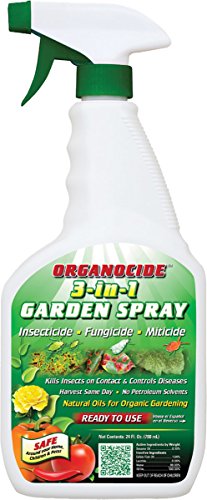
Product overview and intended use: This is an RTU (ready-to-use) version of Organocide, listed as OMRI and nature-safe for organic production. It blends soybean extract, sesame oil, and fish oils to create an insecticidal and fungicidal action effective against a range of pests and diseases, including armored and soft scales and several fungal diseases.
Key features and considerations: The formulation emphasizes versatility and ease of use, suitable for both edible and ornamental crops. While effective broadly, performance can vary with pest type and environmental conditions. As with any spray, ensure thorough coverage and follow label directions for safe application near harvest.
Why it fits organic gardening: The OMRI listing and nature-safe profile make Organocide a trusted option for organic operations or households seeking compliant, multi-purpose protection with relatively low ecological impact.
Product Spotlight: AgroMagen GrowSafe Bio-Pesticide

Product overview and intended use: GrowSafe is described as a bio-pesticide offering organic and natural miticide, fungicide, and insecticide action. It targets mites, whiteflies, aphids, powdery mildew, and downy mildew using all-natural, food-based ingredients. The formula aims for safe mixing with water and gentle performance on plants.
Key features and considerations: The product emphasizes non-toxic, plant-safe formulations designed for organic gardening. Its compatibility with water-based mixes and reduced risk of leaf burn are practical advantages. Users should evaluate pest pressure and consider applying preventively in susceptible crops to maximize protection.
Why it fits organic gardening: With a focus on natural ingredients and low-toxicity profiles, GrowSafe aligns with organic standards and can be integrated into a broader pest-management program without harsh chemical liabilities.
Product Spotlight: Earth’s Ally 3-in-1 Plant Spray
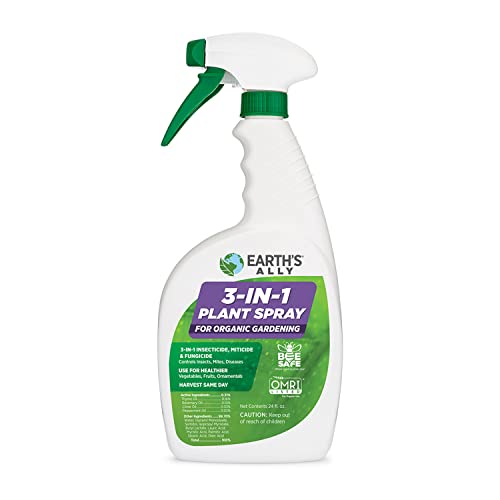
Product overview and intended use: Earth’s Ally 3-in-1 Plant Spray serves as an insecticide, miticide, and fungicide, positioning itself as a 3-in-1 solution for organic gardening. The blend, which emphasizes essential oils, is designed to kill soft-bodied insects and control common plant diseases, with applications suitable for indoor and outdoor gardens.
Key features and considerations: The spray targets a broad range of pests such as spider mites, aphids, whiteflies, and scale, and it also addresses diseases like powdery mildew and leaf spots. Environmental conditions can influence performance, so consistent, thorough coverage is recommended. It is intended to be a versatile option for diverse gardening setups.
Buying Guide: How To Choose The Best Organic Pesticide For Your Garden
When selecting an organic pesticide, consider the following factors to balance efficacy, safety, and sustainability:
- Target pests and diseases: Identify the key threats in your garden (e.g., aphids, mites, powdery mildew) and match products that specifically address those issues. Some formulations offer broad-spectrum protection, while others focus on select pests.
- Active ingredients and mode of action: Compare ingredients such as neem oil, plant oils, or soap-based formulas. Rotate products to reduce resistance and maintain long-term effectiveness.
- Plant compatibility: Check label guidance for edibles, ornamentals, and indoor plants. Some products allow harvest day application, while others require pre-harvest intervals.
- Application method and timing: Consider whether a ready-to-use spray, concentrate, or mist is most convenient for your routine, and plan applications for early mornings or cooler parts of the day to minimize stress on plants.
- Safety and environmental impact: Look for OMRI or EPA exemption listings when prioritizing organic standards. Assess potential effects on beneficial insects and pollinators; some products are more selective than others.
- Coverage and persistence: Some products require thorough coverage and repeat applications for lasting control. Others offer faster knockdown but shorter residual protection—plan accordingly in IPM strategies.
- Storage and compatibility: Ensure proper storage away from heat and direct sunlight. Check compatibility with other garden products to prevent adverse reactions when mixing or applying in sequence.
Integrated pest management (IPM) approach: Organic pesticides perform best when used as part of an IPM strategy that includes cultural controls (crop rotation, sanitation, proper spacing), biological controls (beneficial insects), and monitoring for early pest signs. Combining these elements with qualified organic products can optimize garden health while keeping environmental impact low.