Transform a plain concrete backyard into a stylish, slip-resistant living space with interlocking deck tiles. This guide highlights five top-rated options suited for outdoor use, focusing on durability, drainage, and easy DIY installation. Read on to compare materials, installation features, and ideal applications for each product listed below.
Overview table of selected products:
| Product | Brand | Material | Coverage | Ideal For |
|---|---|---|---|---|
| THYOI Dark Brown Crossed Pattern, 30 Pcs | THYOI | Acacia Wood | 30 Sq Ft | Backyard patios, pool surrounds |
| THYOI 10 Pcs Dark Brown Crossed Pattern | THYOI | Acacia Wood | 10 Sq Ft | Balconies and small patios |
| THYOI Espresso 10 Pcs | THYOI | Acacia Wood | 10 Sq Ft | Compact outdoor spaces |
| PrimeZone 54 PCS Solid Acacia Wood | PrimeZone | Acacia Wood with plastic base | 54 Sq Ft | Large patios and terraces |
| Goovilla 36 Pack Plastic Interlocking Tiles | Goovilla | Plastic | 36 Pack / 36 Sq Ft | All-weather usage on concrete |
THYOI Deck Tiles, 30 Pcs Dark Brown Crossed Pattern
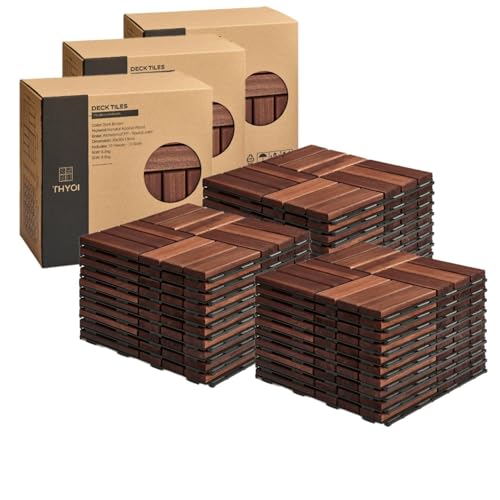
Thermally treated acacia wood forms a durable, water-resistant base for outdoor use. The 30-square-foot set provides a larger upgrade to concrete patios and pool areas. The tiles feature a premium interlocking system with a snap-lock mechanism that promotes drainage and reduces slip hazards after rain. They can be cut to fit irregular spaces, enabling a seamless patio layout. Ideal for creating a warm, natural look on concrete surfaces.
The tiles’ interlocking design allows quick DIY installation on flat concrete patios or balcony floors without adhesives. They resist aging from sun exposure and moisture, maintaining a polished finish through seasonal changes. Some users note the pattern adds a sophisticated visual texture that complements modern outdoor furniture. A practical choice for covering worn concrete while improving drainage and comfort underfoot.
THYOI Deck Tiles, 10 Pcs Espresso Pattern

This 10-square-foot set uses the same premium acacia wood and PPC base construction as larger THYOI tiles. Its espresso color offers a rich, contemporary look that pairs well with dark-bottom furniture and planters. The interlocking system ensures straightforward installation on concrete surfaces, with spacing designed for efficient drainage to minimize standing water after rainfall.
Beyond aesthetics, the tiles provide a durable walking surface and resist warping due to weather conditions. The option is well-suited for balcony flooring or a small patio extension where quick updates are desired without a full deck overhaul. The compact size makes it convenient for renters or those testing a new outdoor layout before expanding further.
PrimeZone 54 PCS Solid Acacia Wood Interlocking Tiles

PrimeZone delivers a solid 54-piece set, built from FSC-certified acacia wood with a heavy-duty base for stability on concrete. The interlocking design enables quick assembly without tools, and custom spacing helps tailor the layout to irregular concrete areas. These tiles perform well outdoors year-round, resisting moisture and heat while maintaining a natural wood appearance that elevates any concrete patio or pool deck.
With easy DIY installation, PrimeZone tiles can be arranged in multiple patterns to define seating zones or walkways. They’re suitable for balcony upgrades, porch extensions, or poolside accents. The combination of wood and durable base improves comfort underfoot, especially in sun-drenched or damp climates where a solid, dry surface is important for safety and enjoyment.
Goovilla Plastic Interlocking Tiles, 36 Pack

Goovilla’s 36-pack features lightweight, high-density plastic with a robust interlocking design. These tiles are designed for quick installation on concrete surfaces, offering strong load-bearing capacity and dependable weather resistance. Drainage is optimized with a four-flat front and rhombic back structure to minimize water pooling and improve airflow underneath the tiles.
Compared to wooden tiles, these plastic units are highly water-resistant, require minimal maintenance, and are less prone to warping in extreme weather. They’re an excellent choice for quick, durable renovations of concrete patios, pool surrounds, or walkways where a fast, clean installation is desired and a budget-friendly option is preferred.
MinCHI257 36 Pack Plastic Interlocking Tiles
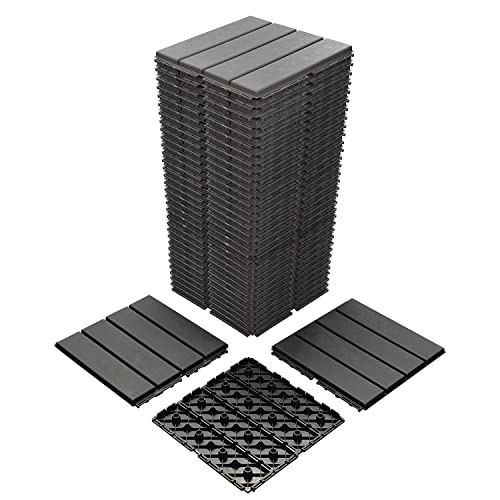
These 36-pack plastic interlocking deck tiles are designed for all-weather outdoor use on concrete. They’re lightweight, easy to assemble, and offer a simple vacuum-like cleaning approach with water wash-down. The hollow drainage design assists with moisture management, helping keep the surface dry and reduce the risk of slipping on damp concrete surfaces. Suitable for patios, balconies, and poolside areas that require a quick, durable refresh.
Buying Guide: Key Purchase Considerations
Material and durability: Acacia wood tiles offer a premium feel and natural aesthetic but require moisture management and occasional maintenance to maintain color. Plastic tiles are highly resistant to water and are easier to clean, but may not deliver the same warmth as wood. Choose based on climate, foot traffic, and desired look.
Interlocking system and drainage: Look for a snap-lock or interlocking mechanism that creates a snug fit and includes gaps for drainage. Proper drainage reduces standing water, slip risk, and surface damage on concrete patios.
Weather resistance: Consider whether tiles are rated for all-season use, including sun exposure, rain, and humidity. Some wood tiles come with treated finishes, while plastics are typically more UV-stable and less prone to fading.
Foot feel and comfort: Wood tiles tend to feel warmer and more natural underfoot, making them pleasant for extended outdoor use. Plastic tiles may feel harder but are often cooler and easier to maintain, especially in hot climates.
Installation and customization: If you want a precise layout on concrete, ensure tiles can be cut to fit irregular shapes and edges. Interlocking systems that require no tools can expedite DIY projects, while some designs may benefit from professional trimming for tight corners.
Maintenance: Wood tiles benefit from periodic sealing or oiling to preserve color and durability, while plastic tiles typically require occasional washing and removal of debris. Consider maintenance time when selecting between materials.
Budget and coverage: Large-area concrete patios benefit from a larger tile count with substantial coverage—these often balance upfront cost with long-term durability. For smaller spaces, a 10–30 piece set can deliver a quick, visually impactful upgrade.
Safety and slip resistance: Choose designs that promote adequate drainage and secure interlocking to minimize movement. Patterns with increased gaps can improve air flow and reduce slip hazards, especially in wet conditions around concrete pools or walkways.
Environmental impact: FSC-certified woods or responsibly sourced materials support sustainable practices. If environmental concerns are priorities, prefer wood tiles with certified sourcing and recyclable plastic options.
Usage versatility: If you plan to move tiles occasionally or use them indoors at times, select low-maintenance options with easy removal and reconfiguration. Interlocking systems designed for temporary events offer flexibility for renters or frequent remodels.