Maintaining a productive vegetable garden means managing weeds without harming crops. The following selections target various weed types, from preemergence controls that stop seeds from germinating to post-emergence sprays that eliminate established weeds. Each product has practical applications for vegetable beds, ornamental borders, and surrounding landscaping to help you keep produce thriving and beds tidy.
| Product | Brand | Type | Key Benefit |
|---|---|---|---|
| Monterey Vegetable and Ornamental Weeder Bundled with Measuring Spoon | Monterey | Preemergence | Kicks in at germination to prevent weed seeds from taking root |
| Hi Yield 16 Oz Grass Killer | Hi-Yield | Post-emergence | Kills existing grasses around vegetables and ornamentals |
| ECO Garden PRO Organic Vinegar Weed Killer | ECO GARDEN PRO PROFESSIONAL | RTU Organic | Glyphosate-free weed control with fast action |
| Bonide Chickweed, Clover and Oxalis Killer | Bonide | Concentrate | Broadleaf weed killer safe for lawns when used as directed |
| ALLIGARE Herbicide | ALLIGARE | Broad-spectrum | Controls a wide range of annual, biennial, and perennial weeds |
Note: Always follow label directions and local regulations when applying any herbicide near edible crops. Some products may require specific timing or protective measures to minimize impact on beneficial organisms and pollinators.
Monterey Weeder Bundled With Measuring Spoon

Monterey’s preemergence formula targets weed seeds as they germinate, providing extended protection for annual grasses and broadleaf weeds. Its versatility covers ornamental trees, shrubs, groundcovers, roses, established flowers, and vegetable beds, making it suitable for mixed landscapes. The 43% active ingredient, Trifluralin, supports long-lasting control and helps maintain bed readability before seedlings emerge. For garden beds, apply as directed prior to weed germination to maximize efficacy and minimize crop exposure. Always ensure proper labeling and safety precautions when applying near edibles.
Hi Yield 16 Oz Grass Killer
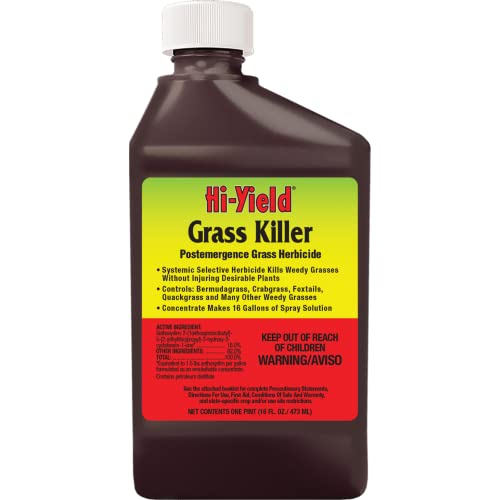
This selective post-emergent herbicide targets and eliminates grass growth, making it useful around vegetable plots, trees, shrubs, and ornamentals. It can be applied to areas where grasses compete with cultivated plants, helping reduce turf-related weed pressure. Applications typically begin after weeds are visible, with follow-up treatments as needed. For best results in a garden setting, avoid drift onto crops and follow label directions for safe use around edible plants and pollinator habitats.
ECO Garden PRO Organic Vinegar Weed Killer

This ready-to-use organic weed killer uses a vinegar-based formula designed to kill weeds quickly, including clover, moss, green grass, and other common encroachers. It’s formulated to be pet- and kid-safe in many applications and is suitable for driveways, sidewalks, mulch beds, and ornamental beds. While fast-acting, results may vary by weed type and environmental conditions. Use caution near desirable plants and avoid prolonged spray contact with greens you intend to harvest soon.
Bonide Chickweed, Clover and Oxalis Killer

This concentrate targets broadleaf weeds such as chickweed, clover, oxalis, and dandelions. It’s designed to be safe for lawns when used as directed and can be mixed for specific spray volumes. For vegetable beds, verify compatibility with edibles and apply during appropriate growth stages to minimize crop impact. Always read the label to understand mixing rates, coverage, and reentry intervals for edible gardens.
ALLIGARE Herbicide

ALLIGARE offers broad-spectrum control of a wide array of annual, biennial, and perennial weeds, including brush. This versatility makes it a practical choice for high-weed-pressure plots and perimeters around vegetable beds where weed incursions can be frequent. When applying, follow the label for crop safety, timing, and protective gear recommendations to manage risk to crops and nearby ornamentals.
Buying Guide: Key Purchase Considerations
- Weed type and lifecycle: Choose preemergence products to stop seeds before they germinate, and post-emergence options to target established weeds. Consider mixed weed pressures typical in vegetable gardens.
- Crop safety and proximity: Verify crop tolerance on labels, especially for leafy greens, root crops, and fruiting plants. Some formulations are safer around edibles when applied carefully and within reentry intervals.
- Active ingredients and mechanism: Understand whether a product uses Trifluralin (preemergence), selective grass killers, or broad-spectrum formulations. This informs compatibility with your garden plan and existing treatments.
- Organic vs. synthetic: Organic options (such as vinegar-based treatments) offer reduced synthetic chemical exposure but may require more frequent applications or have variable results depending on weather and weed type.
- Application method and timing: Consider spray equipment compatibility, drift risk, and the best time of day or season for applying to maximize efficacy without stressing crops.
- Environmental considerations: Assess potential effects on pollinators, water run-off, and soil health. Follow label instructions to minimize unintended ecological impact.
- Compatibility with soil amendments: Some fertilizers and soil conditioners can influence herbicide performance. Check compatibility notes to avoid reduced effectiveness.
- Safety and PPE: Wear appropriate protective clothing per label recommendations. Store and handle products safely to prevent accidental exposure.
- Re-entry and harvest intervals: Adhere to wait times between application and re-entry, as well as any restrictions on harvesting edible crops after treatment.
- Cost vs. efficiency: Weigh the cost per application against coverage area, weed pressure, and the number of seasons you expect to treat.
In selecting the right product, balance immediate weed control with long-term garden health. Preemergence options are ideal for beds with predictable weed timing, while post-emergence products help manage unexpected weed flushes without extensive soil disturbance. Organic options provide alternatives for gardeners seeking lower chemical exposure, though they may require broader or more frequent treatment plans.